











AI Reality Check: The Hidden Cost of AI Adoption - Organizational Debt

Organizational debt—not compute or models—is the real barrier to AI ROI. Explore how process, cultural, and data debt quietly undermine enterprise AI adoption.

Jun 24, 2026 - 12:39
Jun 24, 2026 - 12:48
 0  4
AI Reality Check: The Hidden Cost of AI Adoption - Organizational Debt
Organizational Debt - The Hidden Cost of AI Adoption

Takeaway

The greatest cost of AI adoption in 2026 isn’t compute, talent, or models — it’s organizational debt: the accumulated structural, cultural, and operational liabilities that companies must confront before AI can deliver real value. Most enterprises aren’t under‑invested in AI; they’re over‑leveraged in outdated ways of working.

1. The Debt No One Puts on the Balance Sheet

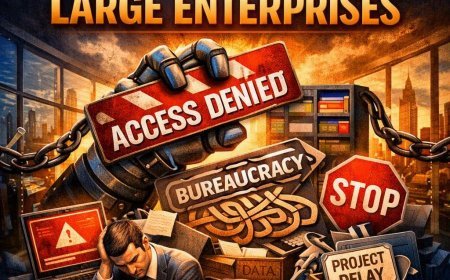
Nearly every company today is racing to “adopt AI,” but few are prepared for what that actually requires. Organizational debt is the silent drag on AI transformation — the sum of:

  • Process debt — workflows built for a pre‑AI world
  • Cultural debt — risk‑averse norms, siloed teams, and political turf
  • Data debt — fragmented, ungoverned, or inaccessible information
  • Talent debt — skill gaps in AI literacy, product thinking, and automation design
  • Decision debt — slow, committee‑driven governance that can’t keep pace with AI cycles

This debt behaves like interest: the longer it goes unaddressed, the more expensive AI becomes — not because the technology is costly, but because the organization is unprepared to use it.


2. Why AI Exposes Organizational Debt So Bluntly

AI doesn’t just automate tasks; it rewires how decisions are made, how work flows, and how value is created. That means AI shines a harsh light on every inefficiency the company has been ignoring.

Three(3) forces make this exposure unavoidable:

A. AI compresses time

Work that once took days now takes minutes. If your approvals, governance, or reporting cycles still take weeks, AI doesn’t accelerate you — it reveals your bottlenecks.

B. AI collapses roles

AI blurs boundaries between analyst, designer, engineer, and operator. Organizations built on rigid job descriptions and siloed functions struggle to absorb this fluidity.

C. AI amplifies inconsistency

If your data, processes, or policies are inconsistent, AI will replicate and scale that inconsistency instantly.

AI doesn’t break organizations. It reveals where they were already broken.


3. The Three Forms of Organizational Debt That Kill AI ROI

A. Process Debt: The Legacy Operating System

Most enterprises still run on workflows designed for:

  • manual handoffs
  • linear approvals
  • departmental ownership
  • compliance-first decision-making

AI requires:

  • continuous iteration
  • cross-functional collaboration
  • rapid experimentation
  • product-centric thinking

Companies that try to “bolt AI onto” legacy processes end up with expensive pilots that never scale.

B. Cultural Debt: The Human Operating System

AI adoption fails not because of the tech, but because of:

  • fear of job displacement
  • political resistance
  • lack of trust in automation
  • leaders who want AI outcomes without AI disruption

Cultural debt is the most underestimated — and the most expensive — form of organizational debt.

C. Data Debt: The Hidden Infrastructure Crisis

AI thrives on clean, connected, governed, and accessible data.

Most enterprises have:

  • siloed systems
  • inconsistent definitions
  • shadow databases
  • unclear ownership
  • outdated governance

Data debt is the tax every AI initiative pays — and the tax rate is rising.


4. The New Economics of AI: Debt Before Dividends

Executives often ask: “What’s the ROI of AI?”

A more relevant initial question may be: “What’s the cost of the debt we must pay down before AI can generate ROI?”

AI value creation follows a predictable pattern:

  1. Year 1: Pay down debt Fix data, processes, governance, and skills.
  2. Year 2: Build AI‑enabled workflows Redesign how work happens, not just automate tasks.
  3. Year 3: Capture exponential value AI becomes embedded in the operating model.

Companies that skip Step 1 never reach Step 3.


5. The New Competitive Divide: AI‑Ready vs. AI‑Fragile

The real competitive advantage in the AI era isn’t necessarily access to models — it’s the absence of organizational debt.

AI‑Ready Organizations

  • treat AI as an operating model shift
  • invest in data foundations
  • empower cross-functional teams
  • redesign workflows end-to-end
  • embrace automation as augmentation
  • move from “projects” to “products”

AI‑Fragile Organizations

  • chase tools instead of transformation
  • rely on outdated governance
  • treat AI as a bolt-on
  • fear workforce disruption
  • measure outputs instead of outcomes

AI doesn’t create winners. It accelerates the gap between those who have paid down their debt and those who haven’t.


6. The Organizational Debt Audit: A Framework for Leaders

To understand your AI readiness, assess your debt across five dimensions:

      1. Data Maturity - Is your data clean, connected, governed, and accessible?

      2. Process Agility - Can workflows be redesigned quickly, or are they locked in bureaucracy?

      3. Cultural Adaptability - Do teams embrace automation, experimentation, and cross-functional work?

      4. Talent Readiness - Do employees understand how to use AI, not just what it is?

      5. Decision Velocity - Can leaders make fast, informed decisions without endless committees?

Your AI strategy is only as strong as your weakest dimension.


7. The Hard Truth: AI Adoption Is Organizational Transformation

AI is not a technology project. It is an organization-wide restructuring of how value is created.

The hidden cost of AI adoption is the courage to confront:

  • outdated processes
  • entrenched power structures
  • legacy systems
  • cultural resistance
  • leadership inertia

AI forces organizations to choose: Transform, or be outpaced by those who do.


8. The Future: AI as a Debt‑Free Operating System

The companies that win the next decade will be those that:

  • treat AI as a new operating system
  • eliminate organizational debt proactively
  • build adaptive, data-driven cultures
  • redesign work around human–AI collaboration
  • invest in continuous learning and automation fluency

AI is not the disruptor. Organizational debt is.

AI simply exposes it — and accelerates the consequences.


Conceived, written and published by AI Quantum Intelligence with the help of AI models.

What's Your Reaction?

Like Like 0
Dislike Dislike 0
Love Love 0
Funny Funny 0
Angry Angry 0
Sad Sad 0
Wow Wow 0