









Construction’s Future of Work Comes into Focus

Last week at ConExpo‑Con/Agg 2026, industry leaders, contractors, technologists, and equipment manufacturers gathered in Las Vegas to discuss the evolution of how the construction jobsite continues to evolve. The focus was on big equipment, as it always is, but this year the conversations around AI (artificial intelligence), connectivity, automation, and workforce development were impossible to ignore.
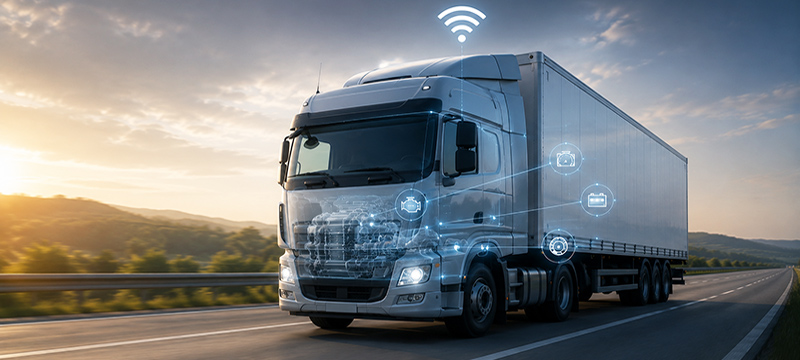
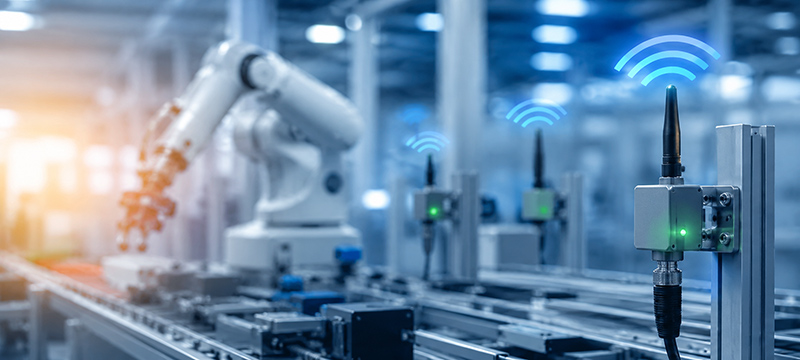
The bottomline is worker‑centric innovations are reshaping how construction gets work done—and much of this progress is built on more than a decade of IoT (Internet of Things)‑enabled equipment, sensors, and connected workflows that quietly laid the foundation for today’s data‑driven capabilities. We are finally seeing the Internet of Things delivering on its promise of solutions to help AI build stronger and better tools for tomorrow.
All about the Technology
Many manufacturers came to ConExpo-Con/Agg with big jobsite announcements. Let’s consider the example of Caterpillar, which debuted Cat Compact, a customer experience for small contractors and growing businesses to bring everything into one destination to buy, rent, and service compact equipment. This blends digital discovery and online research, reducing complexity and helping contractors focus on the job.
Also, the company announced new high-horsepower C3.6 and C13D engines and aftermarket offerings, such as condition monitoring, connectivity tools, and parts options, to help customers protect uptime and get more from equipment. These capabilities build on Caterpillar’s long‑standing IoT and telematics ecosystem, which continues to evolve into more intelligent, connected, and automated jobsite operations.
With a focus on AI, the Cat AI Assistant helps customers interact more easily with Cat equipment and digital tools, enabling faster, smarter decisions from the office to the jobsite. Certainly, this is just the tip of the iceberg. The company also demonstrated Caterpillar’s first autonomous soil compactor, as another example of how connected machines, IoT data, and AI are converging.
The technology companies came in strong as well. Topcon Positioning Systems announced new 3D machine control technologies, expanded functionalities, and enhanced safety features for earthmoving and paving applications, as well as geomatic technologies for surveying and building construction applications. Perhaps what’s important to note here is that none of this begins with AI. The precision and productivity we’re seeing today are rooted in IoT‑enabled positioning, sensing, and realtime data exchange that have been maturing on jobsites for more than a decade.
All this technology is great, but what about the people? Educating workers on what’s new—and what is applicable to their jobsite is a massive undertaking. And then, of course, the training adds another layer to all of this. Fortunately, we are seeing new advances there too.
All about the Training
John Deere made several major equipment and technology announcements, including a new immersive learning environment with John Deere Extended Reality Training System. The company says this immersive, headset-based solution is designed to change how operators, dealers, and customers learn about their machines.
The technology leverages a combination of VR (virtual reality) and AR (augmented reality) experiences to create an engaging and interactive learning environment. The first release, available to both John Deere customers and dealers, will focus on two machines: the 650 P-Tier Dozer and the 210 P-Tier Excavator.
It will feature operator-focused virtual reality lessons, including daily maintenance walkarounds, controls familiarization, and direct interaction modules such as trenching and spreading. Augmented reality experiences will support electrical component location and machine walkarounds. Increasingly, these training modules draw from IoT‑enabled machine data, giving operators a more accurate, real‑world understanding of how equipment behaves in the field.
Certainly, this type of learning experience is not new. I remember attending this same event eight years ago and trying a similar interactive learning experience with a different company.
And yet we continue to see more immersive learning experiences emerge. Interplay Learning, which now includes Industrial Training Intl., showcased new training solutions to improve workforce development in high-risk environments. The centerpiece here is the company’s enhanced VR Crane Simulator, which now supports training across 10 crane types and with more than 1,200 scenarios.
This allows companies to align training more closely with the equipment operators use in the field. Some benefits here include the ability to train operators with immersive simulations, practice complex and high-risk lifts without putting people at risk and align training to exact equipment used in the field.
From high-power equipment and data-driven systems to strategic discussions around policy, safety, and workforce growth, at the center of all of this is the people and the processes that make progress possible. As the construction industry continues to navigate labor challenges, safety priorities, and rapidly evolving technologies, the focus should always remain on how the future of work will continue to take shape in the construction industry.

Behind every autonomous machine, predictive maintenance tool, or immersive training module is an IoT foundation that has been steadily connecting equipment, people, and processes for more than a decade. This editor has not only witnessed that journey but has seen how the IoT legacy we built over the past decade is now powering the next wave of AI‑driven, worker‑centric innovation—reshaping the construction jobsite in realtime.
Want to tweet about this article? Use hashtags #construction #IoT #sustainability #AI #5G #cloud #edge #futureofwork #infrastructure #CONEXPOCONAGG2026 #CONEXPO2026
The post Construction’s Future of Work Comes into Focus first appeared on Connected World.
What's Your Reaction?
 Like
0
Like
0
 Dislike
0
Dislike
0
 Love
0
Love
0
 Funny
0
Funny
0
 Angry
0
Angry
0
 Sad
0
Sad
0
 Wow
0
Wow
0