







Beyond Automation: How AI Becomes Your Small Business’s First “Digital Employee”
Explore how AI is becoming the first “digital employee” for small businesses—handling operations, finance, sales, marketing, and support with adaptive intelligence that scales effortlessly.

Introduction: The Shift From Tools to Teammates
In our last article entitled "The Hidden ROI of AI: How Small Businesses Can Automate the Work They Shouldn’t Be Doing Anymore", we explored the hidden ROI of AI and how small businesses can reclaim hundreds of hours by automating repetitive work. But something deeper is happening beneath the surface — a shift that goes beyond productivity.
AI is no longer just a tool.
It’s becoming a digital employee.
Not in the sci‑fi sense. Not a robot in a swivel chair.
But a persistent, context‑aware, always‑on operational layer that behaves less like software and more like a competent team member who:
- anticipates needs
- handles routine tasks
- escalates exceptions
- learns from patterns
- improves over time
This is the next frontier of digital transformation — and small businesses are uniquely positioned to benefit from it faster than large enterprises.
1. The Digital Employee: What It Actually Means
A digital employee is not a chatbot or a workflow. It’s a role, not a feature.
Think of it as a virtual team member with a defined scope of responsibility:
- AI Operations Assistant
- AI Finance Clerk
- AI Sales Coordinator
- AI Marketing Producer
- AI Customer Support Triage Agent
Each one handles a cluster of tasks that previously required human attention.
What makes a digital employee different from traditional automation?
|
Traditional Automation |
Digital Employee |
|
Executes rules |
Understands context |
|
Requires configuration |
Learns from usage |
|
Handles tasks |
Owns workflows |
|
Static |
Adaptive |
|
Reactive |
Proactive |
This shift is subtle but transformative.
2. Why Small Businesses Benefit First (Not Last)
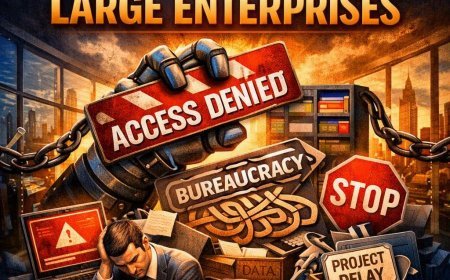
Large enterprises have legacy systems, compliance constraints, and bureaucratic inertia. Small businesses have something far more valuable: agility.
They can adopt AI roles quickly, iterate rapidly, and integrate them deeply into daily operations without a six‑month procurement cycle.
Three reasons small businesses win:
1. Fewer systems = faster integration
A small business might use 6–12 core tools. Enterprises use hundreds.
2. Less red tape = faster experimentation
You don’t need a steering committee to test an AI workflow.
3. Direct impact = immediate ROI
When a founder saves 10 hours a week, the business feels it instantly.
This is why the “digital employee” model is emerging first in the SMB ecosystem.
3. The Five Digital Employees Every Small Business Will Hire in 2026
Let’s break down the roles that are already proving indispensable.
A. The AI Operations Assistant
Your digital ops person handles:
- meeting summaries
- task extraction
- follow‑up reminders
- SOP generation
- cross‑tool updates
It’s the employee who never forgets, never gets tired, and never loses track of a detail.
B. The AI Finance Clerk
Not a CFO — a clerk.
- categorizes expenses
- reconciles invoices
- flags anomalies
- drafts financial summaries
- prepares cash‑flow snapshots
It’s not making strategic decisions — it’s doing the grunt work that humans hate.
C. The AI Sales Coordinator
This one is a game‑changer.
- logs leads
- drafts outreach emails
- updates CRM fields
- schedules follow‑ups
- identifies warm opportunities
It’s the difference between “we’ll get to it” and “it’s already done.”
D. The AI Marketing Producer
Not a strategist — a producer.
- drafts social posts
- repurposes content
- generates visuals
- creates email sequences
- analyzes engagement
It’s the content engine you always wanted but never had time to build.
E. The AI Customer Support Triage Agent
This role filters noise from signal.
- categorizes incoming messages
- drafts responses
- escalates edge cases
- updates knowledge bases
- identifies recurring issues
It’s the first line of defense — and it never sleeps.
4. How to “Hire” Your First Digital Employee
This isn’t about buying a tool. It’s about defining a role.
Step 1: Identify a function that drains time
Operations, finance, sales, marketing, support — pick one.
Step 2: Document the tasks you want off your plate
Not everything. Just the repetitive 60%.
Step 3: Assign the role to an AI system
This could be a general AI assistant or a specialized SaaS tool.
Step 4: Integrate it into your workflow
Give it inputs. Review outputs. Iterate.
Step 5: Promote it
As it learns, expand its responsibilities.
This is how small businesses scale without hiring prematurely.
5. The Cultural Shift: Working With AI, Not Around It
The businesses that thrive won’t treat AI as a novelty. They’ll treat it as a colleague.
That means:
- giving it clear instructions
- defining expectations
- reviewing its work
- providing feedback
- integrating it into team rituals
AI isn’t replacing people — it’s replacing the work that prevents people from doing their best work.
Conclusion: The Future of Work Is Hybrid — But Not the Way You Think
Hybrid work used to mean “some days in the office, some days at home.”
Now it means:
Some work done by humans, some work done by digital employees.
And the companies that embrace this hybrid model early will operate with a level of efficiency, consistency, and strategic focus that competitors simply can’t match.
Food for Thought
If AI becomes your first digital employee, here’s the provocative question:
What happens when your digital employees start outperforming your human ones — not in creativity or judgment, but in reliability and execution?
And even more interesting:
What new kinds of businesses become possible when your first five hires cost nothing, never burn out, and scale infinitely?
The future of small business isn’t just automated.
It’s augmented — and the transformation has already begun.
Written/published by Kevin Marshall with the help of AI models (AI Quantum Intelligence).
What's Your Reaction?
 Like
0
Like
0
 Dislike
0
Dislike
0
 Love
1
Love
1
 Funny
0
Funny
0
 Angry
0
Angry
0
 Sad
0
Sad
0
 Wow
0
Wow
0