










Machine Learning Demystified: Your No-Jargon Guide to the AI Revolution
Machine learning explained without the jargon: discover how AI really learns, what it can (and can't) do, and why it's not magic. A clear guide for non-technical professionals.
Introduction: It’s Not Magic, It’s Math
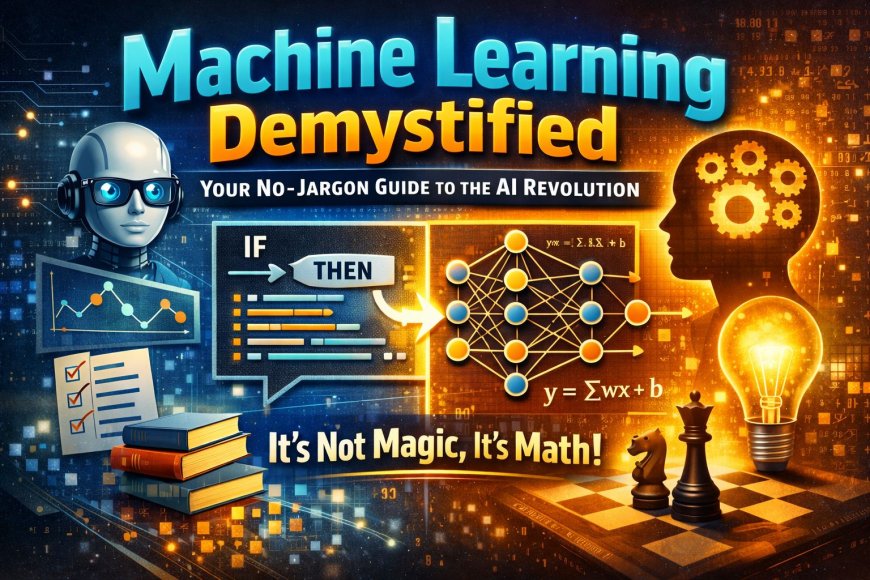
You’ve probably heard the term “machine learning” everywhere—from news stories about self-driving cars to recommendations on Netflix and warnings about facial recognition. It sounds like futuristic wizardry, but here’s the truth: Machine Learning (ML) is simply a way for computers to learn from experience without being explicitly programmed for every single rule.
Think of it this way:
- Traditional Programming: Humans write detailed instructions. (“If the user buys diapers, also recommend baby wipes.”)
- Machine Learning: Humans provide examples and let the computer figure out the patterns. (“Here are millions of shopping carts; figure out what items tend to go together.”)
This article will walk you through what ML really is, how it actually works, where it’s headed, and—crucially—what it’s not.
Part 1: What Machine Learning Really Is—In Human Terms
The Core Idea: Learning from Examples
At its heart, machine learning is about pattern recognition. Just as a child learns to identify cats after seeing many pictures (not by memorizing a definition), ML systems learn from data.
Real-World Analogy:
Imagine teaching a friend to recognize your taste in music. Instead of giving them a rulebook (“I like songs in 4/4 time with guitar solos”), you play them 100 songs you love and 100 you hate. Eventually, they start accurately guessing whether you’ll like new songs. That’s machine learning.
The Three Main Flavours of ML:
- Supervised Learning: Learning with a “teacher” or labeled data.
Example: Spam filters. You label emails as “spam” or “not spam.” The system studies patterns (certain words, senders) and learns to filter new emails. - Unsupervised Learning: Finding hidden patterns in unlabeled data.
Example: Customer segmentation. A retailer analyzes purchase data and discovers natural groupings (e.g., “weekend shoppers,” “bulk buyers”) without predefined categories. - Reinforcement Learning: Learning by trial and error with rewards.
Example: A computer learning to play chess. It tries moves, wins or loses, and adjusts its strategy to maximize future rewards.
Part 2: How Machine Learning Works—A Peek Under the Hood
The Learning Process in Four Steps:
- Gather Data: Everything starts with data—photos, transaction records, sensor readings, text. Garbage in = garbage out.
- Choose a Model: A “model” is a mathematical framework. Simpler models are like fitting a straight line through data points; complex ones can detect subtle, nonlinear patterns.
- Train the Model: This is the “learning” phase. The algorithm makes predictions, checks against known outcomes, and adjusts its internal parameters to reduce errors—like tuning a radio to get a clear signal.
- Make Predictions: Once trained, the model can apply what it learned to new, unseen data.
Key Concept: The “Black Box” Myth
Some complex ML models (especially deep learning) are called “black boxes” because tracing exactly how they reached a decision can be difficult. But researchers are actively working on “explainable AI” to make these processes more transparent.
Part 3: How Machine Learning Is Evolving
From Labs to Everyday Life:
- 2000s: ML was largely academic, used by tech giants for specific tasks (search, ads).
- 2010s: The deep learning boom—better algorithms, more data, and powerful computers enabled breakthroughs in image/speech recognition.
- Today: ML is democratized. Cloud services allow small businesses to use ML tools without PhDs.
Current Frontiers:
- TinyML: Shrinking ML to run on small devices (e.g., hearing aids, thermostats).
- Generative AI: Systems like DALL-E and ChatGPT that create new content.
- Automated Machine Learning (AutoML): Tools that automate parts of the ML pipeline, making it more accessible.
The Human-in-the-Loop Trend:
Instead of full automation, the most effective systems often combine AI with human oversight—especially in high-stakes areas like healthcare.
Part 4: What Machine Learning Is NOT—Debunking Myths
Myth 1: ML = General Intelligence (Like a Human Brain)
Reality: ML is brilliant at specific, narrow tasks but lacks common sense, consciousness, or understanding. A system trained to diagnose X-rays knows nothing about poetry or how to ride a bike.
Myth 2: ML Is Objective
Reality: ML learns from human-generated data, which often contains biases. A hiring algorithm trained on past resumes might inadvertently perpetuate gender or racial biases. The technology reflects our world—flaws and all.
Myth 3: ML Works Instantly Out-of-the-Box
Reality: Effective ML requires careful data preparation, iterative tuning, and ongoing maintenance. It’s more like cultivating a garden than installing a lightbulb.
Myth 4: ML Will Soon Replace All Human Jobs
Reality: ML excels at automating repetitive, pattern-based tasks but struggles with creativity, complex strategy, and emotional intelligence. The future is augmentation—humans and AI working together.
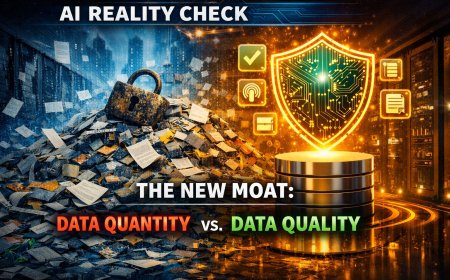
Myth 5: More Data Always Means Better Results
Reality: Quality matters more than quantity. Clean, relevant, well-labeled data is far more valuable than massive but messy datasets.
Part 5: How to Engage with ML as a Non-Technical Professional
Think in Terms of Problems, Not Technology:
Instead of asking “How can we use ML?” ask “What persistent business problem could benefit from finding patterns in our data?”
Questions to Ask When Evaluating ML Solutions:
- What data was used to train this?
- How is accuracy measured?
- What are the known limitations or failure cases?
- How do humans stay in the loop?
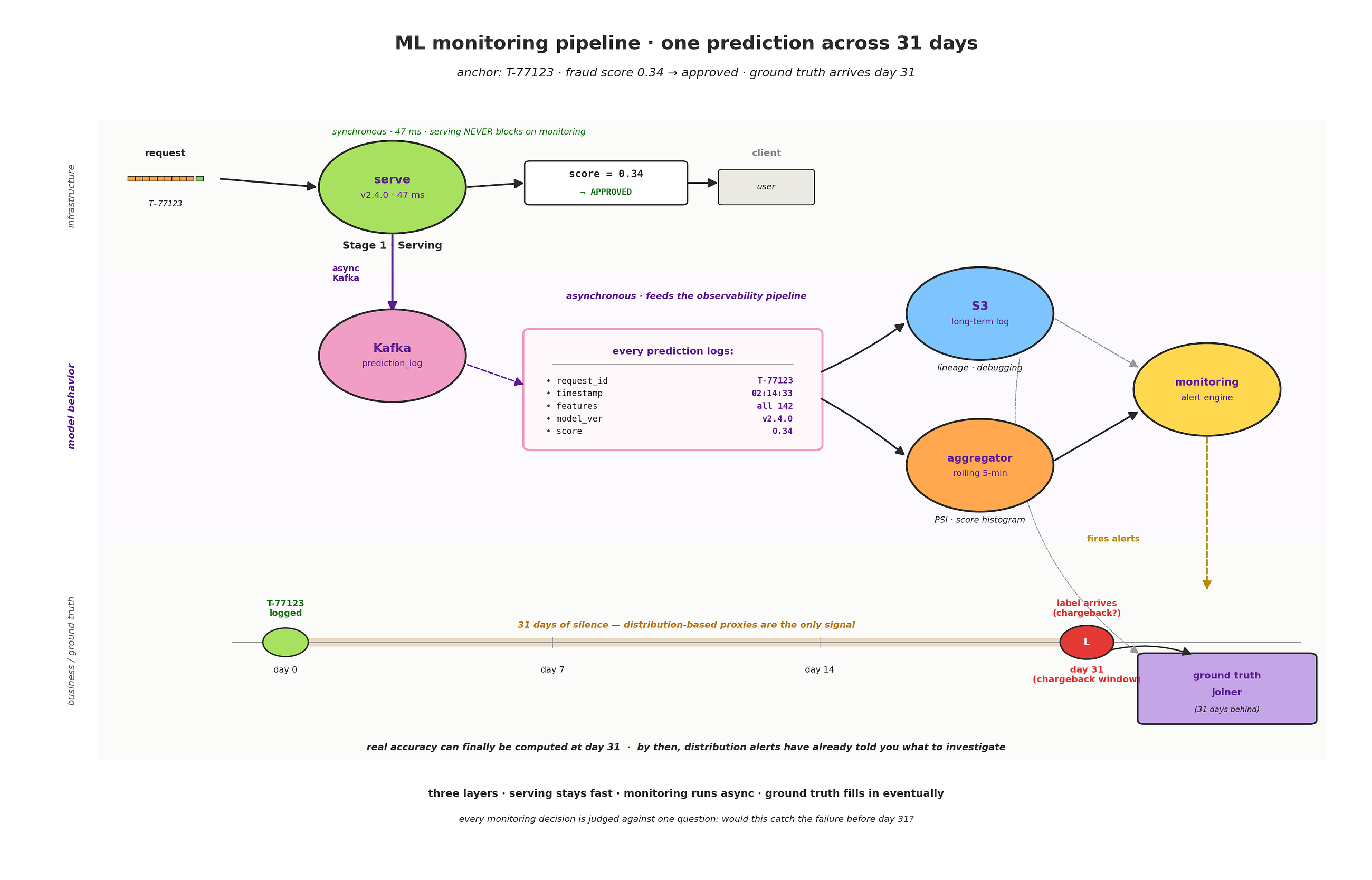
- How do we monitor for bias or drift over time?
Building Literacy:
You don’t need to code, but understanding basic concepts (like training vs. prediction, or the importance of quality data) will help you collaborate effectively with technical teams.
Conclusion: Machine Learning as a Tool for Amplification
Machine learning isn’t a magical oracle—it’s a powerful pattern-finding tool created by humans, trained on human data, and deployed in human contexts. Its evolution isn’t just about more sophisticated algorithms; it’s about better integration with human workflows, ethical guidelines, and accessibility.
The most exciting future isn’t one where machines think for us, but where they help us uncover insights we’d otherwise miss, automate the tedious, and amplify our own uniquely human capabilities. Understanding what ML really is—and isn’t—is your first step toward participating thoughtfully in that future.
Remember: Behind every “intelligent” system are people—people who choose the data, design the goals, and decide how to use the outputs. The real power remains, as always, in human hands.
Written/published by Kevin Marshall with the help of AI models (AI Quantum Intelligence).
What's Your Reaction?
 Like
0
Like
0
 Dislike
0
Dislike
0
 Love
0
Love
0
 Funny
0
Funny
0
 Angry
0
Angry
0
 Sad
0
Sad
0
 Wow
0
Wow
0