













From Rosie the Riveter to the New Plant Floor

More than eight decades ago, an image and a name captured the American mind: Rosie the Riveter. As the Rosie the Riveter song filled radio waves, the image filled cities, and conversations filled homes, Rosie quickly came to represent something far bigger than a single person. She became the symbol of an entire generation of women stepping into the industrial workforce when men were fighting overseas.
Today, many challenges remain, as evidenced by a recent conversation I had with Kelly Ireland, CEO, CBT. Comparing and contrasting the past to the present provides good fodder for conversation. But, to start, let’s journey back together.
During World War II, women filled roles in shipyards, factories, and heavy industry, as men went off to war. Women did this with skill and determination, ultimately keeping production moving. But even after the war, Rosie’s legacy still persisted. A cultural shift was underway, as women’s rights movements began in the decades that followed, ultimately laying the groundwork for broader conversations about equality in the workplace.
Rosie the Riveter wasn’t a single person. Rather, she was an image immortalized in J. Howard Miller’s “We Can Do It!” poster. Rosie was ultimately a symbol of capability, resilience, and the potential power of a segment of the workforce that was often overlooked.
But to simplify Rosie to only a symbol is a slight to the thousands of women who stepped up during World War II. Meet Frances Mauro Masters, an original Rosie the Riveter from Michigan during World War II. She worked on B-24 Liberator bombers.
At 24 years old, she went to work at the bomber plant in Ypsilanti, Mich., in 1942 along with two of her sisters, Josephine and Angeline. In November 2025, she served as the inspiration for a statue at the Michigan World War II Legacy Memorial.
Frances, like more than 310,000 women across America, was determined to aid her country and support those who were serving in the military. Now, nearly eight decades later, we are seeing obituaries for many of these Rosie the Riveters who served as a cultural revolution, guiding the way for the next era of workers in manufacturing.
Modern Day Challenges
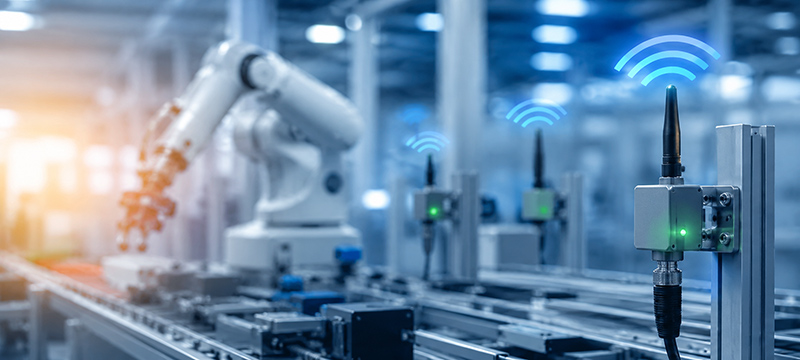
Today’s manufacturing industry is plagued with complex challenges. There is a skills gap across the generations, a volatile supply chain, a need for greater safety and sustainability, and the need to integrate advanced technologies like AI (artificial intelligence), wearables, and more. The tools are different, but the underlying challenge from eight decades ago still remains.
The solution to many of these challenges requires diverse approaches to thinking, problem solving, and collaboration. What is needed is another cultural shift, one that is cross-generational and collaborative at heart.
So, let’s go back to my discussion with Ireland, on The Peggy Smedley Show, she explains the workforce dynamics many manufacturers face today, saying, “You have a mixed workforce. You have youngsters who love tech and want to bring it in … you have an older workforce who are not as much into adopting new tech close to retirement.”
The question then becomes: how do you get management to say, no, you have to? Ireland believes the solution is to bring workers into be a piece of it, with the adoption, so they can see it. Ultimately, true transformation becomes about participation among all, not mandates from the top.
Modern Day Solutions
Often, the solution to many of today’s manufacturing challenges lies at the intersection of people and technology. However, at this intersection also lies complexity. Much of the discourse in this area includes conversation on job displacement, but there is some nuance in this discussion.
“From what we are seeing and the research we are doing, what AI is going to decimate on the white-collar jobs, it is going to do the exact opposite for manual labor, blue-collar jobs, industrial jobs,” explains Ireland. “It can hockey stick that up.”
But adoption will only stick if the numbers make sense. Ireland urges teams must talk about the importance of ROIs (returns on investments). She gives examples of wearable devices that have ROIs in two days and then they have a shelf life of 2-3 years, and businesses can keep adding capabilities to them. Ireland says those are the ones that are going to be successful.
“From the CFO down, they want to see the value this brings,” Ireland says. “If someone can’t lay this out, with this is your ROI, this is very quantifiable, etc., there are not very many people in our industry that can do that right now.”
Ultimately, what manufacturers are doing on the plant floor will end up resonating in at least 25 different industries. If done right, the impact will have far-reaching implications.
What’s Next
Complex systems require diverse, strategic thinking. In the mid-20th century, thousands of women entered an industry. Today, women still remain underrepresented in many technical and manufacturing leadership roles.
Rosie the Riveter reshaped collective beliefs, and today manufacturing faces an equally critical moment. The industry must shift, and that shift will require diverse thinkers. Perhaps we could use a new infusion of Rosie’s energy.
Want to tweet about this article? Use hashtags #IoT #sustainability #AI #5G #cloud #edge #futureofwork #digitaltransformation #RosietheRiveter #WomensHistoryMonth #WomenWhoLead #EmpowerWomen #InternationalWomensDay
The post From Rosie the Riveter to the New Plant Floor first appeared on Connected World.
What's Your Reaction?
 Like
0
Like
0
 Dislike
1
Dislike
1
 Love
0
Love
0
 Funny
0
Funny
0
 Angry
0
Angry
0
 Sad
1
Sad
1
 Wow
1
Wow
1