









The Data Hub Revolution: Why Governments and Enterprises Are Rebuilding the Foundations of Data
Discover how enterprise data hubs are transforming government and business by connecting fragmented data, enabling advanced analytics and AI, and overcoming the challenges of legacy systems and data governance.
In the early days of computing, most organizations treated data like paperwork—files stored in cabinets scattered across departments. One system handled payroll. Another managed customer records. Another tracked compliance. Each did its job, but none really talked to the others.
Fast forward to today, and the expectations have changed dramatically.
Citizens rightfully expect government services to work as seamlessly as online banking. Businesses want real-time insight into operations. Leaders expect decisions to be backed by data rather than instinct. And artificial intelligence is now knocking on the door, promising to transform everything—if the underlying data can support it.
This is where the enterprise data hub enters the story.
Across governments and large enterprises alike, organizations are quietly rebuilding the data foundations of their institutions. It’s not as flashy as launching a new AI chatbot or digital service, but it may be the most important transformation happening under the hood.
The Big Idea: A Central Nervous System for Data
Think of an enterprise data hub as the central nervous system of an organization.
Instead of dozens or hundreds of systems operating in isolation, a data hub creates a shared structure where information from across the enterprise can connect and interact.
At its core, the model links a few fundamental concepts that exist in nearly every organization:
- People and organizations (citizens, customers, businesses)
- Programs or services (benefits, products, regulatory activities)
- Transactions and interactions (applications, purchases, inspections)
- Resources (employees, assets, funding)
- Outcomes and performance metrics
By connecting these elements, the organization gains something it rarely had before: a unified view of reality.
A Simple Example: The Citizen Experience
Imagine a citizen interacting with government in three different ways:
- Applying for a housing subsidy
- Renewing a driver's license
- Starting a small business
Traditionally, those interactions might occur in three separate systems run by three separate departments.
The citizen becomes three separate records.
The government sees fragments of a person, not a whole picture.
With an enterprise data hub, those interactions link back to a single trusted identity record. The systems remain independent, but the data connects.
This unlocks powerful possibilities:
- Faster services
- Better fraud detection
- More accurate policy evaluation
- Reduced administrative duplication
The same principle applies in the private sector. Banks, insurers, retailers, and telecom providers are all trying to achieve the same thing: a unified view of the customer.
Where the Biggest Progress Has Happened
Over the past decade, enormous progress has been made in three areas that make enterprise data hubs possible.
1. Data Integration Has Finally Matured
In the past, connecting systems was fragile and expensive.
Today, technologies like APIs, event streaming, and cloud data platforms allow systems to share data much more fluidly.
When a new event occurs—an application submitted, a payment issued, a shipment delivered—it can be broadcast across systems instantly.
This event-driven architecture allows organizations to respond faster and maintain synchronized information.
Large organizations now routinely integrate hundreds of systems in near real time.
2. Analytics Has Become Truly Powerful
The second breakthrough is the explosive growth of data analytics and data science.
Once data from across the enterprise is centralized or linked, organizations can analyze patterns that were previously invisible.
Examples include:
Healthcare
Hospitals analyze patient outcomes across millions of records to identify which treatments work best.
Government Programs
Social programs can measure whether funding actually improves long-term employment outcomes.
Supply Chains
Manufacturers can predict disruptions before they happen by analyzing supplier data.
The rise of cloud-scale data warehouses and data lakes has made it possible to analyze billions of records in minutes.
3. Artificial Intelligence Finally Has Something to Work With
AI is only as good as the data behind it.
Without structured, well-governed information, AI systems become unreliable or even dangerous.
Enterprise data hubs provide the structured backbone that AI systems need.
For example:
- AI assistants for caseworkers can instantly retrieve relevant program rules
- Fraud detection models can analyze cross-program activity
- Customer support systems can understand full interaction histories
This is one reason why many organizations now see data architecture as a prerequisite for AI adoption.
A Concrete Example: Fighting Fraud
Fraud detection is a perfect example of why connected data matters.
In a fragmented system:
- Fraudsters exploit gaps between agencies or departments
- Duplicate payments go unnoticed
- Suspicious patterns remain hidden
With an enterprise data hub, investigators can detect patterns across programs.
For example:
- The same bank account receiving benefits under multiple identities
- A company receiving grants from multiple programs under slightly different names
- Regulatory violations linked to multiple related organizations
Financial institutions have already demonstrated the power of this approach.
Governments are increasingly adopting similar strategies.
But Here’s the Hard Truth: Data Transformation Is Painful
Despite the promise, building enterprise data ecosystems remains extremely difficult.
The challenges are rarely technical.
They are organizational and political.
The Biggest Pain Point: Data Ownership
In most organizations, data is controlled by individual departments.
Each system owner believes their version of the data is the authoritative one.
When a central data model attempts to unify everything, tensions emerge:
- Who owns the official customer record?
- Which address is correct?
- Which system defines eligibility rules?
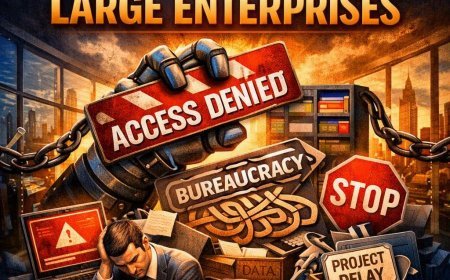
These disputes can slow projects for years.
The Second Pain Point: Legacy Systems
Many large institutions still run systems that are 20 to 40 years old.
These systems were never designed to integrate easily.
Data may exist in formats that are difficult to extract or interpret.
In some cases, even the original developers are long gone.
Connecting these systems to modern data platforms is often the most expensive part of transformation.
The Third Pain Point: Data Quality
One of the uncomfortable truths of data modernization is this:
When organizations start connecting their data, they discover how messy it really is.
Duplicate identities
Incomplete records
Conflicting addresses
Inconsistent classifications
Cleaning this up requires enormous effort.
But the process also produces one of the most valuable outcomes: organizational self-awareness.
The Hidden Risk: AI Built on Bad Data
The excitement around AI has introduced a new danger.
Organizations are rushing to deploy generative AI tools before their data foundations are ready.
If the underlying data is inconsistent or poorly governed, AI systems can produce:
- incorrect recommendations
- biased outcomes
- regulatory violations
This is why many experts now emphasize data governance and lineage as critical safeguards.
Knowing where data comes from—and how it has been transformed—is essential for responsible AI.
The Quiet Success Stories
Despite the challenges, many organizations are making real progress.
Large banks now maintain unified customer profiles across dozens of systems.
Airlines integrate operations, logistics, and passenger data in real time.
Governments are beginning to create whole-of-government identity and service platforms.
These efforts often take years, but once the foundation exists, innovation accelerates dramatically.
The Next Frontier: Knowledge Graphs and Intelligent Systems
The future of enterprise data may look very different from traditional databases.

Many organizations are now experimenting with knowledge graphs—data structures that explicitly map relationships between entities.
Instead of just storing records, these systems understand how things connect:
- people to organizations
- organizations to programs
- programs to regulations
- regulations to outcomes
When combined with AI, this creates something closer to institutional intelligence.
A policymaker could ask:
"Which regulatory programs have the highest enforcement costs but the lowest compliance improvements?"
And the system could answer in seconds.
The Deeper Lesson: Data Is Institutional Memory
At its deepest level, the enterprise data hub represents something more profound than technology.
It is the memory of the organization.
Every transaction, decision, and interaction contributes to that memory.
When the memory is fragmented, organizations repeat mistakes and struggle to learn.
When it is connected and accessible, institutions become smarter over time.
They detect risks earlier.
They design better policies.
They deliver better services.
Final Thought: The Most Important Infrastructure You Never See
The digital transformation headlines often focus on apps, AI tools, and new user experiences.
But beneath those innovations lies something quieter and more fundamental.
A well-designed enterprise data model.
It’s the invisible infrastructure that makes modern intelligence possible.
The organizations that invest in it—carefully, patiently, and responsibly—will be the ones that truly unlock the next era of data-driven governance, business innovation, and intelligent systems.
And those that don’t?
They may discover that the future runs on data they never managed to connect.
Written/published by Kevin Marshall with the help of AI models. (AI Quantum Intelligence)
What's Your Reaction?
 Like
0
Like
0
 Dislike
0
Dislike
0
 Love
0
Love
0
 Funny
0
Funny
0
 Angry
0
Angry
0
 Sad
0
Sad
0
 Wow
0
Wow
0