
Why is AI-Driven Omnichannel Support the Future of the Insurance Industry?
A seamless, customized, and personalized experience is all customers want or expect from the insurance industry. The key driver behind the growth is the increase in the compound annual growth rate of the global insurtech market by 52.7% from 2022-2030. Adding to this momentum, the Genesys 2025 Global [...] The post Why is AI-Driven Omnichannel Support the Future of the Insurance Industry? appeared first on AutomationEdge.
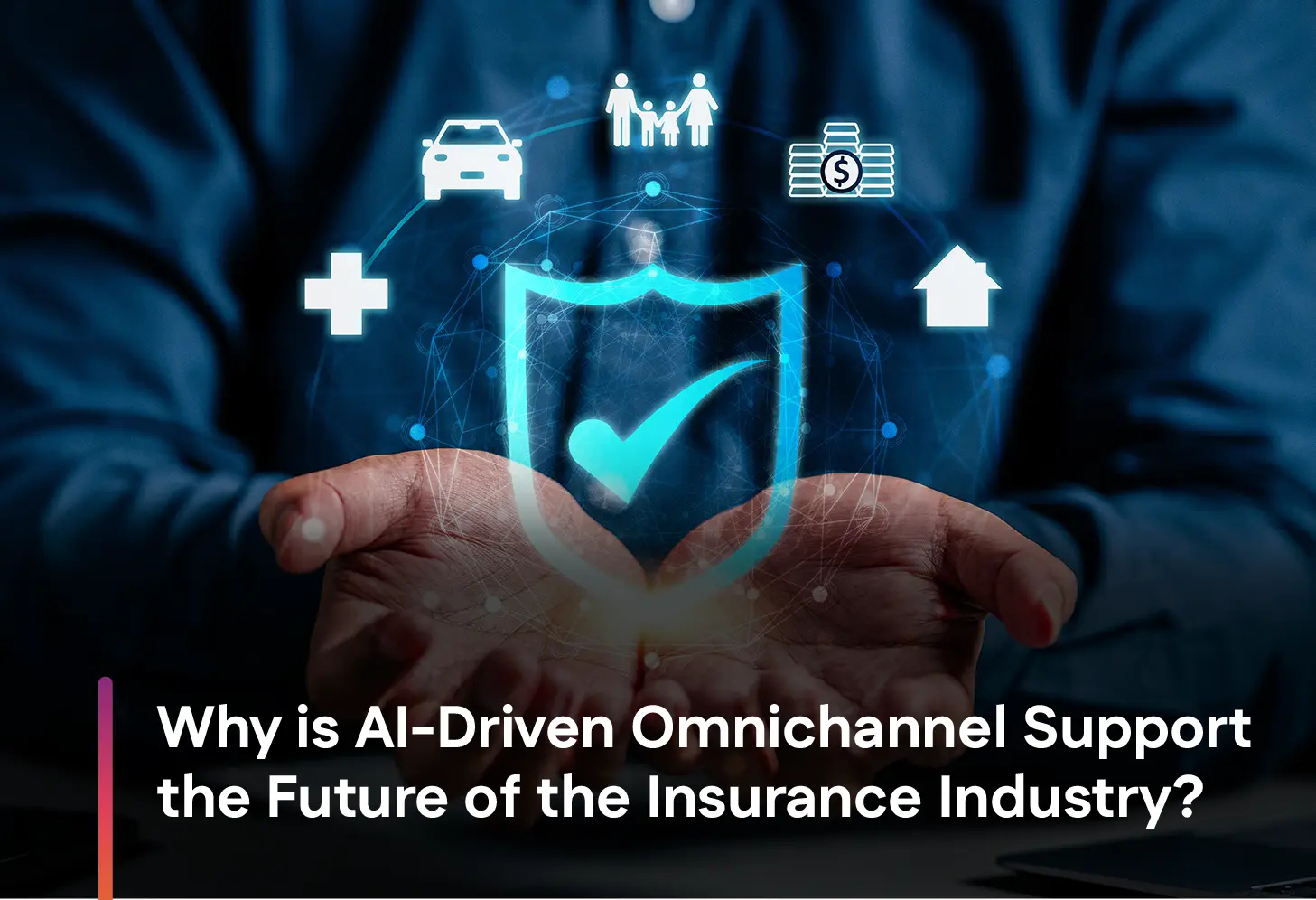
A seamless, customized, and personalized experience is all customers want or expect from the insurance industry. The key driver behind the growth is the increase in the compound annual growth rate of the global insurtech market by 52.7% from 2022-2030.
Adding to this momentum, the Genesys 2025 Global Insurance Outlook reports that 99% of insurers have already invested in generative AI or plan to do so, showing how strongly technology is driving the future of insurance. Studies indicate that businesses adopting omnichannel customer engagement strategies are able to retain as much as 89% of their customers. At AutomationEdge, we empower insurers with AI-driven automation solutions that enhance customer experiences and streamline omnichannel support.
Key Article Takeaways
- AI-driven omnichannel support is redefining insurance by delivering consistent, personalized customer experiences across all touchpoints—apps, chat, email, voice, and in-person.
- Customer expectations are shifting rapidly, with most buyers prioritizing digital convenience, faster resolutions, and seamless channel switching over traditional agent-only interactions.
- Insurers are heavily investing in AI, with 99% already adopting or planning to adopt generative AI, proving that technology is now central to the industry’s growth strategy.
- Automation and RPA-powered bots are enabling 24/7 support, handling routine tasks like claims tracking, policy generation, and quotes, while escalating complex cases to human agents.
- Top use cases of omnichannel AI include self-service portals, conversational applications, automated claims processing, AI-assisted underwriting, and proactive customer notifications.
- The future of insurance will be predictive and hyper-personalized, with AI anticipating customer needs, integrating into everyday journeys (embedded insurance), and ensuring compliance through ethical, transparent systems.
With the rise of new technologies, insurers are using them to improve customer journey. To achieve higher satisfaction, they must turn challenges into opportunities. One such opportunity lies in improving customer loyalty with AI-driven omnichannel support, which builds trust and delivers an optimal experience.
This is where the benefits of omnichannel AI in insurance come into play, helping insurers streamline interactions, unify communication across platforms, and deliver consistent, personalized experiences that meet evolving customer expectations.
Customers’ Expectations from Insurance Industry
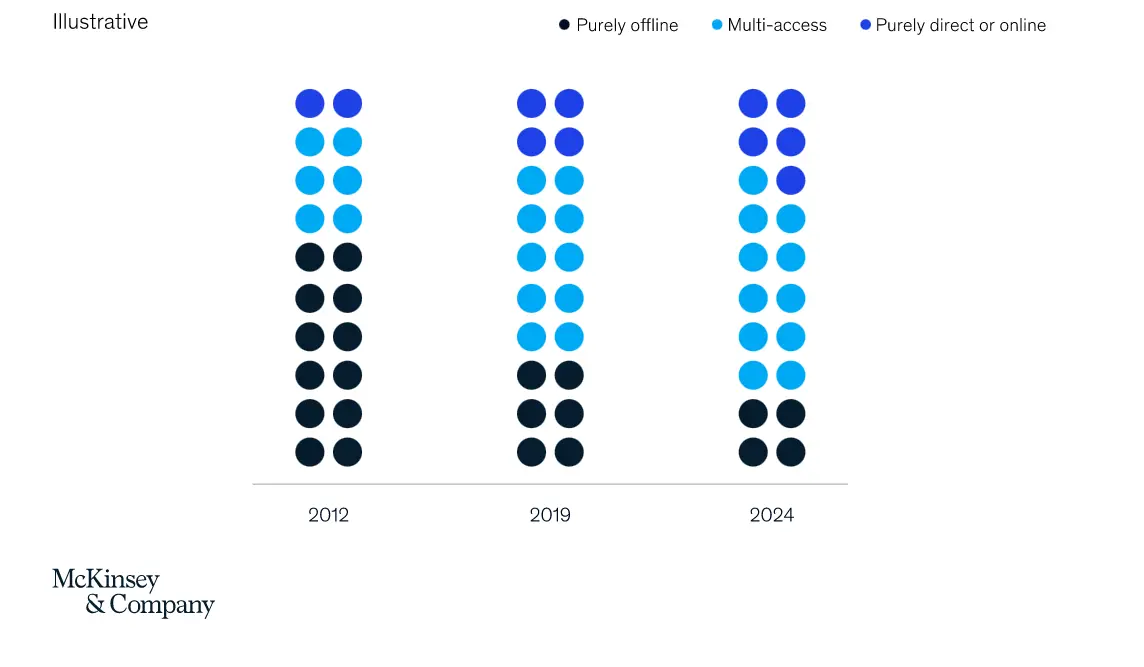
Traditionally, customers interacted with insurers mainly through agents and brokers, but this approach has become outdated. That’s why customers now demand seamless interactions across multiple access points, especially through embedded insurance customer journeys that simplify claims processing, policy generation, and product purchases.
As per McKinsey’s report, around 84% of respondents use digital steps along the customer journey; also, 55% of respondents cannot imagine buying an insurance product online. However, customers consider service quality and trusted advice from an agent to be an important part of their decision to purchase the insurance policy, but an easy adaption of technology made convenience a top priority for them.
AI-Driven Omnichannel Support- The New Insurance Standard
In today’s world, customers expect insurance firms to make their contact process convenient for them. Most insurers’ customers interact with them through social media, custom mobile apps, websites, and messaging apps. Thus, for insurance companies, having a strong digital presence and offering a consistent customer experience across all channels has become important. At this point, AI-driven omnichannel support is all the insurance industry must have.
AI-Driven omnichannel support in insurance is a system that lets customers interact seamlessly across multiple channels (chat, email, SMS, voice, in-person), powered by AI and automation to deliver consistent, low-effort service 24/7. Omnichannel support with RPA in the insurance industry refers to the capability of engaging with customers on both digital and offline mediums to make sure their issues are resolved on time and accurately.
Moreover, to offer these services and experience, insurers don’t have to be present 24/7; using RPA bots or the integration of AI in RPA bots can make this possible. These RPA or AI-driven bots can be easily accessible 24/7 for resolving any queries without any human intervention. In case of unresolved issues, these bots can keep humans in the loop.
Insurers can also program their bot with a predefined set of rules for knowledge-based articles and simple queries like policy generation, claims settlement, quote generation, and many others. When combined with omnichannel customer support for insurers, these capabilities ensure that customers get consistent, personalized assistance across all touchpoints for improved customer experience.
For example, when a bot helps a customer generate a quick policy quote, regulatory considerations for AI in omnichannel insurance support ensure that the process remains compliant with industry rules and protects customer data.
AI Experience Center
Discover our AI solutions your way. Access self-service video demos, and real implementation stories. Learn how AI can transform your business.
AI Experience Center
Discover our AI solutions your way. Access self-service video demos, and real implementation stories. Learn how AI can transform your business.
The Power of AI + Omnichannel in Insurance
Omnichannel support means offering a unified experience across all channels; when infused with AI, it becomes proactive, personalized, and frictionless.
AI + omnichannel enables:
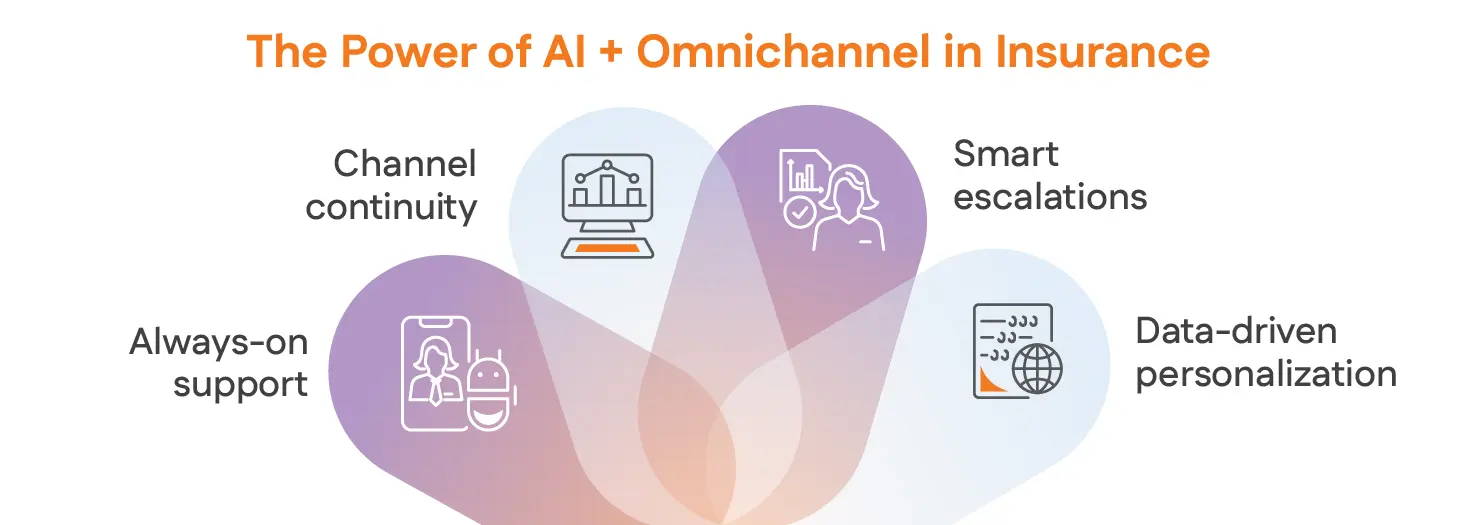
- Always-on support (AI bots handle routine tasks)
- Channel continuity (switch from chat to call seamlessly)
- Smart escalations (AI sends complex queries to a human)
- Data-driven personalization (AI uses context from past interactions)
According to Deloitte, insurers that adopt AI improve personalization and streamline underwriting through automation.
McKinsey also notes generative AI has “reasoning, judgment, empathy” potential that outstrips past AI waves.
Top 5 Use Cases of AI-Driven Omnichannel Support in Insurance
AI-driven omnichannel support in insurance enables seamless, consistent experiences across web, mobile, chat, email, and voice. By combining automation with human-like intelligence, insurers can reduce costs, speed up claims, and improve customer satisfaction.
Here are the top 5 practical use cases that show how omnichannel AI is transforming insurance operations.
| Use Case | Description | Key Benefit |
|---|---|---|
| Self-Service Portals | Let policyholders check status, raise claims, update info via web/app/voice | Reduces support load, increases transparency |
| Conversational Applications | Chatbots, voice assistants, messaging bots across platforms | 24/7 support with consistent channel switching |
| Claims Automation & Tracking | AI guides users through claim submission, document upload, and status updates | Faster processing, fewer errors |
| Intelligent Lead / Underwriting | AI supplements agents in quoting, risk scoring, upselling | Smarter risk decisions, conversion uplift |
| Proactive Notifications | Push renewal reminders, alerts based on behaviour, fraud warnings | Improves retention, trust, engagement |
The adoption of AI in the insurance sector is growing at a rapid pace, and by 2025 it is expected to be nearly universal. According to CoinLaw, claims automation alone is helping insurers cut processing times by almost 70%.
A key part of this transformation is how insurers can use chatbots and live agents seamlessly to deliver both efficiency and personalized service. At the same time, the integration of advanced technologies is driving measurable cost savings from AI-powered omnichannel support in insurance, making innovation beneficial for both insurers and their customers.
Benefits of AI-Driven Omnichannel Support in Insurance
Omnichannel support powered by AI is not just a customer service tool—it’s a growth engine for insurers. Companies with Omnichannel customer engagement strategies see an average of 9.5% yearly increase in annual revenue compared to 3.4% for other non-Omnichannel based companies by combining automation, data insights, and seamless channel switching, insurers can meet rising expectations while lowering costs.
Here are the key benefits of AI-driven omnichannel support in the insurance industry:
- Improved Customer Satisfaction – Customers get fast, 24/7 help across chat, app, email, or voice with consistent answers.
- Lower Operational Costs – Automation reduces repetitive workload for agents and optimizes resources.
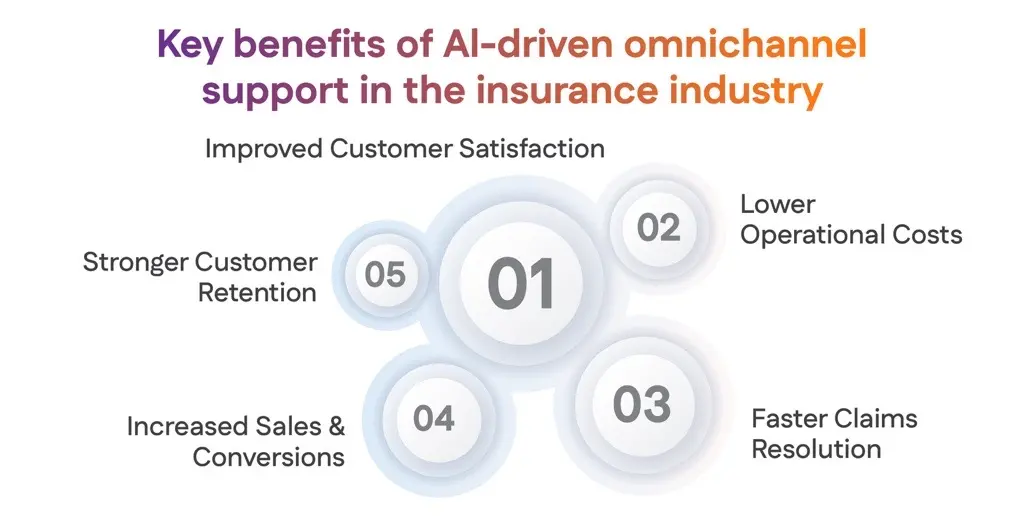
- Faster Claims Resolution – AI streamlines document verification, updates, and tracking across multiple channels.
- Increased Sales & Conversions – Intelligent recommendations and guided upsell improve policy adoption.
- Stronger Customer Retention – Proactive alerts, renewals, and personalized outreach boost long-term loyalty.
Together, these benefits prove why AI-driven omnichannel support is emerging as the new industry standard—helping insurers balance efficiency with exceptional customer experiences.
How to Architect an AI-Driven Omnichannel Platform
Designing an AI-driven omnichannel platform requires more than just adding channels—it demands integration, automation, and intelligence.
Here are the key steps:
-
Audit Existing Channels
Map all current touchpoints (apps, websites, call centres, brokers) and identify customer pain points.
-
Unify Systems with Middleware
Connect digital and offline channels into a central hub so data and context flow seamlessly.
-
Integrate AI Tools
Deploy chatbots, NLP, sentiment analysis, and recommendation engines to automate and personalize experiences.
-
Set Escalation Rules
Define when queries should move from AI to human agents while carrying full customer history.
-
Enable Continuous Learning
Refine AI responses using customer feedback, analytics, and ongoing training.
-
Ensure Compliance & Security
Build data protection, encryption, and regulatory compliance (GDPR, HIPAA, etc.) into the platform.
With these steps in place, insurers can replace fragmented interactions with a unified customer journey—delivering convenience, trust, and speed while keeping costs under control.
Why Omnichannel Support for the Insurance Industry?
In the digital world, the demographic of digital customers is evolving rapidly, and it is also carving the future of the insurance industry. From delivering personalized experiences to fulfilling customer needs through digital mediums, the industry is poised to grow exponentially.
With the adoption of Generative AI in insurance customer support, insurers can now provide faster query resolution, proactive assistance, and personalized services to modern customers.
Marketers have found that using three or more channels in a campaign can result in purchase rates that are up to 287% higher compared to campaigns that rely on a single channel.
While the traditional method of offering human agents will continue to persist, the digital medium is going to be mainstream. Hence, AI omnichannel support insurance is the cue for insurers to move towards a customer-centric vision and create a robust customer experience with intelligent, connected support across every channel.
Latest Trends in AI-Powered Omnichannel Insurance Support
Future trends in omnichannel insurance point toward hyper-personalized, proactive, and AI-assisted customer journeys. Insurers will move beyond reactive service into predictive support, delivering tailored recommendations, faster claims, and unified experiences across both digital and human touchpoints.
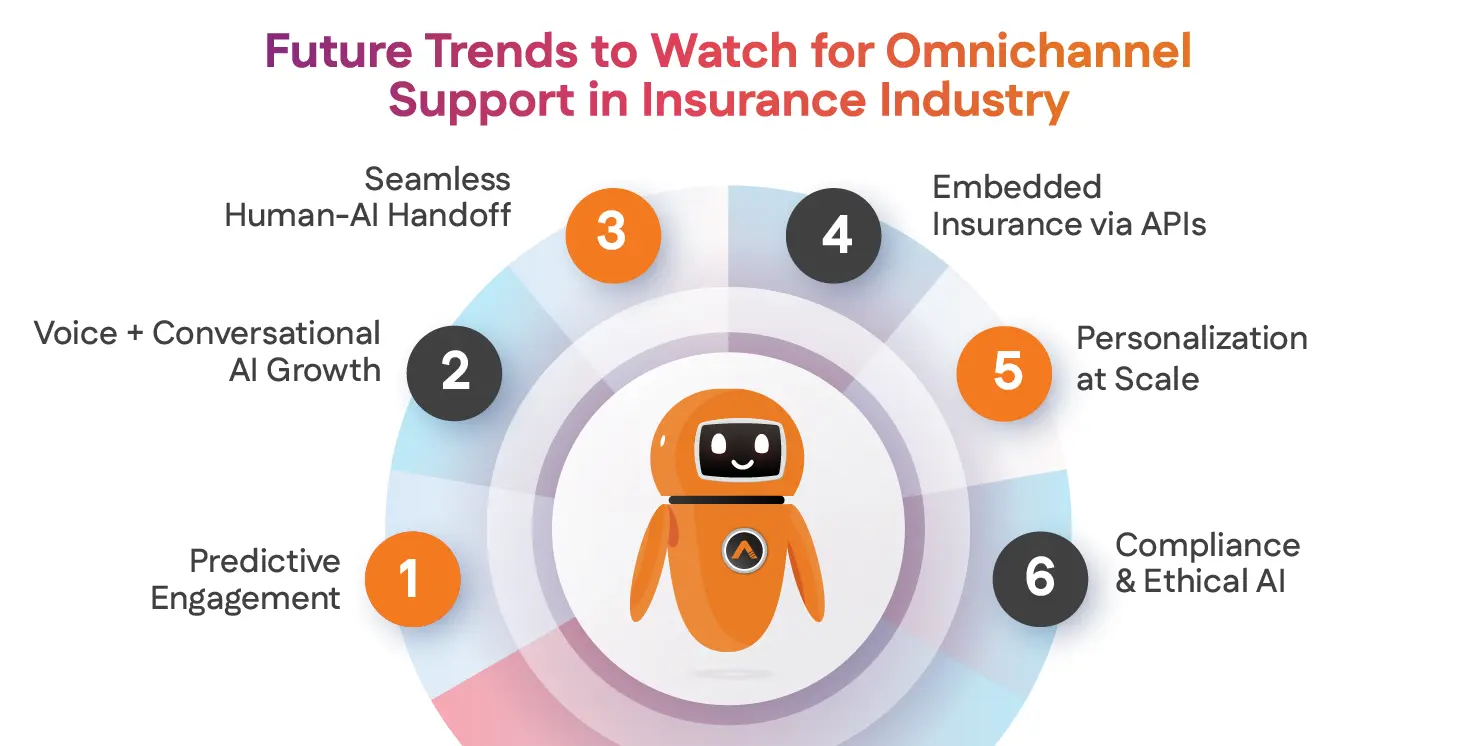
Future Trends to Watch for Omnichannel Support in Insurance Industry –
-
Predictive Engagement
AI will anticipate customer needs (renewals, claims, upsell) before customers even reach out.
-
Voice + Conversational AI Growth
More interactions will shift to natural language interfaces via smart speakers, in-car assistants, and mobile voice bots.
-
Seamless Human-AI Handoff
Hybrid models will ensure that complex cases instantly escalate to agents with full context, avoiding repetition.
-
Embedded Insurance via APIs
Policies will be integrated into customer journeys at retail, banking, or travel platforms with omnichannel support built in.
-
Personalization at Scale
AI will analyse behavioural, contextual, and historical data to customize every interaction—offers, policies, and support journeys.
-
Compliance & Ethical AI
With regulators focusing on fairness and transparency, insurers will need AI-driven omnichannel systems that are compliant and explainable.
The future of insurance lies in AI-powered, predictive, and ethically guided omnichannel support. Insurers that start embracing these trends today will not only meet rising customer expectations but also build long-term loyalty and sustainable growth.
Conclusion:
AI-driven omnichannel support is no longer just an option for insurers—it’s becoming the industry standard. By unifying digital and offline channels, leveraging AI for personalization, and automating routine tasks, insurance companies can deliver faster, smarter, and more consistent experiences.
This approach not only enhances customer satisfaction but also reduces operational costs and accelerates claims and policy processes. As the industry moves toward predictive, proactive, and ethically guided AI solutions, insurers who adopt omnichannel automation today will gain a clear competitive advantage.
Boost your insurance operations and customer experience. Explore AutomationEdge to implement AI-driven omnichannel support seamlessly.
Frequently Asked Questions
The post Why is AI-Driven Omnichannel Support the Future of the Insurance Industry? appeared first on AutomationEdge.