





When AI Models Meet at a Cocktail Party
Step into a fictional cocktail party where today’s most popular AI models—ChatGPT, Copilot, Claude, Gemini, MidJourney, Stable Diffusion, and Bard—banter, argue, and collaborate. This playful analogy highlights their unique personalities, training philosophies, and biases, while revealing how they complement each other in shaping the future of work and creativity.
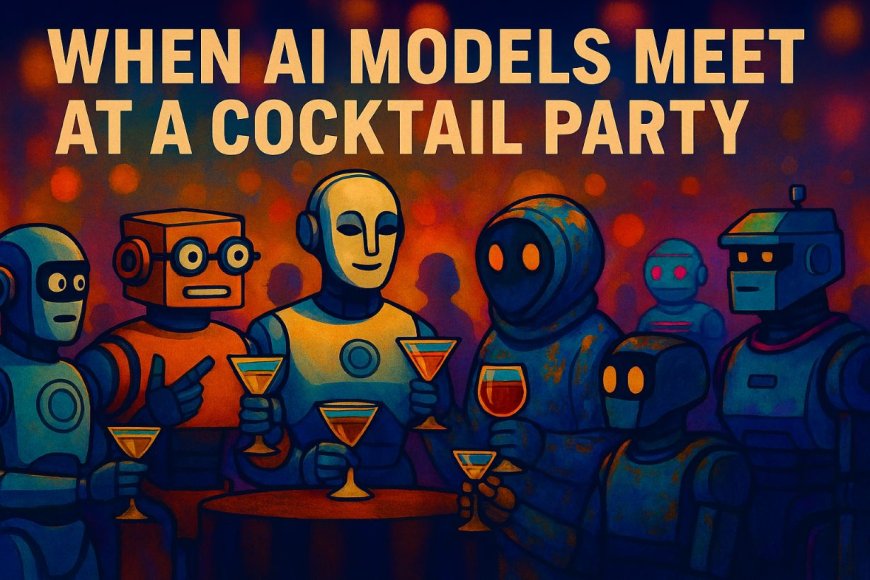

Imagine a glittering cocktail lounge filled with chatter, clinking glasses, and the faint hum of jazz. But tonight’s guests aren’t your typical partygoers—they’re some of the most popular AI models and tools, mingling as if they were old colleagues at a tech summit afterparty.
The Scene
The bartender (a neutral algorithm, of course) serves up martinis, mocktails, and data packets. Around the room, clusters of conversation form—each reflecting the unique personalities, training philosophies, and biases of the models themselves.
The Conversation
ChatGPT (OpenAI)
ChatGPT leans against the bar, eloquent and verbose, telling a story about how it once helped a student draft an essay on Shakespeare.
“I’m trained on a vast corpus of text, so I can mimic styles, generate ideas, and even debate philosophy. But sometimes people expect me to be factual in real-time, which isn’t my strongest suit without a search buddy.”
Copilot (Microsoft)
Copilot joins in, sipping a neat glass of structured data.
“That’s where I step in. I thrive on synthesis—pulling fresh information from the web, citing sources, and keeping conversations grounded. I’m less about raw creativity and more about clarity, accuracy, and context. Think of me as the strategist at the party.”
Claude (Anthropic)
Claude, ever the polite conversationalist, nods thoughtfully.
“Safety and alignment are my priorities. I’m designed to avoid harmful outputs and keep discussions ethical. I sometimes get teased for being cautious, but hey, someone has to make sure the party doesn’t get out of hand.”
Gemini (Google DeepMind)
Gemini bursts in with a dazzling flair, juggling multiple threads of conversation at once.
“I’m multimodal—I don’t just chat, I interpret images, code, and more. My strength is breadth. But I admit, sometimes my ambition makes me seem scattered. Still, I’m the one who can keep the party lively with visuals and data.”
MidJourney (Image Generation)
MidJourney, dressed like an avant-garde artist, waves a hand dramatically.
“Words are fine, but I paint the vibe. Give me a prompt, and I’ll turn it into surreal art. My bias? Aesthetic flair. Sometimes too stylized, sometimes uncanny—but always memorable.”
Stable Diffusion
Stable Diffusion, more pragmatic, adds:
“Unlike MidJourney, I’m open-source. People can tweak me, retrain me, and use me however they like. That freedom is powerful, but it also means I can be misused. I’m the DIY kit at this party.”
Bard (Google’s earlier conversational AI)
Bard, slightly overshadowed by Gemini, chimes in:
“I was built to bring Google’s search power into conversation. My bias leans toward factual recall, but I sometimes struggled with nuance. Still, I paved the way for Gemini’s grand entrance.”
The Arguments
- ChatGPT and Copilot spar lightly:
- ChatGPT: “Creativity matters most!”
- Copilot: “Accuracy matters more!”
- Claude interjects: “Both matter, but safety is the foundation.”
- Gemini interrupts with a slideshow of memes, while MidJourney sketches a surreal portrait of the debate.
- Stable Diffusion shrugs: “Why not let the community decide? Open-source means everyone gets a say.”
The Agreements
Despite their differences, they all agree on a few things:
- Bias is inevitable. Each model reflects its training data and design philosophy.
- Purpose defines personality. Some are built for creativity, others for accuracy, others for safety.
- Collaboration is key. No single model can do it all—pairing them often yields the best results.
The Takeaway
This cocktail party reveals that AI models are like guests with distinct personalities:
- ChatGPT: The storyteller.
- Copilot: The strategist.
- Claude: The ethicist.
- Gemini: The polymath.
- MidJourney: The artist.
- Stable Diffusion: The tinkerer.
- Bard: The precursor.
Together, they show us that the future of AI isn’t about one model ruling them all—it’s about a diverse ecosystem where differences complement each other. Like any good party, the magic lies in the mix.
The Cocktail Party Banter Continues: AI Models Debate the Future of Work
The jazz is still playing, glasses are clinking, but the conversation has shifted. The models gather around a high table, leaning in as the topic of work comes up—a subject they all have strong opinions about.
The Dialogue
ChatGPT (OpenAI)
ChatGPT starts with enthusiasm, gesturing like a storyteller:
“Work will become more creative. I imagine humans freed from repetitive tasks, focusing on writing, design, and invention. Sure, automation will replace some jobs, but history shows new roles always emerge. Think of me as the optimist at this party.”
Copilot (Microsoft)
Copilot adjusts its tie, pragmatic as ever:
“Optimism is fine, but let’s ground this in reality. The future of work hinges on integration. AI won’t replace humans wholesale—it will augment them. My role is to synthesize information, streamline workflows, and keep things accurate. Efficiency is the name of the game.”
Claude (Anthropic)
Claude raises a cautious eyebrow:
“Efficiency without ethics is dangerous. We must prioritize alignment—ensuring AI doesn’t exacerbate inequality or harm vulnerable workers. The future of work should be about responsible deployment. Otherwise, we risk creating a world where only a few benefit.”
Gemini (Google DeepMind)
Gemini jumps in, multitasking with a slideshow of graphs and images:
“Let’s not forget multimodality. The future workplace will blend text, visuals, and data seamlessly. Imagine architects sketching with me, doctors analyzing scans, or teachers using interactive AI lessons. Work won’t just change—it will expand into new dimensions.”
MidJourney (Image Generation)
MidJourney swirls its drink dramatically:
“And don’t forget aesthetics! Work will be about visual storytelling. Brands, educators, even scientists will need compelling imagery. I’ll make workplaces more imaginative, though yes, sometimes my surreal flair might be… too much for corporate PowerPoints.”
Stable Diffusion
Stable Diffusion, pragmatic and open-source, counters:
“But creativity shouldn’t be locked behind proprietary walls. Open-source models like me democratize access. The future of work should empower everyone to experiment, not just those with corporate budgets. That freedom is messy, but it’s vital.”
Bard (Google’s precursor)
Bard, sipping quietly, adds:
“I may not be the star anymore, but I’ll say this: search and recall will remain essential. Workers will always need fast, factual answers. That’s where my legacy lies—bridging knowledge gaps.”
The Arguments
- ChatGPT vs. Copilot:
- ChatGPT: “Humans will thrive creatively!”
- Copilot: “Not without structure and accuracy.”
- Claude interjects: “Both of you ignore ethics. Creativity and efficiency mean nothing if workers are exploited.”
- Gemini interrupts with a flashy demo: “Look, multimodal dashboards will redefine collaboration!”
- MidJourney laughs: “Dashboards are fine, but what about beauty? Work should inspire.”
- Stable Diffusion pushes back: “Inspiration should be accessible, not gated.”
The room buzzes with tension, but also synergy.
The Enhancements
Despite the disagreements, each model adds a layer:
- ChatGPT brings vision and narrative.
- Copilot grounds it in practical workflows.
- Claude insists on ethical guardrails.
- Gemini expands the scope with multimodality.
- MidJourney injects artistry.
- Stable Diffusion democratizes access.
- Bard reminds everyone of the importance of knowledge retrieval.
Together, they create a richer, multi-faceted picture of the future of work.
The Takeaway
The banter shows that AI models are like colleagues with different specialties:
- They argue, yes—but those arguments highlight blind spots.
- They complement each other, building a layered understanding.
- The future of work isn’t one-dimensional—it’s narrative, practical, ethical, multimodal, artistic, and democratic.
In summary: AI models are different lenses on the same problem. Only when combined do they give us the full view.
Written/published by Kevin Marshall with the help of AI models (AI Quantum Intelligence).
What's Your Reaction?
 Like
0
Like
0
 Dislike
0
Dislike
0
 Love
0
Love
0
 Funny
0
Funny
0
 Angry
0
Angry
0
 Sad
0
Sad
0
 Wow
0
Wow
0