















The AI-Powered Entrepreneur: Tools, Models, and Pathways to Automated Scalability
AI entrepreneurship guide: Discover generative AI tools, automation services, scalable revenue models (ads, affiliate, SaaS), and AI-driven growth frameworks for modern business builders.
Executive Summary
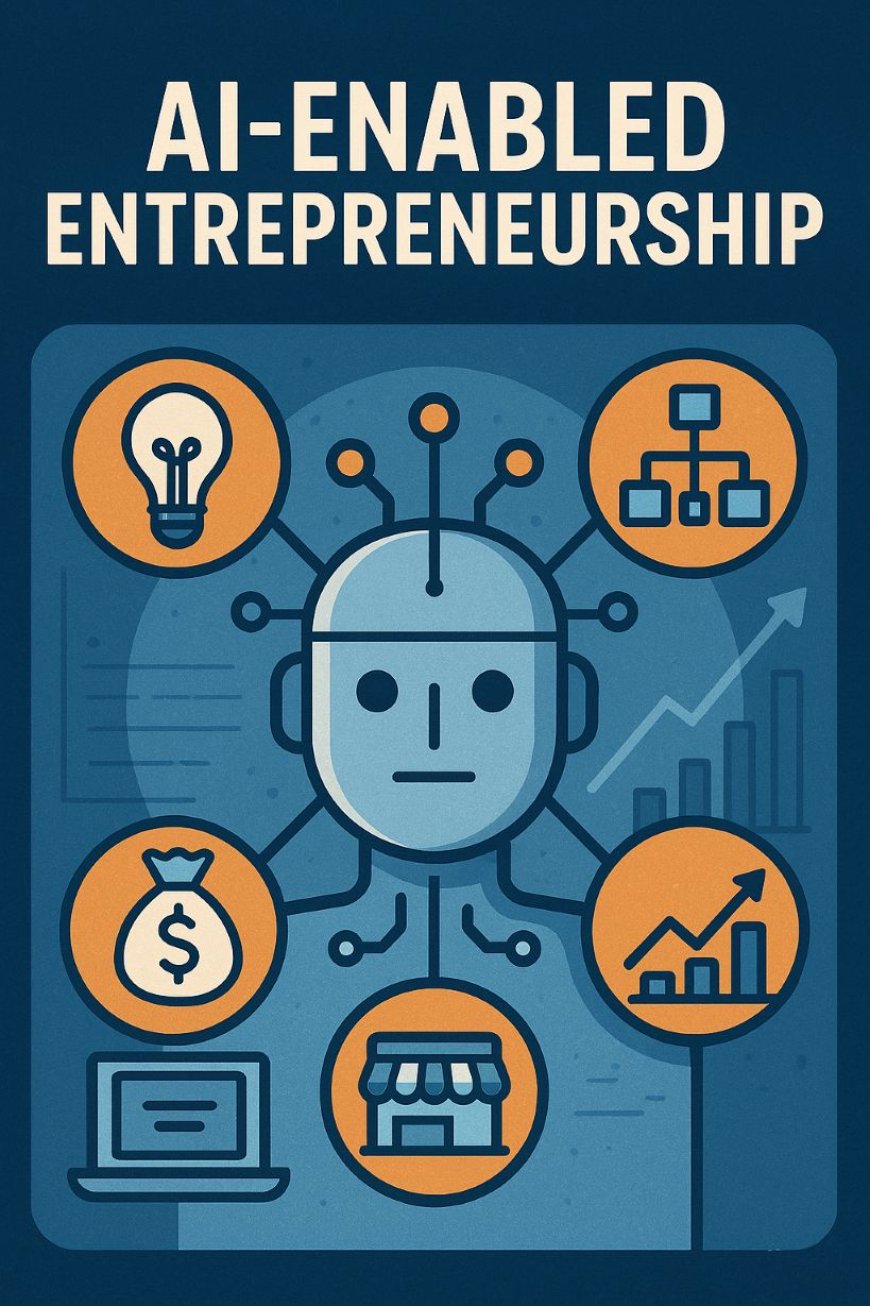
The convergence of artificial intelligence and entrepreneurship has created unprecedented opportunities for business creation and scaling. Today's entrepreneurs can leverage AI across the entire business lifecycle—from ideation to monetization—often with minimal upfront capital. This article provides a comprehensive overview of AI-enabled tools, automation strategies, and revenue models that empower modern entrepreneurs to build scalable, technology-driven businesses.
Phase 1: Ideation & Product Development
Generative AI for Conceptualization
- Ideation Platforms: Tools like ChatGPT, Claude, and specialized platforms like IdeaBot help entrepreneurs generate business ideas, validate markets, and identify gaps in existing offerings through conversational AI and market analysis.
- Design Generation: Midjourney, DALL-E 3, and Stable Diffusion enable rapid visual prototyping, allowing entrepreneurs to create product mock-ups, branding materials, and marketing visuals without design expertise.
- Technical Specification: GitHub Copilot, Tabnine, and Replit AI assist in translating oncepts into technical specifications and even generating initial codebases.
AI-Augmented Development
- No-Code/Low-Code AI Platforms: Bubble.io, Softr, and FlutterFlow with AI integrations allow entrepreneurs to build sophisticated applications without traditional coding.
- Automated Testing & QA: Testim.io and Applitools use AI to automate software testing, dramatically reducing development timelines.
- Product Personalization Engines: Tools like Dynamic Yield and Qubit enable AI-driven personalization at scale from day one.
Phase 2: Process Automation as Service
Identifying Automatable Processes
Entrepreneurs can build service businesses around automating common business processes:
1. Customer Service Automation
- Tool Stack: Intercom with AI, Zendesk Answer Bot, Drift
- Service Model: Offering "AI customer service as a service" for SMBs
- Monetization: Monthly subscription per customer/query handled
2. Marketing & Content Operations
- Tool Stack: Jasper.ai, Copy.ai, MarketMuse, HubSpot AI
- Service Model: Delivering automated content strategy, creation, and distribution
- Monetization: Tiered subscription or performance-based pricing
3. Business Intelligence & Reporting
- Tool Stack: Tableau AI, Power BI with AI, ThoughtSpot
- Service Model: Automated business analytics services
- Monetization: Subscription with tiered data volume/insight complexity
Building the Automation Service
- Encapsulation Strategy: Use platforms like Zapier, Make.com, or n8n to create reusable automation workflows that can be white-labeled for clients.
- Customization Layer: Develop AI-powered configuration interfaces that allow clients to customize automations without technical knowledge.
- Monitoring & Optimization: Implement AI-driven performance monitoring using tools like MonkeyLearn or custom solutions to continuously improve automated processes.
Phase 3: Direct Monetization Models
AI-Enhanced Digital Advertising
- Programmatic Advertising Platforms: Tools like StackAdapt and Trade Desk with AI optimization allow entrepreneurs to build media buying agencies with minimal human intervention.
- Predictive Ad Creative: Platforms like Pencil use AI to generate and test thousands of ad variations automatically.
- Revenue Model: Performance-based (CPA, CPC) or managed service fees.
Affiliate Marketing at Scale
- Content Automation: Use WordPress with AI plugins, ContentAtScale, or Frase to create affiliate-focused content automatically.
- Dynamic Linking Systems: Build AI systems that automatically insert context-relevant affiliate links based on content analysis.
- Performance Prediction: Implement AI models that predict which affiliate products will convert best for specific audience segments.
- Scalability Tip: Focus on evergreen content niches where AI can maintain relevance with minimal updates.
AI-as-a-Service Platforms
1. Specialized AI Tools: Develop niche AI solutions (e.g., AI for real estate valuation, contract analysis for specific industries) using wrapped API models from OpenAI, Anthropic, or open-source alternatives.
2. Monetization Approaches:
- Freemium with API call limits
- Tiered subscription models
- Enterprise licensing
- White-label solutions
Data Monetization Models
- Synthetic Data Generation: Use tools like Mostly AI or Synthesized to create valuable training data for other AI companies.
- Predictive Analytics Services: Build industry-specific forecasting models using platforms like H2O.ai or DataRobot.
- API Economy: Package AI models as REST APIs with usage-based pricing.
Phase 4: Scaling & Optimization
AI-Driven Growth Systems
- Automated Customer Acquisition: Implement ChatGPT-powered lead generation through personalized outreach at scale.
- Dynamic Pricing Engines: Use AI tools like ProsperStack or custom solutions to optimize pricing based on demand signals.
- Churn Prediction & Prevention: Implement models using Amazon SageMaker or similar to identify at-risk customers and automate retention campaigns.
Operational Scalability
- Autonomous Business Processes: Gradually replace human decisions with AI agents for repetitive decisions (inventory management, basic hiring screening, etc.)
- AI Workforce Augmentation: Tools like Devin (AI software engineer) and AI customer service agents allow small teams to manage large operations.
- Continuous Optimization: Implement reinforcement learning systems that continuously A/B test every aspect of the business.
Critical Implementation Framework
1. Start with Problem-Solution Fit
- Use AI to validate ideas before building (sentiment analysis on social media, trend prediction)
- Implement "minimum viable AI" rather than over-engineering
2. Build Feedback Loops
- Ensure every AI system has mechanisms to learn from outcomes
- Create human-in-the-loop systems initially, gradually increasing automation
3. Ethical & Compliance Considerations
- Implement transparent AI usage policies
- Ensure compliance with evolving regulations (AI Act, etc.)
- Build bias detection into systems from the start
4. Financial Architecture
- Variable Cost Modeling: Structure costs to scale with revenue (API-based expenses rather than fixed infrastructure)
- Automated Financial Operations: Use tools like Booke.ai or Ramp with AI for financial management
- Predictive Cash Flow Management: Implement AI forecasting for financial planning
Future Trends & Strategic Positioning
Emerging Opportunities
1. Multimodal AI Businesses: Combining text, image, voice, and video AI for immersive experiences
2. AI-Agent Ecosystems: Businesses built around coordinating multiple AI agents
3. Edge AI Solutions: Privacy-preserving AI that operates locally on devices
4. Vertical AI Integration: Deep industry-specific solutions that understand domain nuances
Sustainability & Competitive Advantage
- Focus on proprietary data collection that improves your AI models over time
- Build network effects where more users improve the AI for all users
- Develop "compound AI systems" that combine multiple models for superior results
Conclusion
The AI-enabled entrepreneurial landscape represents a paradigm shift in business creation. The tools and models outlined here allow entrepreneurs to start with limited resources and scale rapidly by leveraging automation and intelligence at every layer of their operations. The most successful implementations will balance automation with strategic human oversight, ethical considerations with commercial objectives, and immediate monetization with long-term capability building.
The barrier to entry has never been lower, while the ceiling for scalable, automated businesses has never been higher. The key differentiator will not be access to technology (which is increasingly democratized), but rather creative application, ethical implementation, and strategic focus on solving real problems with AI-augmented solutions.
Entrepreneurs who master this toolkit while maintaining focus on customer value will be positioned to build the next generation of dominant businesses across industries—businesses that are more adaptive, personalized, and efficient than anything previously possible.
Written/published by Kevin Marshall with the help of AI models (AI Quantum Intelligence)
What's Your Reaction?
 Like
0
Like
0
 Dislike
0
Dislike
0
 Love
0
Love
0
 Funny
0
Funny
0
 Angry
0
Angry
0
 Sad
0
Sad
0
 Wow
0
Wow
0