





The Five Architects: How AI Built Itself in Waves
Explore the 5 waves of AI history: from Symbolic Logic (Expert Systems) to Neural Networks (Pattern Recognition), Deep Learning (Computer Vision), Transformers (Generative AI), and Agentic AI (Autonomous Action). See how each era’s breakthroughs—like XCON, Dragon NaturallySpeaking, iPhone Face ID, ChatGPT, and AI Agents—shaped commercial products.
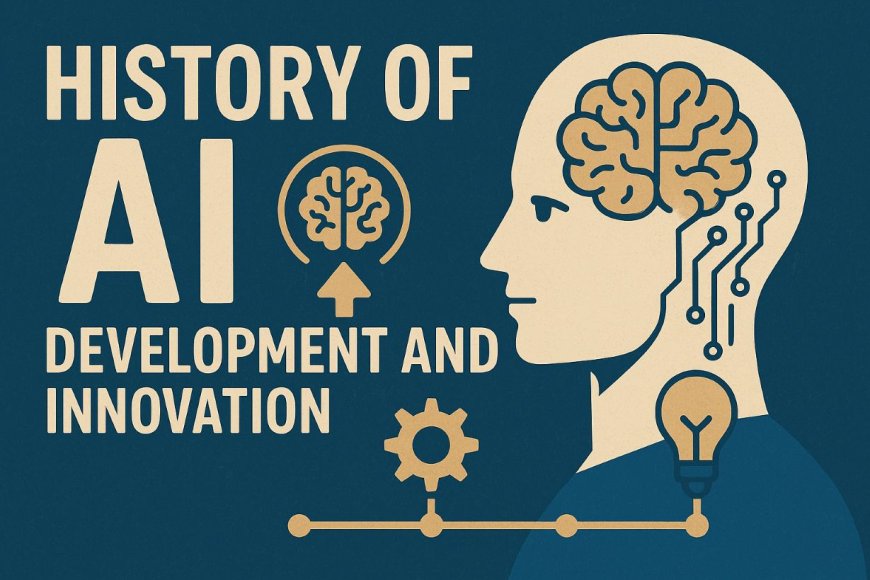
The history of Artificial Intelligence is not a straight line, but a series of interconnected waves. Each era solved a specific problem of "intelligence," only to reveal a deeper layer of complexity that the next generation would have to address.
To understand where we are today—with models that can both "create" (Generative) and "do" (Agentic)—we must look at the five distinct architectural shifts that built the modern AI stack.
The following historical framework grounds each architectural shift in specific technological breakthroughs and, most importantly, the commercial products and services that brought them to the public.
1. The Symbolic Era: Intelligence as Logic (1950s–1980s)
* Core Belief: Intelligence is a top-down process of logical manipulation.
* Key Technological Innovation: Expert Systems. These were rule-based inference engines paired with a "knowledge base" of facts and heuristics (rules of thumb) from human experts.
* Practical Application & Commercialization: This was the era of highly specialized, expensive, and lucrative corporate and government systems. They didn't reach consumers directly but powered critical decision-making.
· MYCIN (1976): A Stanford system for diagnosing blood infections and recommending antibiotic treatments. It outperformed medical students, proving the concept but was never used in practice due to legal and integration hurdles. Its rule-based structure, however, was commercialized.
· XCON (1978-1980s): The quintessential commercial success. Developed by Digital Equipment Corporation (DEC) with Carnegie Mellon, XCON (eXpert CONfigurer) automated the highly complex task of configuring VAX minicomputer orders. It saved DEC an estimated $40 million per year by ensuring orders were complete and correctly configured before manufacturing, drastically reducing errors and costs.
· TurboTax (1985 onward): While a later evolution, the core engine of early TurboTax is a brilliant example of a commercialized expert system. It uses a vast tree of tax rules (the knowledge base) and asks the user questions (the inference engine) to navigate the incredibly complex rule set of the tax code and produce a correct return.
2. The Connectionist Shift: Intelligence as Pattern Recognition (1980s–2000s)
* Core Belief: Intelligence emerges from bottom-up learning from data.
* Key Technological Innovation: Backpropagation Algorithm & Multi-Layer Perceptrons. This allowed neural networks to efficiently adjust their internal connections (weights) by propagating errors backward from output to input layers, enabling them to learn complex patterns.
* Practical Application & Commercialization: This shift moved AI from corporate back offices to consumer-facing features and embedded systems.
· Handwriting Recognition: The breakthrough application. Apple's Newton (1993) famously struggled with it, but the technology was perfected by PalmPilot (1997) with its Graffiti alphabet. More accurately, banks adopted Optical Character Recognition (OCR) systems built on neural networks to automatically read handwritten digits on checks, processing billions of transactions.
· Speech Recognition: Dragon NaturallySpeaking (1997) was the landmark consumer product. It used neural networks to translate continuous speech into text with growing accuracy, moving from discrete-word dictation to a more natural experience, primarily for professionals like doctors and lawyers.
· Fraud Detection: Credit card companies (Visa, Mastercard) began deploying neural networks to analyze transaction patterns in real-time, learning a cardholder's typical "pattern" to flag anomalous, potentially fraudulent purchases.
3. The Deep Learning Revolution: Intelligence as Hierarchy (2010s)
* Core Belief: Complex perception and understanding require learning layered representations of data.
* Key Technological Innovation: Convolutional Neural Networks (CNNs) & GPUs for Training. CNNs use filters to hierarchically detect edges, shapes, and objects in images. The parallel processing power of GPUs made training these massive networks feasible.
* Practical Application & Commercialization: This era saw AI become a **core feature of the world's largest consumer platforms.
· Computer Vision:
o Facebook (2012+): Used deep learning for automatic photo tagging ("Friends Tag Suggestions"), analyzing uploaded photos to identify faces and suggest tags.
o Google Photos (2015): Launched with powerful "search by content" (e.g., "find pictures of dogs" or "beaches") powered by CNNs that understood the contents of images.
o iPhone Face ID (2017): Apple's secure facial authentication system is a dedicated CNN hardware/software stack that creates a depth map of a user's face and learns incremental changes over time.
· Language & Assistants:
o Google Translate (2016): Switched from a statistical method to a **deep learning-based system (GNMT)**, dramatically improving the fluency and accuracy of translations between languages.
o Smart Assistants: Apple's Siri (2011, but vastly improved), Google Assistant (2016), and Amazon Alexa (2014) all relied on deep learning for both speech recognition (the "hear" part) and natural language understanding (the "comprehend" part).
4. The Transformer Era: Intelligence as Context (2017–Present)
* Core Belief: Understanding and generating language requires dynamic, global context.
* Key Technological Innovation: The Transformer Architecture & Self-Attention Mechanism. It processes all words in a sequence simultaneously, weighing the importance of each word to every other word, enabling an unprecedented understanding of context and long-range dependencies.
* Practical Application & Commercialization: This created the Generative AI explosion, moving from analysis to creation.
· Large Language Models (LLMs):
o OpenAI ChatGPT (2022): The product that defined the era for the public. The GPT series (powered by Transformers) demonstrated coherent, creative, and helpful long-form dialogue, making the power of LLMs accessible to everyone.
o Google Gemini & Bard, Anthropic Claude, Meta Llama: A wave of commercial and open-source LLMs integrated into search engines (Google), productivity suites (Microsoft 365 Copilot), and coding tools (GitHub Copilot).
· Multimodal Models:
o DALL-E 2, Midjourney, Stable Diffusion (2022): While image generation uses a related architecture (diffusion models), their training and language understanding are tightly coupled with Transformer-based language models, allowing them to generate images from complex text prompts.
o GPT-4V, Gemini Advanced: Models that can natively process and reason across text, images, and audio.
5. The Agentic Frontier: Intelligence as Action (2024–Future)
* Core Belief: True intelligence involves planning, using tools, and executing tasks in the real world.
* Key Technological Innovation: Large Model Agents (LMAs) with Reasoning Loops & Tool-Use APIs. This involves frameworks that allow an LLM to break down a goal, plan steps, use tools (web search, calculator, code interpreter, software APIs), and iterate based on feedback.
* Practical Application & Commercialization (Early Stages): Products are shifting from chatbots to copilots to agents.
o AI Coding Agents: Devin (by Cognition AI) and Cursor are more than code completions. They can take a high-level command ("build a website with a login page"), plan the implementation, write multiple files, run the code, debug errors, and iterate until the task is complete.
o AI Research & Shopping Agents:
§ Perplexity AI: While still largely a chatbot, its "Pro Search" mode exhibits agentic behavior: it formulates search queries, synthesizes information from multiple sources, and follows chains of thought to provide comprehensive answers.
§ Rabbit R1 & AI Pin: Hardware devices predicated on the agentic premise. A user says, "Plan a trip to Paris for me in May," and the agent is designed to navigate travel sites, compare flights/hotels, and populate a calendar—though these early products are still proving out the vision.
o Enterprise Workflow Agents: The most mature area. Sierra and other platforms are building agents for customer service that don't just generate FAQ responses but can actually perform actions: checking an order status, processing a return, updating a subscription—all by safely connecting to enterprise software via APIs.
The Architecture of Commercial Progress
|
Era |
Core Capability |
Commercial "Unlock" & Representative Product |
|
Symbolic |
Formal Logic |
Automated Expert Decisions. Product: XCON (saved DEC $40M/yr) |
|
Neural Nets |
Pattern Learning |
Consumer-Facing Perception. Product: Dragon NaturallySpeaking, PalmPilot Graffiti |
|
Deep Learning |
Feature Extraction |
Platform-Scale Intelligence. Product: Google Photos Search, iPhone Face ID |
|
Generative |
Content Creation |
Creative Co-pilot & Chat. Product: ChatGPT, DALL-E, GitHub Copilot |
|
Agentic |
Goal Execution |
Autonomous Task Completion. Product: AI Coding Agents (Devin), Enterprise Workflow Automators |
This journey shows a clear arc: from automating the logic of specialists, to understanding the sensory world of users, to amplifying the creativity of creators, and now to acting as an autonomous extension of the individual or worker. Each wave didn't replace the previous one but rather subsumed its lessons into a more capable and commercially transformative whole.
If you are interested in deep dives into how these models are being applied in the real world today, you can find more resources and articles at AI Quantum Intelligence.
Written/published by Kevin Marshall with help from AI models (AI Quantum Intelligence).
What's Your Reaction?
 Like
0
Like
0
 Dislike
2
Dislike
2
 Love
0
Love
0
 Funny
0
Funny
0
 Angry
0
Angry
0
 Sad
0
Sad
0
 Wow
0
Wow
0