












The Algorithmic Gift: How AI Is Rewriting Holiday Shopping — and What We Lose When It Chooses for Us
AI-driven gift shopping surged this holiday season, transforming how people discover, choose, and personalize presents — but raising questions about meaning and human intent.
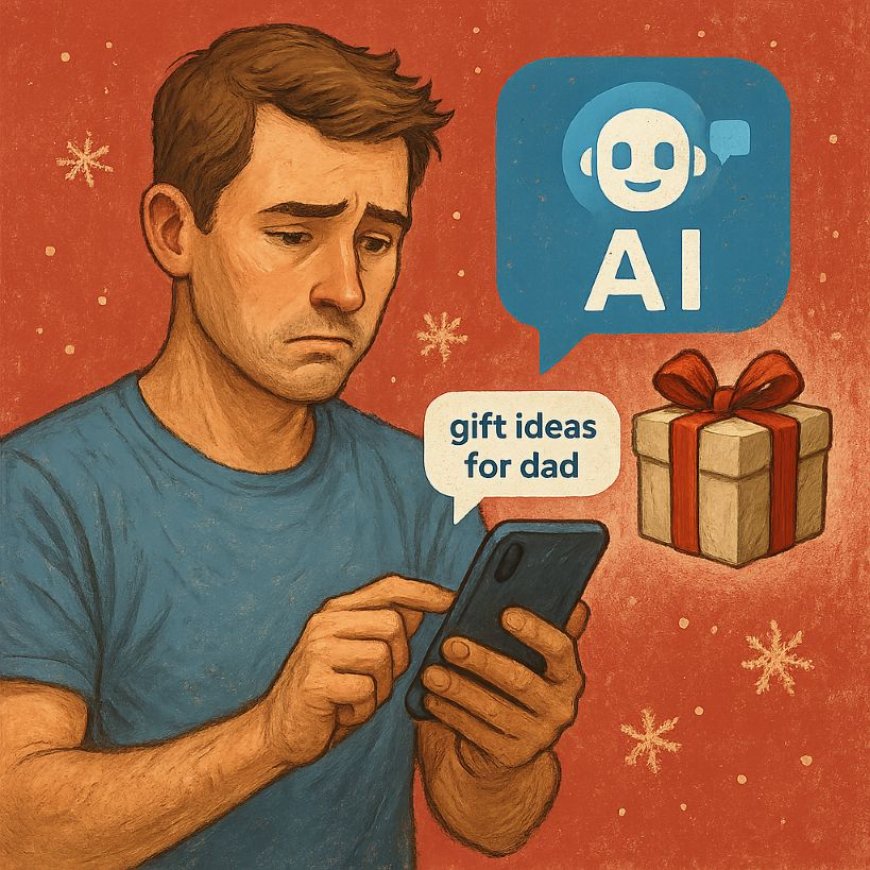
The data from this season paints a clear picture: AI has become the new front door to holiday shopping.
Key AI-Usage Trends and Findings from the 2025 Holiday Season
Based on the Bluefish AI Shopping Trends Report analyzing millions of AI-generated answers across platforms:
1. Massive Spike in AI Usage for Gift Discovery
- Consumers increasingly turned to AI assistants to ask what to buy, where to find deals, and which brands to trust.
- AI was used not just for product comparisons, but for personalized recommendations based on budget, age, and lifestyle.
- This shift created a new layer of competition for visibility — retailers must optimize for AI answers, not just search engines or ads.
2. Retailer Visibility Driven by AI Prompts
|
Category |
Top AI-Surfaced Retailers |
|
Electronics |
Best Buy, Walmart, Amazon |
|
Apparel |
Nordstrom, Target, Macy’s |
|
Footwear |
DSW, Nordstrom, Foot Locker |
|
Home Goods |
Best Buy, Amazon |
- Best Buy dominated AI-driven searches for deals across multiple categories.
- Nordstrom led in clothing, showing strong AI visibility across demographics.
3. Hyper-Personalization Is Now the Norm
- AI responses varied dramatically based on user age, budget, and phrasing.
- This means brands must now manage AI visibility by audience segment, not just overall brand presence.
Is AI Usage Growing Exponentially?
Yes — especially during high-intent shopping windows like Black Friday through Christmas:
- AI-generated gift guides, deal comparisons, and retailer rankings surged.
- Consumers are increasingly outsourcing decision-making to AI, especially for complex or high-value purchases.
Strategic Implications for Brands and Shoppers
- For brands: AI optimization is now essential. Visibility in AI answers can make or break holiday performance.
- For shoppers: AI tools offer faster, more tailored recommendations — but results vary by platform and prompt style.
How the Various AI Platforms Shaped Holiday Gift Recommendations in 2025
1. Microsoft Copilot
- Strengths: Context-aware, emotionally intelligent, and highly personalized. Copilot adapted to user tone, relationship dynamics, and even past conversations to suggest gifts that felt thoughtful and relevant.
- Popular Use Cases:
- “Gift ideas for my partner who loves sci-fi and hates clutter”
- “What should I get my boss that’s useful but not too personal?”
- Impact: Copilot became a trusted co-planner, not just a search engine — especially for users juggling multiple relationships and gift categories.
2. ChatGPT
- Strengths: Fast, creative ideation. ChatGPT excelled at brainstorming quirky, thematic, or niche gift ideas, often with a playful tone.
- Popular Use Cases:
- “Give me 10 unique gifts for a cat lover who’s into tech”
- “What’s a funny Secret Santa gift under $20?”
- Impact: Great for novelty and variety, but less nuanced in relationship sensitivity unless explicitly prompted.
3. Google Bard
- Strengths: Search-integrated suggestions with real-time product links. Bard leaned heavily on Google Shopping and trending data.
- Popular Use Cases:
- “Best-rated gifts for teens 2025”
- “Top trending toys this Christmas”
- Impact: Efficient for mainstream and data-driven choices, but less effective at emotional nuance or tailoring to unique personalities.
The “Punchline”… The Algorithmic Gift — Are We Outsourcing Meaning?

As AI becomes our co-pilot in holiday shopping, a deeper question emerges:
What happens when we outsource the emotional labour of gift-giving to algorithms?
Gift-giving is traditionally a ritual of empathy — a way to signal understanding, affection, and shared memory. But when AI starts curating our choices, we risk turning gifts into transactions: optimized, efficient, and emotionally diluted.
- The upside: AI can help us avoid stress, discover hidden gems, and tailor gifts to interests we might overlook.
- The risk: We may lose the intentionality — the quiet reflection on what someone truly means to us, and what gesture might express that best.
In a world where AI can suggest “the perfect gift,” the real challenge is remembering that perfection isn’t the point. Meaning is messy. It’s personal. It’s human. And sometimes, the best gift is the one that surprises even the algorithm — because it came from a place no machine can reach.
Happy Holidays!
Written/published by Kevin Marshall with the help of AI models (AI Quantum Intelligence).
What's Your Reaction?
 Like
0
Like
0
 Dislike
0
Dislike
0
 Love
0
Love
0
 Funny
0
Funny
0
 Angry
0
Angry
0
 Sad
0
Sad
0
 Wow
0
Wow
0