










From Rule-Follower to Problem-Solver: How AI is Creating Truly Intelligent Automation
Discover how the next evolution of automation combines AI language models with contextual memory to create intelligent agents that understand, adapt, and solve problems—moving beyond fragile rule-based systems to resilient business partners.
The future of automation isn't about writing more rules—it's about teaching systems to understand. While traditional RPA has automated countless routine tasks, next-generation intelligent agents combine language understanding with contextual memory to handle complexity, ambiguity, and change in ways that would have been unimaginable just a few years ago.
Introduction: When Your Automation Breaks Down
Imagine you've trained the perfect robotic assistant to handle your company's invoice processing. It reliably extracts numbers from specific invoice formats, follows your approval rules to the letter, and sends payments exactly on schedule. Then one day it receives an invoice where the vendor’s name is slightly different, the amount requires special approval, and the formatting doesn't match anything in its rules. Your perfect automation grinds to a halt, requiring human intervention.
This is the fundamental limitation of traditional Robotic Process Automation (RPA). It excels at deterministic, rule-based tasks—the "if this, then that" processes that computers have been handling for decades. But in a business world filled with unstructured data, exceptions, and constantly changing requirements, these systems often create as much maintenance work as they save.
The Three Pillars of Intelligent Automation
The next evolution of automation combines three powerful technologies to create systems that don't just follow instructions but understand context, learn from experience, and make reasoned decisions.
1. The Understanding Layer: Large Language Models (LLMs)
Large Language Models (LLMs)—the technology behind tools like ChatGPT—act as the "brain" of intelligent automation. Unlike traditional software that requires explicit programming for every scenario, LLMs can:
- Interpret unstructured information like emails, documents, or chat messages
- Understand intent even when expressed in different ways
- Make judgment calls based on guidelines rather than rigid rules
- Explain their reasoning in human-understandable terms
For example, where traditional automation might fail with an invoice in a new format, an LLM-powered system can read and understand the document much like a human would, extracting relevant information even if it's presented differently than expected.
2. The Memory Layer: Graph-Based Knowledge Systems
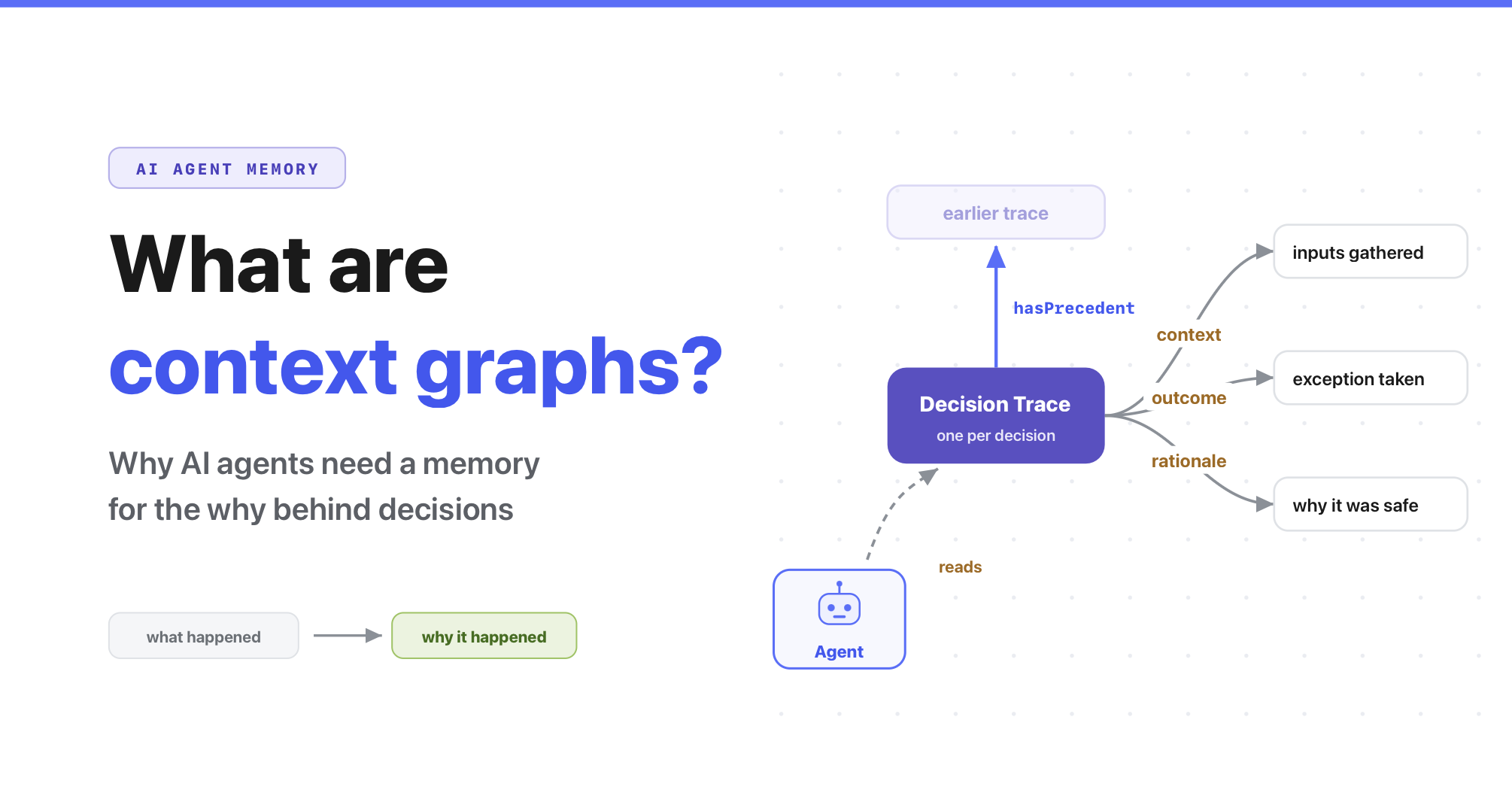
If LLMs provide understanding, graph-based systems provide contextual memory. Traditional databases store information in tables (like spreadsheets), but graph databases store information as interconnected nodes and relationships.
Think of it this way: A traditional database might tell you that "Invoice #456 is for $5,000." A graph database tells you that "Invoice #456 is FROM Vendor-A, who HAS_A_CONTRACT with us that ALLOWS purchases up to $10,000 without special approval, and this invoice is FOR Project-X, which IS_MANAGED_BY Jane Doe."
This interconnected "memory" allows automated systems to:
- Recall past decisions and their outcomes
- Understand relationships between different pieces of information
- Make decisions based on rich context rather than isolated data points
3. The Action Layer: The Agent Orchestrator
The agent orchestrator is the practical manager that ties everything together. It receives a task or goal, breaks it down into steps, decides which tools to use, executes the plan, and learns from the results. It's like a project manager coordinating between the "understanding" (LLM) and "memory" (graph database) to get things done.
Here's a simplified view of how these components work together:

Real-World Applications: Where Intelligent Automation Excels
Adaptive Customer Service
Traditional chatbots follow decision trees—if a customer says "A," the bot responds with "B." Intelligent agents can understand a customer's actual problem, pull up their entire history with your company, review relevant policies, and provide personalized solutions. If a solution requires multiple steps (issuing a refund, sending a replacement, updating account notes), the agent can handle the entire process seamlessly.
Context-Aware Document Processing
Consider an insurance claim that includes medical reports, police documentation, and photos. An intelligent system can:
- Understand and extract relevant information from each document type
- Cross-reference this claim with similar past claims in its memory
- Check for consistency and potential red flags
- Route the claim to the appropriate adjuster with a summary and recommended actions
Dynamic Project Management
Instead of simply tracking tasks and deadlines, an intelligent project management assistant could:
- Understand the dependencies between different project components
- Anticipate potential bottlenecks based on similar past projects
- Proactively suggest resource reallocations when delays occur
- Generate progress reports tailored to different stakeholders' needs
Building Your First Intelligent Agent: A Practical Framework
Step 1: Start with a Contained Use Case
Don't try to automate your most complex process first. Choose something manageable with clear boundaries, like:
- Sorting and categorizing internal support requests
- Processing a specific type of standardized form
- Gathering and summarizing daily reports from multiple sources
Step 2: Design Your Knowledge Graph
Before building anything, map out what your system needs to "know." Identify:
- Key entities (people, projects, documents, products)
- Important relationships (approves, manages, contains, depends on)
- Critical attributes (status, priority, deadline, amount)
Step 3: Implement with Guardrails
Intelligent systems need boundaries. Establish clear rules about:
- What decisions the system can make autonomously vs. what requires human approval
- How confident the system needs to be before acting
- Where to log all decisions and actions for review and improvement
Step 4: Adopt an Iterative Approach
Start with the system in an "assistive" role, suggesting actions for human review. Gradually expand its autonomy as you gain confidence in its performance. Continuously add to its knowledge graph based on real-world outcomes.
The Human Advantage: Collaboration, Not Replacement
The most successful implementations of intelligent automation view these systems as collaborative partners rather than replacements for human workers. The technology handles repetitive cognitive work, exception handling, and information synthesis, freeing humans to focus on:
- Strategic decision-making based on the synthesized information
- Relationship management that requires emotional intelligence
- Creative problem-solving for truly novel challenges
- Oversight and governance of the automated systems
In accounting departments, for instance, intelligent agents might handle 80% of routine invoice processing, flagging only the complex exceptions for human review. The accountants then spend their time on analytical work, process improvement, and managing vendor relationships—higher-value activities that leverage their expertise.
The Road Ahead: Where This Technology is Heading
As intelligent automation evolves, we're moving toward systems that can:
- Learn continuously from every interaction without explicit reprogramming
- Explain their reasoning transparently, building trust with human colleagues
- Collaborate with each other, with different specialized agents working together on complex processes
- Adapt proactively to changing business conditions and requirements
This represents a fundamental shift from viewing automation as a way to reduce headcount to viewing it as a way to augment organizational intelligence—creating enterprises that are more resilient, adaptive, and capable of handling complexity.
Getting Started with Intelligent Automation
If you're considering implementing intelligent automation in your organization:
- Audit your processes to identify candidates with:
- High volumes of unstructured data (emails, documents)
- Many exceptions or variations
- Requirements for contextual understanding
- Start small and focused with a pilot project that has clear success metrics
- Invest in knowledge organization—the quality of your graph structure will determine the quality of your automation
- Plan for change management—help your team transition from overseeing rules to managing intelligence
The most forward-thinking organizations aren't asking "Which tasks can we automate?" but rather "How can we create systems that understand what we're trying to accomplish and help us do it better?"
This article builds on concepts explored in other pieces on AI Quantum Intelligence, including our looks at why traditional RPA often fails without AI, practical applications of automation using AI, and methods for evaluating multi-step AI-generated content.
What's the first process in your organization that could benefit from understanding, not just following rules? Share your thoughts in the comments below.
Written/published by Kevin Marshall with the help of AI models (AI Quantum Intelligence).
What's Your Reaction?
 Like
0
Like
0
 Dislike
0
Dislike
0
 Love
0
Love
0
 Funny
0
Funny
0
 Angry
0
Angry
0
 Sad
0
Sad
0
 Wow
0
Wow
0