















AI Search Trends One Year Later: The Rise of Agents, RAG, and Multimodal Intelligence
A year after our original analysis, AI search trends have shifted dramatically. Discover how public curiosity evolved from ChatGPT and generative art to agentic AI, RAG systems, multimodal intelligence, and enterprise-grade automation—and what these changes reveal about the future of AI.
Introduction: A Year That Redefined the AI Landscape
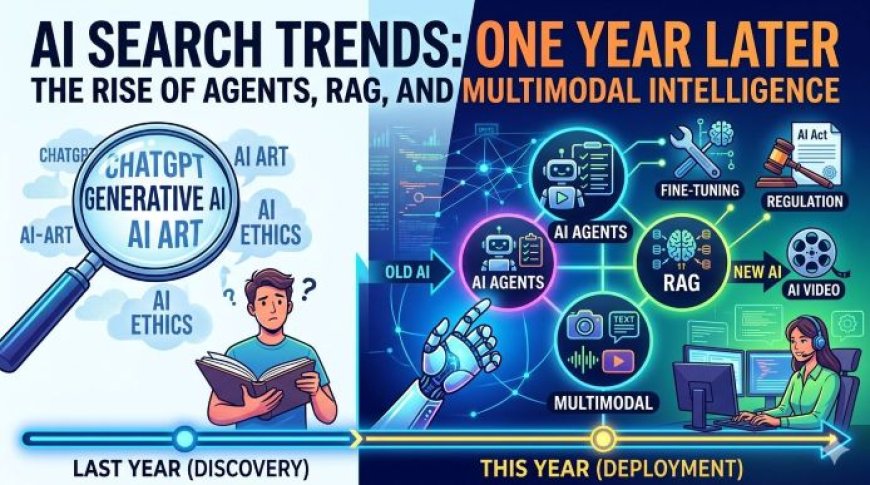
A year ago, global curiosity around artificial intelligence was dominated by a handful of foundational questions: What is AI? How does ChatGPT work? What can generative models create?
Today, the conversation has evolved. The world is no longer simply discovering AI—it is deploying it, integrating it, and increasingly, depending on it.
Search behavior reflects this shift with remarkable clarity. The past twelve months have produced a new hierarchy of AI‑related keywords, revealing a public that has moved beyond novelty and into operational mastery, automation, and deeper concerns about reliability, regulation, and long‑term impact.
This article compares last year’s keyword universe with today’s, highlighting what changed, what surprised us, and what these shifts tell us about the future of AI. You can refer to the original baseline article at Uncovering the Most Popular AI-Related Search Keywords: Trends, Insights, and What They Tell Us About the Future.
1. Last Year’s AI Curiosity: A World in Discovery Mode
In the original analysis, the most popular AI‑related search terms clustered around:
- ChatGPT
- Generative AI
- Machine Learning
- AI Art
- AI Ethics
- AI Jobs
- AI Tools
- Deep Learning
- AI vs Human Intelligence
These terms reflected a world still learning the basics — exploring definitions, experimenting with creative tools, and grappling with early ethical questions. The public was fascinated, cautious, and wide‑eyed.
That era is over.
2. This Year’s AI Curiosity: A World in Deployment Mode
Search data from 2025–2026 shows a dramatic shift toward applied, technical, and integration‑focused keywords.
Top Emerging Keywords
- LLMs / Foundation Models
- RAG (Retrieval‑Augmented Generation)
- AI Agents / Agentic AI
- Multimodal AI
- Fine‑Tuning / Custom Models
- On‑Device AI / Edge AI
- Synthetic Data
- AI Regulation
- AI Fatigue
- AI Automation Tools
The public has moved from “What is AI?” to “How do I build, customize, and control AI systems that work reliably with my data?”
This is the clearest sign yet that AI has crossed the threshold from novelty to infrastructure.
3. Five Major Shifts in Public Curiosity
Shift #1 — From Understanding AI to Operationalizing It
Last year’s searches were conceptual.
This year’s searches are tactical:
- “How do I build a RAG pipeline?”
- “Best AI agents for business automation”
- “How to fine‑tune an LLM on internal documents”
People aren’t just using AI — they’re engineering it.
Shift #2 — From ChatGPT Dominance to Model Diversity
ChatGPT is still a major search term, but it no longer monopolizes attention.
Searches now include:
- Gemini
- Claude
- Mistral
- Grok
- Llama
The public is exploring alternatives, comparing capabilities, and seeking specialized models for specific tasks. The ecosystem has fragmented — in a healthy way.
Shift #3 — From AI Art to Multimodal Intelligence
AI art searches have plateaued.
In their place:
- “AI video generation”
- “Image‑to‑video models”
- “Multimodal reasoning”
- “AI that can read PDFs and charts”
People now expect AI to see, hear, interpret, and act — not just generate images.
Shift #4 — From Ethics Curiosity to Regulation Anxiety
Ethics was last year’s philosophical concern.
This year’s concern is legal and operational:
- “EU AI Act compliance”
- “AI content detection”
- “AI copyright rules”
- “Bias lawsuits”
The conversation has matured from morality to liability.
Shift #5 — From AI Jobs to Workforce Transformation
Last year’s searches:
“AI jobs,” “AI engineer,” “machine learning careers.”
This year’s searches:
- “AI replacing jobs”
- “AI productivity tools”
- “AI agents for workflow automation”
- “How to stay relevant with AI”
The tone has shifted from opportunity to adaptation.
4. The New Themes Defining AI’s Next Phase
Theme A: The Rise of Agentic AI
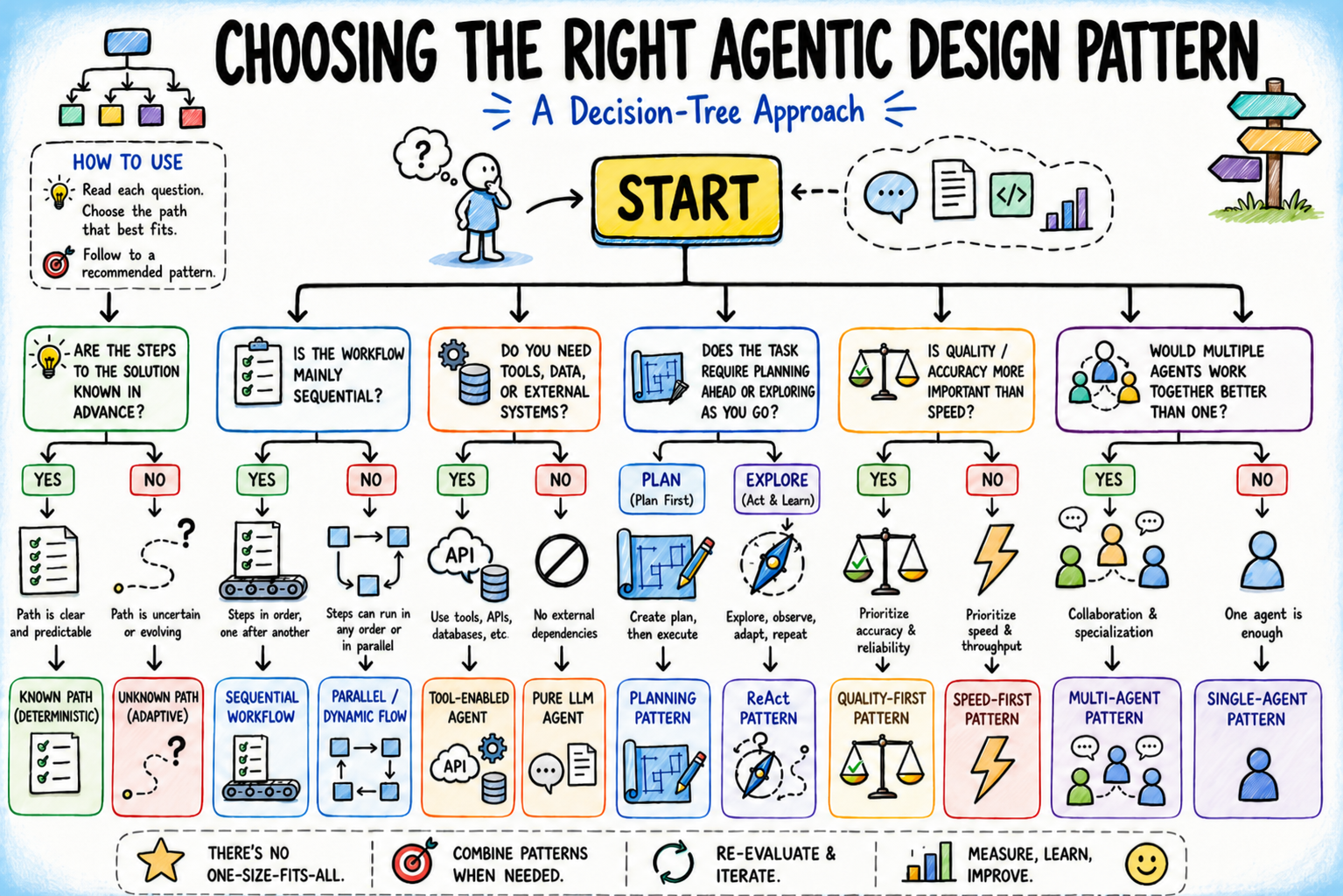
Agent‑based systems — capable of planning, reasoning, and taking multi‑step actions — are now one of the fastest‑growing search categories.
This is the biggest conceptual leap since the launch of ChatGPT.
Theme B: RAG as the New Enterprise Standard
RAG has become the backbone of enterprise AI adoption.
Searches show a demand for:
- grounded answers
- reduced hallucinations
- domain‑specific intelligence
RAG is the new “must‑have” for any serious AI deployment.
Theme C: Edge AI and Privacy‑Driven Adoption
Searches for:
- “offline AI”
- “on‑device LLM”
- “AI privacy tools”
reflect a growing desire for speed, cost control, and data sovereignty.
Theme D: Multimodal Explosion
People now expect AI to:
- analyze images
- interpret documents
- generate video
- process audio
- understand charts
This marks a shift from text‑only intelligence to full‑spectrum cognition.
Theme E: AI Fatigue
A new keyword — and a new cultural signal.
“AI fatigue” reflects:
- oversaturation
- skepticism
- a desire for practical value over hype
This is a critical turning point for the industry.
5. What These Trends Tell Us About the Future
The evolution of AI search behavior reveals a world that has moved beyond fascination and into integration. AI is no longer a toy, a novelty, or a curiosity — it is becoming a core layer of digital infrastructure.
The next year will be defined by:
- agentic systems that act autonomously
- multimodal models that understand the world like humans do
- enterprise‑grade RAG pipelines
- on‑device intelligence
- regulation‑driven innovation
- a public demanding reliability, not spectacle
The AI era is maturing — and the search data proves it.
Written/published by Kevin Marshall with the help of AI models (AI Quantum Intelligence).
What's Your Reaction?
 Like
0
Like
0
 Dislike
1
Dislike
1
 Love
2
Love
2
 Funny
0
Funny
0
 Angry
0
Angry
0
 Sad
0
Sad
0
 Wow
0
Wow
0