














AI for Product Teams: Boosting Efficiency and Driving Growth
Discover how AI is revolutionizing product management and marketing. Explore our guide to top AI-powered tools that help product teams boost efficiency, automate tasks, and drive strategic growth with data-driven insights.
Product management and marketing in the software world are dynamic and demanding. Staying ahead requires not only a deep understanding of the market and customer needs but also the ability to execute efficiently and strategically. Fortunately, the rise of Artificial Intelligence (AI) offers a powerful toolkit to streamline workflows, unlock deeper insights, and ultimately drive product success. This article explores several AI-powered and enabled tools that can directly benefit product managers, software product marketing specialists, and related roles, appealing to both business-minded professionals and technical AI enthusiasts.
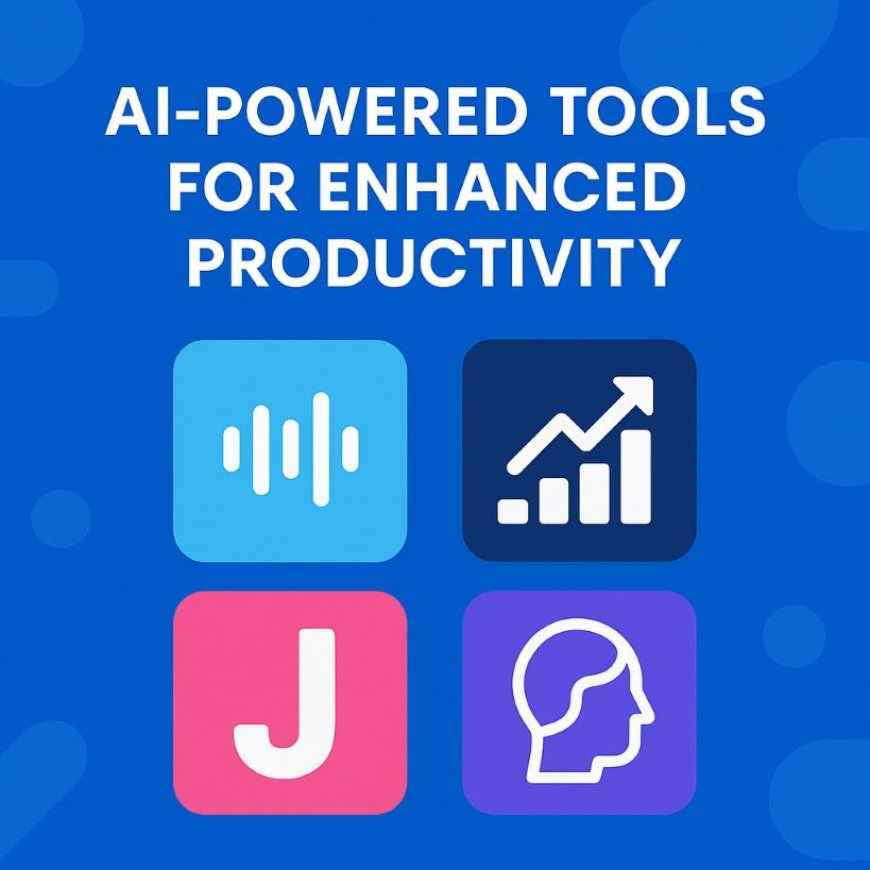
AI-Powered Tools for Enhanced Productivity
1. Otter.ai (https://otter.ai/): AI-Powered Meeting Assistant
- Benefits: Otter.ai leverages natural language processing (NLP) to provide real-time transcription and meeting notes. It can identify speakers, generate summaries, and even highlight key discussion points. This significantly reduces the time spent on manual note-taking and allows product teams to focus on the conversation.
- How to Use: Integrate Otter.ai with your video conferencing platform (e.g., Zoom, Google Meet). It will automatically record and transcribe meetings. Product managers can use it to quickly review customer interviews, team brainstorming sessions, and stakeholder updates. Marketing specialists can leverage transcripts to extract key messages for content creation and analyze customer feedback.
- Efficiency Gains: Saves significant time on note-taking and post-meeting follow-ups. Provides searchable transcripts for easy information retrieval. Improves communication and alignment across teams.
2. Surfer SEO (https://surferseo.com/): AI for Content Optimization
- Benefits: Surfer SEO uses machine learning to analyze top-ranking content for specific keywords. It provides data-driven insights on content structure, keyword density, and related terms to help optimize website content for search engines. This is invaluable for software product marketing teams aiming to improve organic visibility and attract qualified leads.
- How to Use: Input your target keywords, and Surfer SEO will analyze the competitive landscape. It offers suggestions on content length, headings, keywords to include, and even questions to answer. Marketing specialists can use these insights to create high-ranking blog posts, landing pages, and website copy that effectively targets their audience.
- Efficiency Gains: Streamlines the content optimization process, reducing guesswork and improving search engine rankings. Helps marketing teams create more effective and data-backed content strategies.
3. Jasper (formerly Jarvis) (https://jasper.ai/): AI Writing Assistant
- Benefits: Jasper utilizes advanced natural language generation (NLG) to assist with various writing tasks, from generating marketing copy and social media posts to drafting product descriptions and even outlining blog articles. It can adapt its tone and style to match your brand, significantly speeding up content creation.
- How to Use: Provide Jasper with context, keywords, and desired output (e.g., a product description for a new feature). The AI will generate multiple options, which you can then refine and edit. Product marketers can use Jasper to quickly create compelling marketing materials, overcome writer's block, and maintain a consistent brand voice across different channels.
- Efficiency Gains: Dramatically accelerates content creation, freeing up marketing teams to focus on strategy and other critical tasks. Helps maintain brand consistency and explore different marketing angles quickly.
4. Lensa (https://lensa-ai.com/): AI-Powered Image Editing (for Marketing Visuals)
- Benefits: While primarily known for its artistic filters, Lensa's underlying computer vision algorithms offer powerful image editing capabilities. Marketing teams can use it to quickly enhance product screenshots, create engaging social media visuals, and ensure consistent branding across imagery.
- How to Use: Upload your product images or marketing visuals to the Lensa app. Utilize its various tools to adjust lighting, colors, and details. While advanced features require understanding of image editing principles, the intuitive interface allows for quick and impactful enhancements.
- Efficiency Gains: Simplifies and speeds up image editing tasks, allowing marketing teams to create visually appealing content without requiring extensive design expertise or relying solely on designers for minor adjustments.
5. Pendo (https://www.pendo.io/): AI-Driven Product Analytics
- Benefits: Pendo is a comprehensive product analytics platform that integrates AI to provide deeper insights into user behavior. Its features, such as path analysis and sentiment analysis of user feedback, help product managers understand how users are interacting with the product, identify areas for improvement, and prioritize features based on data.
- How to Use: Integrate Pendo's SDK into your software product. It will automatically track user interactions and provide dashboards and reports. Product managers can use this data to identify user pain points, understand feature adoption, and measure the impact of product changes. AI-powered features help surface key trends and anomalies that might be missed with manual analysis.
- Efficiency Gains: Provides data-backed insights for product decisions, reducing reliance on assumptions. Helps prioritize development efforts based on user behavior and feedback, leading to more impactful product updates.
6. MonkeyLearn (https://monkeylearn.com/): AI for Text Analysis
- Benefits: MonkeyLearn utilizes machine learning to perform various text analysis tasks, such as sentiment analysis, topic modeling, and keyword extraction. This is incredibly valuable for product teams to process large amounts of customer feedback from surveys, reviews, and social media, gaining actionable insights into customer sentiment and identifying key themes.
- How to Use: Integrate MonkeyLearn with your feedback collection channels. The AI will automatically analyze the text data and provide categorized results and insights. Product managers can use this to understand customer needs, identify recurring issues, and prioritize feature requests. Marketing specialists can analyze brand mentions and customer reviews to understand market perception.
- Efficiency Gains: Automates the process of analyzing large volumes of text data, saving significant time and providing more comprehensive and objective insights than manual analysis.
Conclusion
AI is rapidly transforming the landscape of product management and software product marketing. By leveraging these and other AI-powered tools, product teams can significantly enhance their efficiency, gain deeper insights into their market and users, and ultimately drive product success. Embracing AI is no longer a futuristic notion but a strategic imperative for staying competitive and delivering exceptional software products. As these technologies continue to evolve, product professionals who adopt and master them will be well-positioned for future success.
What's Your Reaction?
 Like
0
Like
0
 Dislike
0
Dislike
0
 Love
0
Love
0
 Funny
0
Funny
0
 Angry
0
Angry
0
 Sad
0
Sad
0
 Wow
0
Wow
0