





The Convergence: How AI, IoT, and Robotics are Rebuilding the Modern Factory
Discover how the convergence of AI, IoT, and Robotics is transforming manufacturing. Learn about digital twins, cobots, and predictive maintenance in 2026.
Introduction: The Dawn of the "Software-Defined Factory"
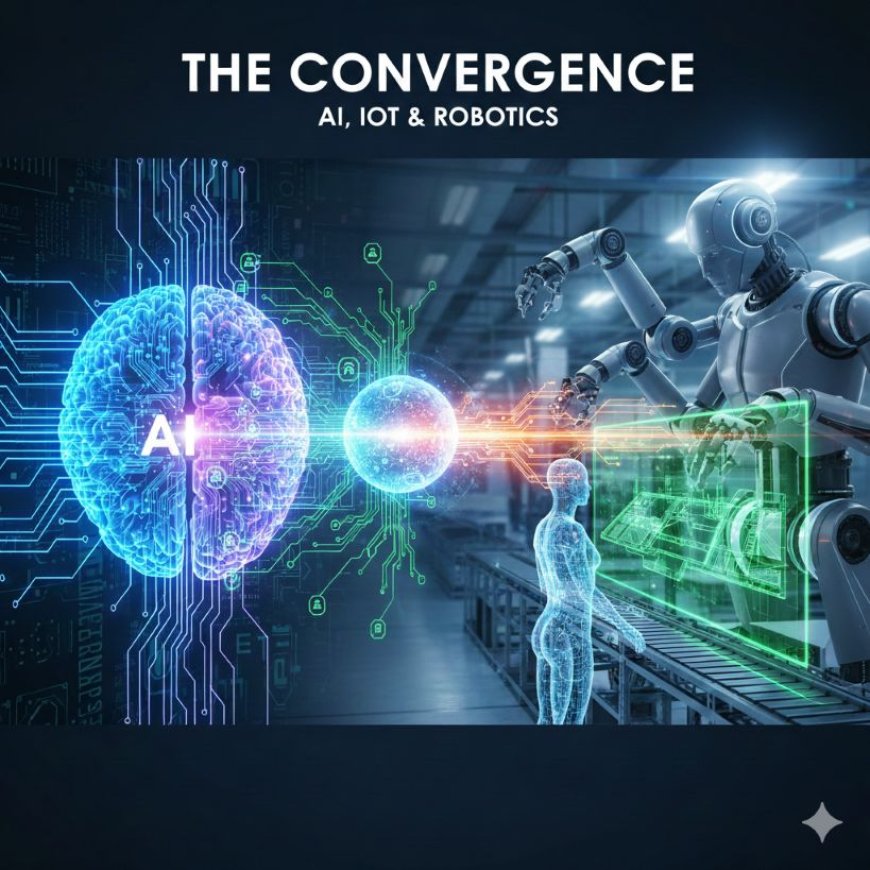
For decades, the factory floor was a place of rigid automation—machines programmed to do one thing, over and over, in a "black box" environment. But as we move through 2026, a fundamental shift has occurred. The "dumb" robot has been replaced by Physical AI, and the static assembly line has evolved into a living, breathing ecosystem.
This transformation is driven by The Convergence: the seamless integration of the Internet of Things (IoT) as the nervous system, Artificial Intelligence (AI) as the brain, and Robotics as the hands. Together, these technologies aren't just making factories faster; they are making them "thrive" through self-healing systems and collaborative human-robot environments.
1. The Nervous System: IoT and the Data Goldmine
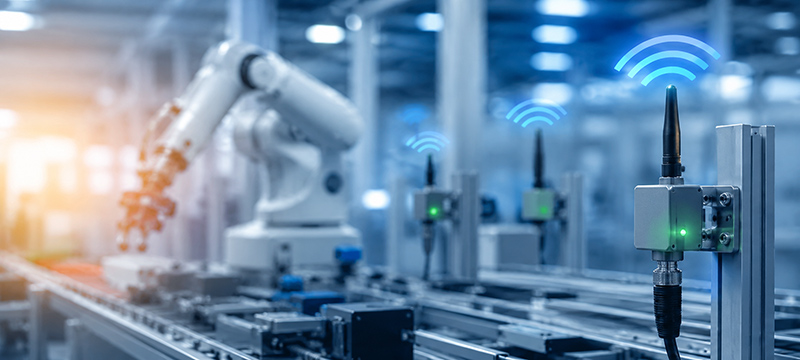
At the heart of the modern factory lies the Industrial Internet of Things (IIoT). Thousands of sensors now monitor everything from the vibration of a bearing to the temperature of a soldering iron in real-time.
- Real-Time Transparency: Unlike traditional manufacturing where issues were discovered after a batch was ruined, IoT provides a "glass factory" view.
- Edge Computing: In 2026, we’ve moved beyond sending all data to the cloud. Critical decisions are made at the "Edge" — directly on the factory floor—reducing latency to milliseconds.
2. The Brain: Predictive Maintenance and Agentic AI
Data is useless without intelligence. This is where Machine Learning (ML) and Agentic AI step in. We are moving from predictive maintenance (telling you when it might break) to prescriptive action (fixing it autonomously).
The "Self-Correcting" Factory: In 2026, if an AI agent detects a 0.5% drift in a robotic arm's precision, it doesn't just send an alert. It cross-references the production schedule, identifies a gap, orders a replacement part via the digital supply chain, and reroutes the workload to a backup line—all before a human operator even notices the drift.
The Impact of AI on Downtime (2026 Projections): Metric | Improvement with AI | Unplanned Downtime | Reduced by 35–45% | Maintenance Costs | Reduced by 25–30% | Equipment Lifespan | Increased by 20%
3. The Hands: The Rise of Humanoids and Cobots
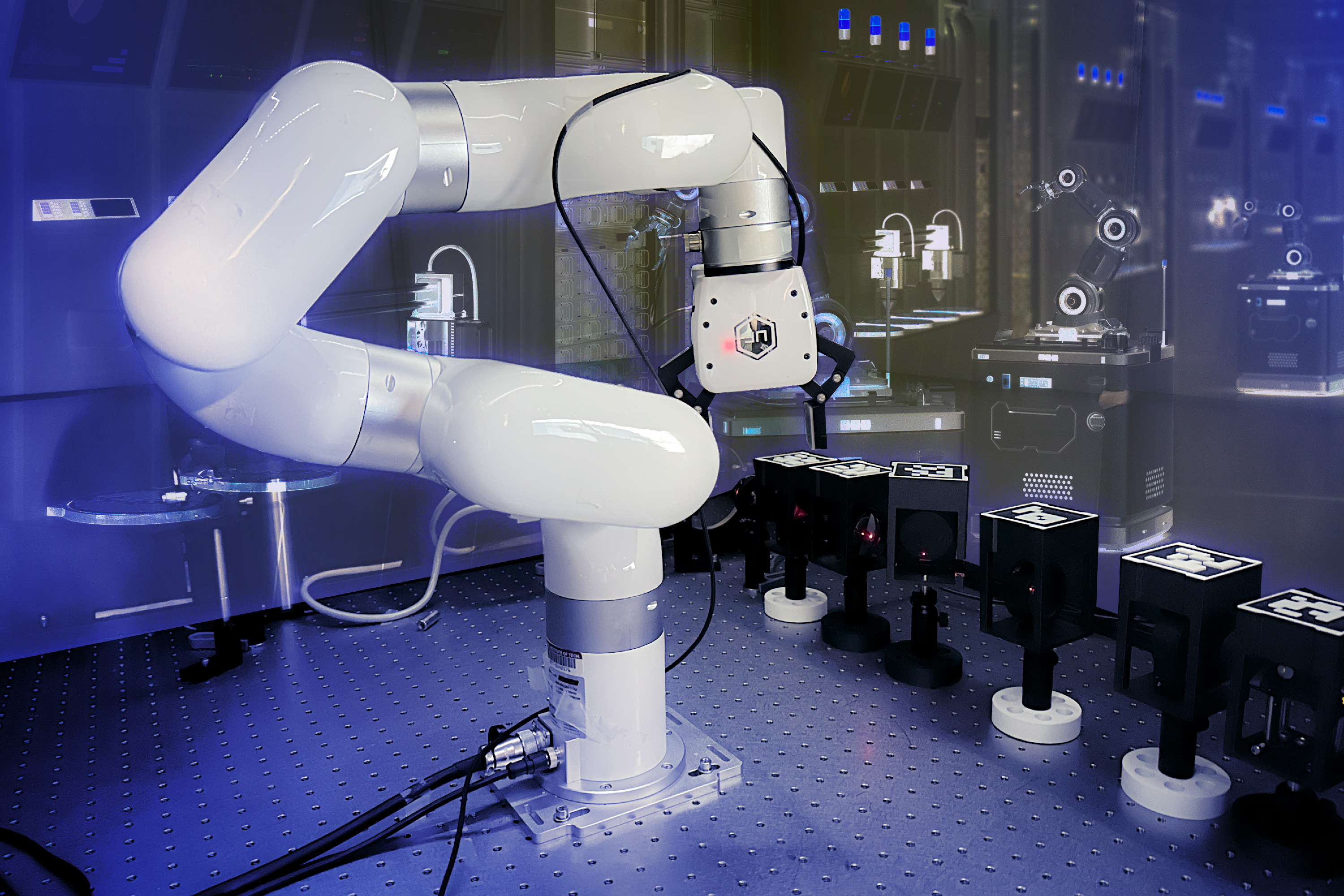
The physical manifestation of this convergence is the new generation of Collaborative Robots (Cobots) and Industrial Humanoids. As seen at CES 2026, companies like Hyundai and Boston Dynamics are deploying robots like Atlas not to replace humans but to "partner human progress."
- Human-Centered Design: These robots are equipped with tactile sensors and 360-degree vision, allowing them to work safely alongside humans without safety cages.
- Versatility: Unlike old-school robots fixed to the floor, Autonomous Mobile Robots (AMRs) navigate complex warehouses, picking and transporting goods with the dexterity of a human worker.
4. The Digital Twin: Simulation Before Execution
One of the most powerful tools in the “AI and Quantum Intelligence” toolkit is the Digital Twin. Before a single physical bolt is turned, the entire factory is built in a virtual environment.
- "Simulate-then-Procure": Manufacturers now use high-fidelity simulations to test "what-if" scenarios. What if we increase line speed by 10%? What if the supply of a specific resin is delayed?
- Virtual Commissioning: Using tools like NVIDIA Omniverse or Siemens Digital Twin Builder, engineers can train AI models in a virtual world so that when the physical robot is switched on, it already "knows" its environment.
Conclusion: Together We Learn, Together We Thrive
The convergence of AI, IoT, and robotics is not just a technical milestone; it is a cultural one. It represents a shift from "man vs. machine" to a collaborative era where technology handles the dangerous, repetitive, and mundane, freeing humans to focus on strategy, design, and innovation.
As we continue to share these learning resources, remember that the goal of a smart factory is not just output—it’s the creation of a resilient, sustainable, and human-centric future.
Frequently Asked Questions
Q: What exactly is the "Convergence" in modern manufacturing? A: It is the seamless merging of three distinct technologies: IoT (the nervous system), AI (the brain), and robotics (the hands). When these work together, they move the factory from a collection of isolated machines to a living ecosystem that can learn and adapt in real-time.
Q: How does AI actually reduce factory downtime? A: Through a process called "prescriptive maintenance." Instead of waiting for a machine to break, AI monitors vibrations and temperatures. If it detects an anomaly, it can automatically adjust the machine’s load or schedule a repair during a planned break, reducing unplanned downtime by up to 45%.
Q: What is a Digital Twin and why is it important? A: Think of a Digital Twin as a "flight simulator" for a factory. It is a virtual 1:1 model of your physical equipment. By running simulations in the digital twin first, companies can find errors and optimize workflows without ever risking damage to real machines or stopping production.
Written/published by Kevin Marshall with the help of AI models (AI Quantum Intelligence).
What's Your Reaction?
 Like
0
Like
0
 Dislike
0
Dislike
0
 Love
0
Love
0
 Funny
0
Funny
0
 Angry
0
Angry
0
 Sad
0
Sad
0
 Wow
0
Wow
0