










The Double-Edged Sword: The Battle for the Soul of Artificial Intelligence
A deep dive into the dual nature of AI: exploring the escalating tension between groundbreaking, benevolent applications and powerful, criminal exploitation. This article examines who funds AI's rapid growth and argues that the future hinges not on the technology itself, but on the values and guardrails we build around it.
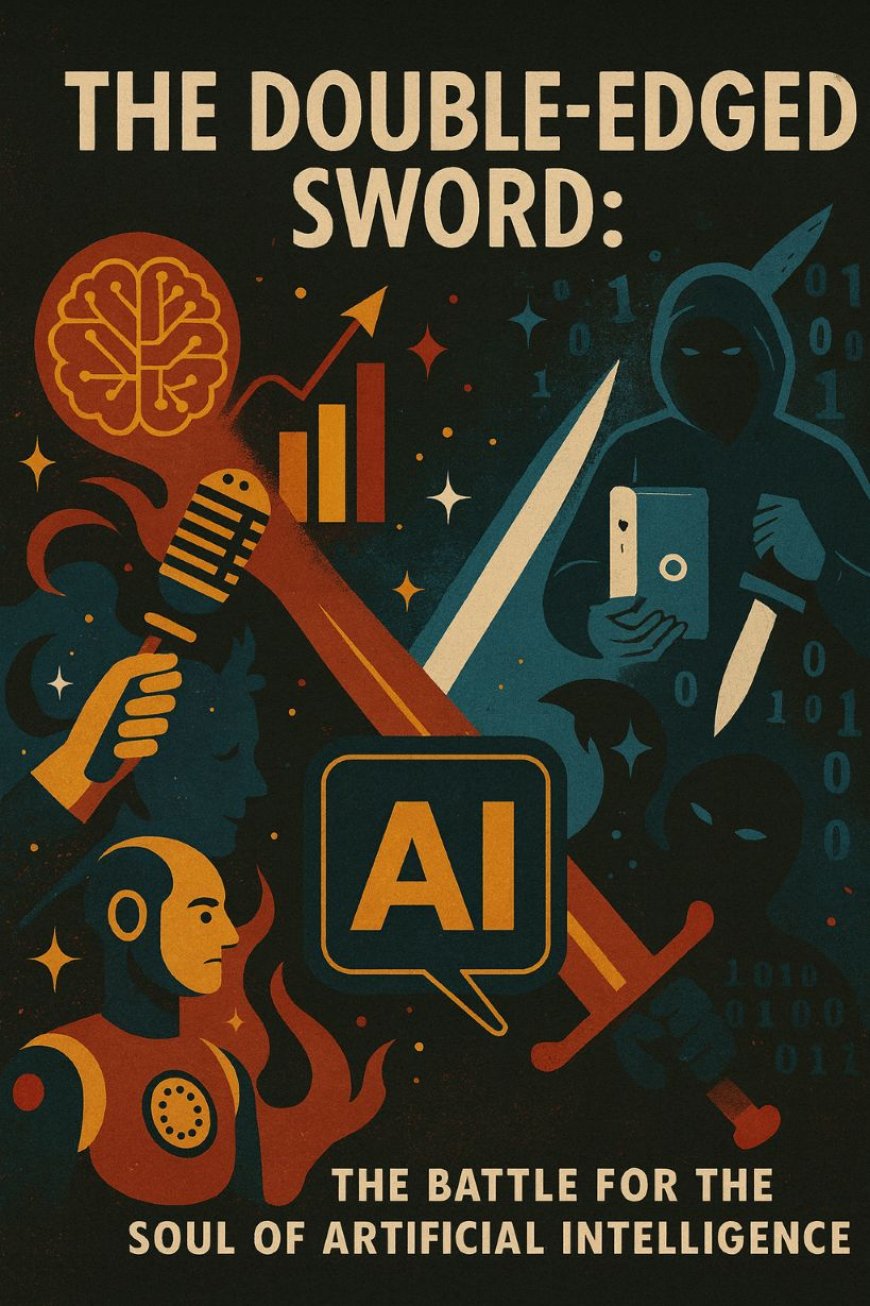
In the span of just a few years, Artificial Intelligence (AI) has exploded from a science-fiction concept into a force that is reshaping our daily lives. It can write poetry, diagnose diseases, and predict complex weather patterns. Yet, the same fundamental technology can also mimic a loved one’s voice to scam a grandparent, generate flawless phishing emails, or turbocharge the theft of millions of digital identities. This isn't a minor side effect; it is a core tension. We are witnessing an escalating battle not just for what AI can do, but for what it will be used to do—a battle between benevolent innovation and criminal exploitation.
The Bright Side: AI as a Force for Good
The beneficial applications of AI are profound and growing. In healthcare, AI algorithms are now powerful assistants, analyzing medical scans with superhuman accuracy to spot early signs of cancers like breast cancer or tumors that the human eye might miss. They are accelerating drug discovery, sifting through molecular combinations in days that would take humans years.
In environmental science, AI models predict climate patterns, optimize energy use in smart grids, and help track deforestation from satellite imagery. For people with disabilities, AI-powered tools provide real-time audio descriptions for the visually impaired or generate captions for the deaf and hard of hearing.
On an everyday level, AI streamlines logistics to get goods to us faster, powers language translation apps that bridge global divides, and personalizes educational tools to fit individual learning styles. The core promise here is augmentation—using AI to amplify human capability, solve grand challenges, and improve quality of life.
The Dark Side: The Criminal Toolkit Supercharged
Paradoxically, the very traits that make AI beneficial—efficiency, scalability, and the ability to find patterns—also make it a historically powerful tool for criminals.
- Hyper-Personalized Scams: Gone are the days of easily-spotted scam emails filled with typos. AI can now analyze a person's social media footprint and generate perfectly written, context-aware messages that mimic a colleague's writing style or a friend's tone of voice. Deepfake audio and video take this further, creating convincing simulations of people to authorize fraudulent transactions or spread disinformation.
- Democratizing Cybercrime: AI lowers the barrier to entry for cyberattacks. "Script kiddies" (inexperienced hackers) can now use AI-powered tools to write sophisticated malware or automate phishing campaigns. AI can also be used to brute-force passwords more efficiently or find vulnerabilities in software code at an unprecedented scale.
- Digital ID Theft & Fraud: AI algorithms excel at synthesizing data. They can cross-reference leaked personal information from multiple data breaches to create comprehensive fake identities or bypass identity verification systems that rely on static knowledge questions.
This creates an asymmetric war: defenders (companies, governments, individuals) must protect every possible point of failure, while attackers using AI need to find only one.
Who's Funding This? The Complex Customer Base
So, who is bankrolling these rapid advancements? The funding ecosystem is mixed, creating a nuanced reality where the same foundational technology is pushed forward by divergent interests.
- Big Tech & Cloud Giants (The Primary Engines): Companies like Google, Microsoft, Amazon, Meta, and OpenAI are investing tens of billions. Their business model is dual: they use AI to supercharge their own products (search, ads, social networks, office software) and, crucially, they sell AI access as a service. Their customers are everyone—benevolent developers, researchers, hospitals, small businesses, and, inevitably, malicious actors who slip through the cracks. Their funding is driven by a mix of idealism, competitive pressure, and the vast commercial potential of being the platform upon which the future is built.
- Venture Capital & Startups: Billions in VC money flow into AI startups promising to disrupt industries from finance to legal tech. This drives specialization and practical application, mostly for benefit. However, the "move fast and break things" ethos can sometimes overlook security and ethical safeguards in the race to market.
- Governments & Defense Contractors: National governments, particularly in the US and China, are major funders of AI research for purposes of national security, surveillance, and cyber warfare. This directly fuels advancements in areas like facial recognition, data analysis, and autonomous systems. The "dual-use" dilemma is stark here: technology developed for drone target identification could be adapted for civilian surveillance; tools for penetrating enemy networks are one step away from tools for criminal hacking.
- The Dark Economy: Cybercriminal groups are themselves becoming sophisticated "customers" and innovators. They use stolen credit cards and cryptocurrencies to pay for access to premium AI tools and cloud computing power, or they develop their own malicious AI models in hidden forums. They represent a shadowy, parasitic funding stream that directly fuels the arms race on the dark side.
Beyond the Battle: A More Nuanced Reality
Viewing this purely as a war between "good" and "evil" AI is too simple. The reality is more tangled:
- The Same Tool: There is no separate "good AI" and "bad AI." It is the same transformer models, the same gradient descent algorithms, applied with different intent.
- The Bias Problem: AI can perpetuate and amplify societal biases in hiring, lending, and policing, causing large-scale harm without criminal intent—a form of systemic exploitation rooted in flawed data.
- The Autonomy Question: As AI systems become more autonomous, assigning responsibility for harm (from a biased decision to a fatal error in a self-driving car) becomes a legal and ethical minefield.
- The Privacy Trade-Off: Many beneficial AI tools are fueled by our personal data. The constant collection needed for, say, a perfect health monitor creates a tempting target for exploitation and erodes privacy.
The Path Forward: Governance, Ethics, and Resilience
Winning this "battle" doesn't mean eliminating one side; it means tilting the entire ecosystem toward responsibility and resilience. This requires:
- Embedding Security & Ethics from the Start: "Security-by-design" must be non-negotiable for AI developers, funded by the big players.
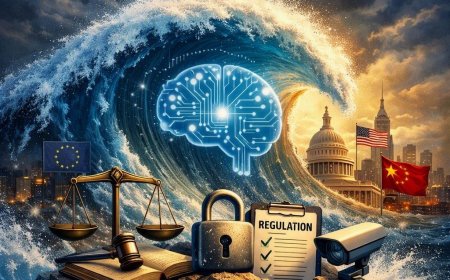
- Adaptive Regulation: Governments need to craft smart, flexible regulations that mitigate risk without stifling innovation. This includes standards for transparency, auditing, and clear liability.
- Democratizing Defense: Just as AI lowers the bar for attack, we need AI-powered defense tools that are accessible to small businesses and individuals, not just large corporations.
- Global Cooperation: Cybercrime and digital exploitation are borderless. International treaties and law enforcement cooperation are essential, however challenging.
Conclusion
The tension between AI's promise and its peril is not a bug in the system; it is a fundamental feature of a powerful general-purpose technology. The giants funding this revolution—Big Tech, governments, VCs—are building a new world, but they are not fully in control of who uses their tools or how. The outcome won't be a decisive victory for good or evil, but a continuous struggle. Our collective task is to build not just smarter AI, but wiser guardrails, more informed users, and a culture of ethical responsibility that ensures the weight of this double-edged sword falls more often on the side of benefit, lifting humanity up rather than cutting it down. The future of AI will be shaped not only by its coders, but by its governors, its users, and the societal values we choose to enforce.
Written/published by Kevin Marshall with the help of AI models (AI Quantum Intelligence).
What's Your Reaction?
 Like
0
Like
0
 Dislike
0
Dislike
0
 Love
0
Love
0
 Funny
0
Funny
0
 Angry
0
Angry
0
 Sad
0
Sad
0
 Wow
0
Wow
0