








The Evolution of Test Automation: From Scripted Validation to AI-Driven Quality Assurance
Explore the evolution of test automation from scripted tools to AI-driven quality assurance. This article details how AI technologies like intelligent test generation and self-healing automation enable comprehensive quality throughout the entire product delivery lifecycle, transforming QA from a checkpoint into a continuous, predictive practice.
Introduction: The Shifting Paradigm of Software Quality
The journey of test automation represents one of the most transformative arcs in software engineering—evolving from simple, repetitive validation to becoming an intelligent, integral component of the entire product delivery lifecycle. This evolution mirrors the broader trajectory of software development itself, from waterfall methodologies to agile and DevOps, and now toward AI-enhanced engineering practices. Today, AI-powered testing tools are redefining what's possible in quality assurance, enabling teams to deliver higher-quality software faster while managing increasing system complexity.
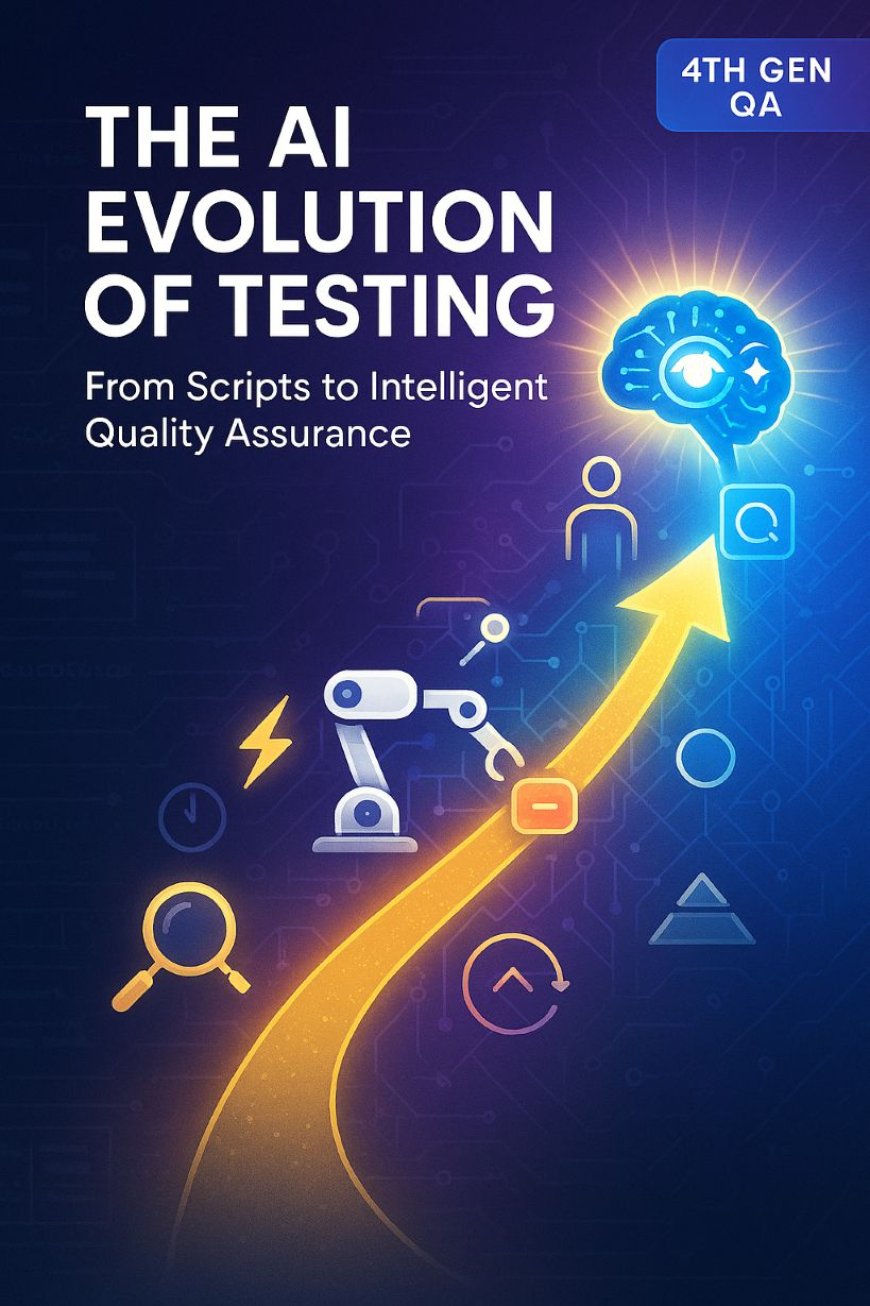
The Historical Trajectory: Four Generations of Test Automation
First Generation: Record-and-Playback (1990s-early 2000s)
The earliest commercial testing tools like WinRunner and SilkTest introduced the revolutionary concept of capturing user interactions and replaying them. While groundbreaking at the time, these tools suffered from brittleness—tests broke with the slightest UI changes—and required significant manual maintenance. Testing was largely an afterthought, occurring at the end of development cycles.
Second Generation: Script-Based Frameworks (mid-2000s)
The introduction of open-source tools like Selenium (2004) marked a pivotal shift. Testers could now write scripts in programming languages, enabling more complex validations and better integration with development workflows. The emergence of Behaviour-Driven Development (BDD) frameworks like Cucumber (2008) further bridged the gap between technical and non-technical stakeholders by expressing tests in natural language.
Third Generation: API and Service Layer Testing (2010s)
As applications became more service-oriented, testing shifted "left" toward the API layer. Tools like Postman, REST Assured, and SoapUI gained prominence, allowing teams to test business logic independently of the UI. This era also saw the rise of Continuous Integration/Continuous Deployment (CI/CD), with testing becoming an automated gate in deployment pipelines. The "testing pyramid" concept gained traction, emphasizing more unit and integration tests over fragile UI tests.
Fourth Generation: AI-Augmented Testing (2020s-Present)
The current era is defined by intelligent testing systems that leverage machine learning, computer vision, and natural language processing. AI doesn't just execute tests—it generates them, prioritizes them, maintains them, and interprets results. This represents a fundamental shift from automation as task repetition to automation as intelligent quality orchestration.
The AI Revolution in Testing: Capabilities Transforming Quality Assurance
Intelligent Test Generation
Modern AI testing tools like Applitools, Testim, and Functionize can analyze application behavior, user flows, and requirements to autonomously generate test cases. Using techniques like:
- Visual AI: Computer vision algorithms that understand UI elements contextually rather than through fragile locators
- Natural Language Processing: Converting plain English requirements into executable tests
- Change Impact Analysis: Predicting which tests need modification based on code changes
Self-Healing Test Automation
AI-powered maintenance addresses the chronic problem of test brittleness. These systems can:
- Detect when UI changes break element locators
- Automatically update selectors while preserving test intent
- Learn from correction patterns to improve future resilience
Smart Test Optimization
With ML algorithms, testing tools can:
- Prioritize test execution based on risk, code changes, and defect history
- Identify redundant tests and suggest consolidation
- Predict areas of high defect probability to focus testing efforts
- Optimize test suite execution time through parallelization strategies
Enhanced Defect Analysis
AI augments human judgment in defect management through:
- Automated bug triage and classification
- Root cause prediction by correlating test failures with code changes
- Visual regression detection that distinguishes intentional UI changes from defects
- Anomaly detection in application behavior across releases
AI-Enabled Quality Throughout the Product Delivery Lifecycle
Shift-Left: Quality in Requirements and Design
AI tools now facilitate quality considerations from the earliest stages:
- Requirements analysis for completeness, testability, and potential ambiguity
- Automated test scenario generation from user stories and acceptance criteria
- Design validation through predictive models of user interaction patterns
Continuous Testing in CI/CD Pipelines
Intelligent testing integrates seamlessly into modern delivery pipelines:
- Risk-based test selection for each build, optimizing pipeline execution time
- Flaky test detection and quarantine to maintain pipeline reliability
- Automated quality gates with contextual pass/fail criteria
- Environment-aware testing that adapts validations based on deployment target
Shift-Right: Production Quality Monitoring
AI extends testing beyond pre-release validation:
- Synthetic transaction monitoring that simulates user journeys in production
- Canary analysis comparing metrics between release versions
- User behavior analysis to identify unexpected usage patterns
- Predictive alerting for potential quality issues before they impact users
The Human Element: Augmented, Not Replaced
Contrary to dystopian narratives, AI in testing enhances rather than replaces human testers. The evolution has shifted the QA role from:
- Manual executors → Quality strategists
- Script maintainers → AI trainers and validators
- Defect reporters → Quality analysts and advocates
- Test case designers → Risk assessment specialists
Modern QA professionals increasingly focus on high-value activities like exploratory testing, user experience validation, and quality strategy—areas where human judgment remains essential.
Challenges and Considerations in the AI Testing Era
Technical and Organizational Hurdles
- Data quality and quantity: AI requires substantial, high-quality training data
- Explainability: Understanding why AI systems make specific testing decisions
- Skill transformation: Developing new competencies in data science and ML
- Integration complexity: Incorporating AI tools into existing toolchains and processes
Ethical and Practical Boundaries
- Over-reliance risk: Maintaining appropriate human oversight
- Bias in training data: Ensuring AI testing reflects diverse user perspectives
- Cost-benefit analysis: Justifying investment in emerging technologies
- Security considerations: Protecting test data and intellectual property
The Future Trajectory: Where Testing is Heading
Emerging Frontiers
- Generative AI for testing: Creating comprehensive test scenarios from minimal input
- Autonomous testing agents: Self-directed systems that explore applications and identify issues
- Quantum computing applications: Solving complex testing optimization problems
- Integrated quality ecosystems: Unified platforms spanning requirements, development, testing, and operations
The Ultimate Vision: Predictive Quality Engineering
The trajectory points toward systems that don't just detect defects but predict and prevent them. Future testing ecosystems will likely feature:
- Quality prediction models that forecast defect probability for release candidates
- Self-optimizing test coverage that evolves with application changes
- Cross-system impact analysis in complex microservices architectures
- Personalized quality profiles adapting tests to specific user segments and behaviours
Conclusion: The Quality Assurance Transformation
The evolution from record-playback tools to AI-powered testing ecosystems represents more than technological advancement—it signifies a fundamental reimagining of quality's role in software delivery. Quality assurance has transformed from a final checkpoint to an integrated, intelligent function spanning the entire product lifecycle.
As AI capabilities mature, the most successful organizations will be those that strategically leverage these technologies while cultivating the human expertise needed to guide, interpret, and contextualize automated insights. The future of testing isn't merely automated—it's intelligent, predictive, and seamlessly woven into the fabric of software creation and delivery.
This evolution ultimately serves a singular, enduring purpose: enabling teams to deliver software that better serves human needs with greater reliability, security, and user satisfaction. The tools and techniques will continue to evolve, but this human-centered objective remains the constant guiding star of quality assurance's journey.
Written/published by Kevin Marshall with the help of AI models (AI Quantum Intelligence).
What's Your Reaction?
 Like
0
Like
0
 Dislike
0
Dislike
0
 Love
0
Love
0
 Funny
0
Funny
0
 Angry
0
Angry
0
 Sad
0
Sad
0
 Wow
0
Wow
0