











Dynamic surface codes open new avenues for quantum error correction
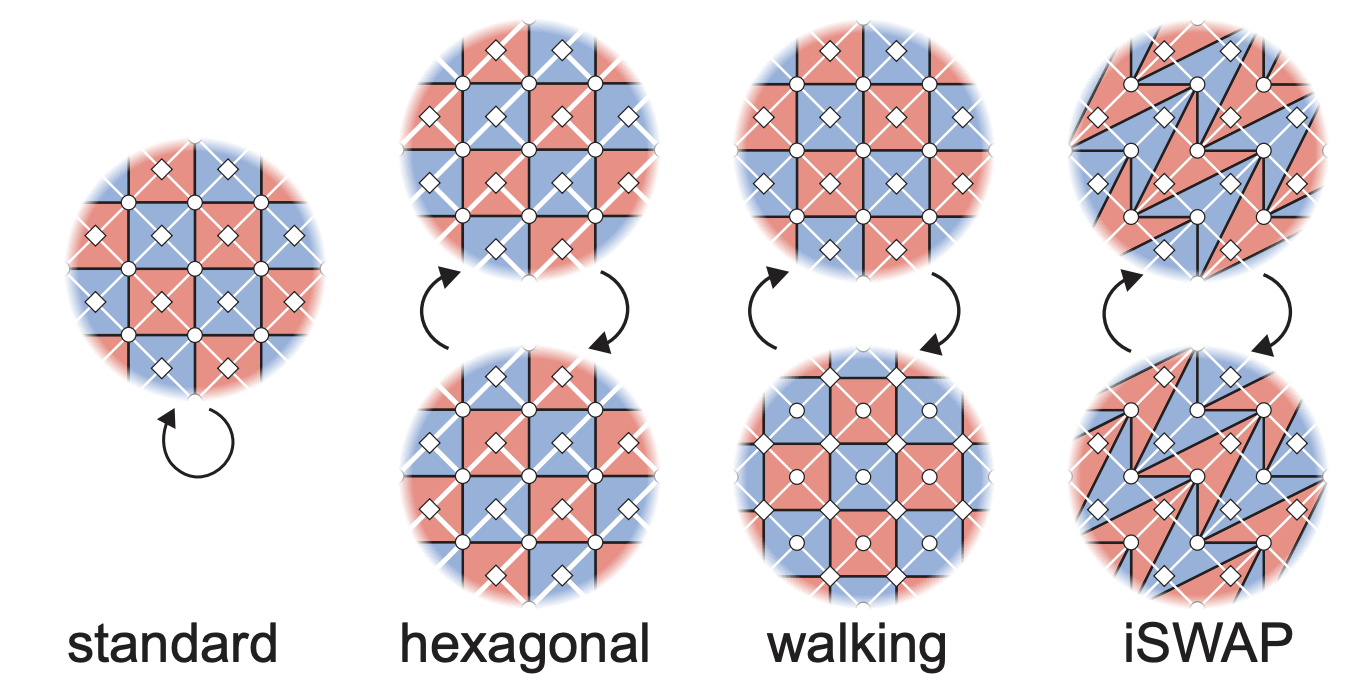
Quantum error correction (QEC) is crucial for reaching the ultra low error rate necessary for useful quantum algorithms. At Google Quantum AI, our quantum processors use physical qubits constructed from small superconducting circuits, which are susceptible to noise. QEC allows us to combine numerous physical qubits into logical qubits, which are robust to noise.
In December 2024, we announced that operation of error correction on our Willow quantum processor was below threshold, signifying that the logical qubit's robustness to errors exponentially increases as more physical qubits are added. This demonstration utilized a surface code for high-performance quantum error-correction. During the operation of this surface code, we employed a static circuit, i.e., a single consistent set of underlying physical operations was executed repeatedly to measure and correct errors. These static circuits, while useful for realizing QEC on a device with full yield, limit the ability to avoid "dropouts" — qubits or couplers that fail.
What's Your Reaction?
 Like
0
Like
0
 Dislike
0
Dislike
0
 Love
0
Love
0
 Funny
0
Funny
0
 Angry
0
Angry
0
 Sad
0
Sad
0
 Wow
0
Wow
0