






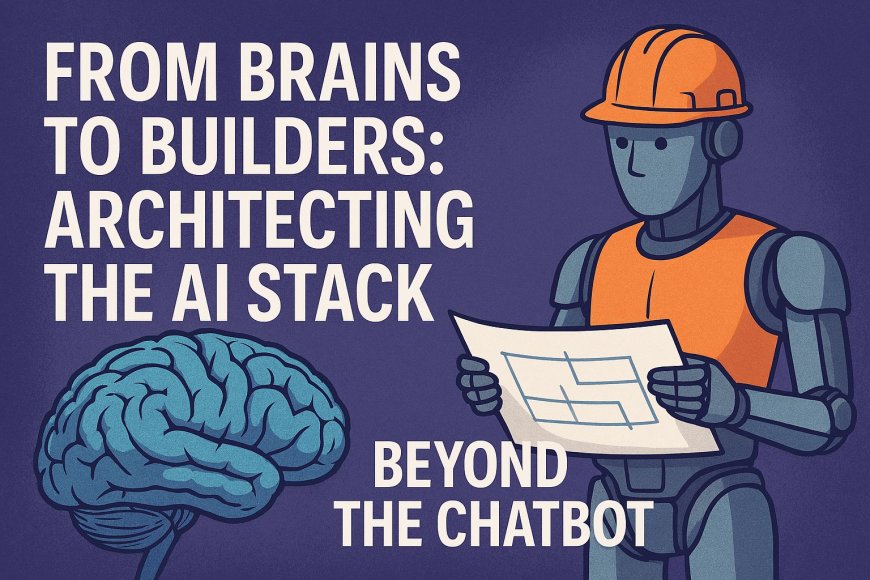
From Brains to Builders: Architecting the AI Stack Beyond the Chatbot
In this article, we move beyond the chatbot. Discover how the real AI revolution lies in architecting full-stack "digital workers"—layering LLMs with RAG, Agents, and protocols like MCP to move from conversation to execution. Outcomes matter, not prompts.
For the past couple of years, both the public and general business (aka coffee room) conversation about artificial intelligence has orbited a single, mesmerizing point: the Large Language Model. We’ve been hypnotized by the “brain”—its fluent reasoning, its vast knowledge, its poetic and sometimes erratic outputs. But a quiet, fundamental shift is underway in how leading developers and enterprises are actually deploying AI. The focus can no longer be about isolated intellect, but on building a complete operational entity. We are moving from evaluating engines to building vehicles; from conversing with a “brain” to delegating to a digital worker.
The Limitation of the "Brain-Only" Paradigm
An LLM, for all its brilliance, is an engine without a chassis, a brain in a vat. It reasons based on a static, generalized snapshot of the world—its training data—which is receding into the past every minute of every day. It doesn’t know your Q3 sales figures, your proprietary engineering schematics, or your customer’s unique support history. Asking it to perform meaningful work in this state is like asking a brilliant consultant to solve your company’s problems while locked in a room with only a set of public encyclopedias from 2023. You get impressive theory, but rarely a precise, actionable outcome.
This is why the "better prompt" chase is a dead end for production systems. We are reaching the ceiling of what a disembodied, context-starved brain can reliably achieve. The future isn't about more clever ways to ask; it's about constructing systems that can independently perceive, decide, and execute.
The AI Stack: Building a Complete Digital Being
The shift is from monolithic "AI" to a composable stack, each layer adding critical functionality. This is the architecture that transforms a conversational novelty into a reliable colleague.
Layer 1: The LLM (The Brain)
This remains the core reasoning engine. Its role is to process language, understand intent, formulate plans, and make decisions. Think of it as the executive function. Its value is not in what it knows, but in how it thinks.
Layer 2: RAG - Retrieval-Augmented Generation (Brain + Library)
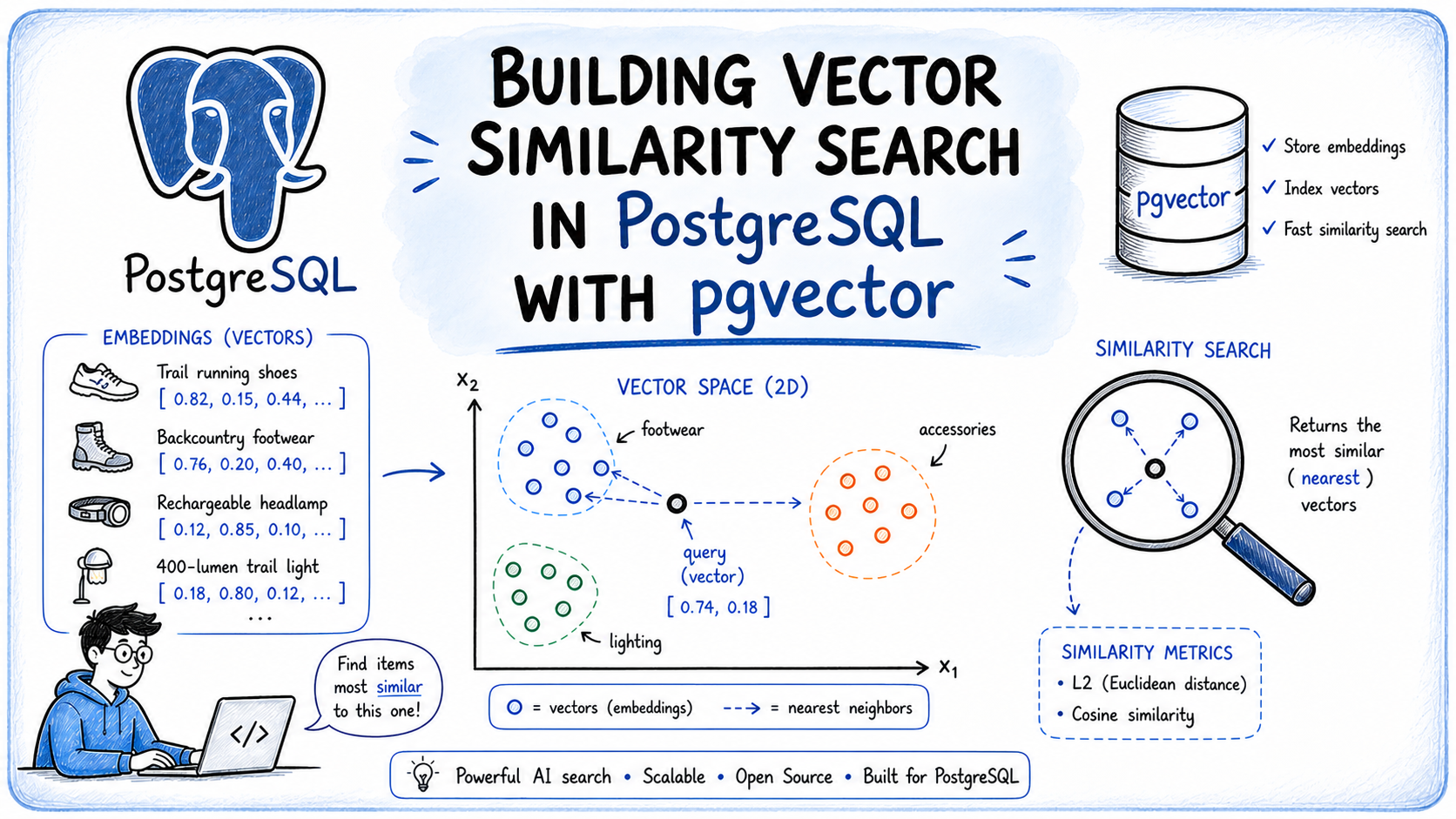
This is the first major augmentation. RAG grounds the LLM’s reasoning in your live, private, proprietary data. By connecting the brain to vector databases (like Azure AI Search), data lakes, or CRM systems (like Dataverse), you create a context-aware intelligence. It can answer questions about your company handbook, analyze this morning’s operational metrics, or summarize a client’s case history with citations. The hallucination problem plummets because answers are now evidence-based. The brain is no longer guessing; it’s referencing.
Layer 3: The AI Agent (Brain + Hands)
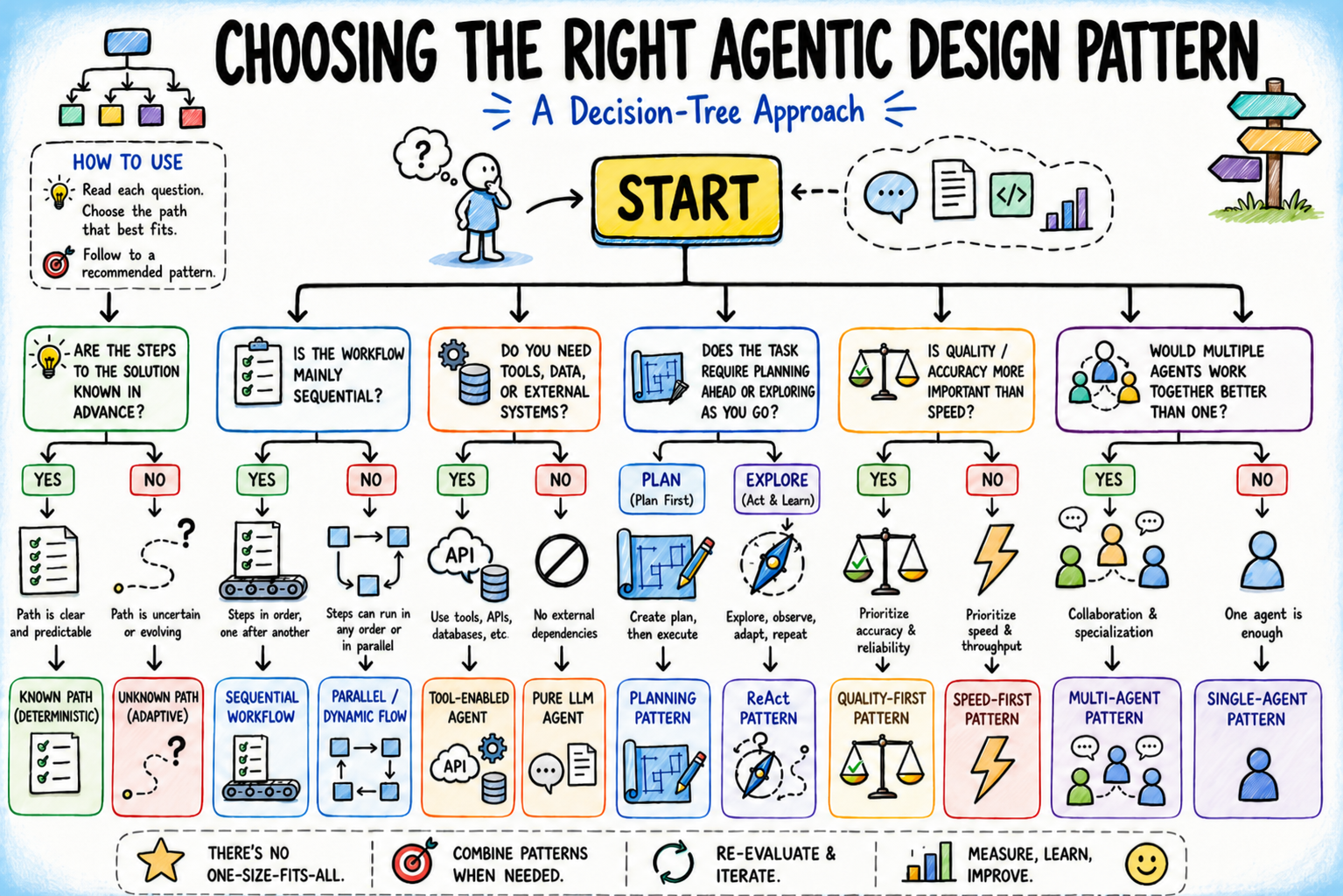
This is the leap from answering to acting. An agent is an LLM empowered with tools (APIs, functions, software), memory (the ability to retain context across a session or task), and workflows (a sequence of steps to achieve a goal). Instead of just describing how to refund a customer, an agent with the right tool access can execute the refund in your billing system, update the support ticket, and notify the customer via email—all through a single natural language instruction. This is the move from chatbots to digital workers.
Layer 4: MCP & The Orchestration Layer (The Nervous System)
The Model Context Protocol (MCP), pioneered by Anthropic and others, represents the next critical evolution: interoperability. A single agent is powerful, but real-world tasks require coordination. MCP is a standard protocol that allows different models, agents, tools, and data sources to communicate seamlessly. It’s the nervous system that turns a collection of specialized digital workers (a sales agent, a coding agent, a analytics agent) into a coordinated team. One agent can hand off a task to another, share context, and combine capabilities. This is what makes the entire system scalable, flexible, and robust.
The Bottom Line: From Prompts to Outcomes
The fundamental transition is this: we are moving from a paradigm of interaction to one of delegation and orchestration. The user’s role changes from a meticulous driver (engineering perfect prompts) to a clear commander (stating desired outcomes).
Are you building a chatbot, or are you architecting a digital worker?
- A chatbot is a feature. It sits on a website and answers questions from a script or a limited knowledge base.
- A digital worker is a capability. It is an autonomous system embedded in your business processes—an onboarder of new employees, a 24/7 supply chain analyst, a proactive customer success manager.
The Strategic Imperative
For businesses and developers, the implication is clear: competitive advantage will not come from accessing a slightly better LLM through a chat interface. It will come from how effectively you can integrate that reasoning capability with your unique data, your critical tools, and your operational workflows. The winners will be those who architect these layered systems—systems where the LLM is merely the brilliant CPU in a full-stack computer of capabilities.
The age of the mesmerizing and talking brain is over. The age of the building, doing, and orchestrating AI system has begun. The question is no longer "How smart is it?" but "What can it actually do and get done?"
Written/published by Kevin Marshall with the help of AI models (AI Quantum Intelligence).
What's Your Reaction?
 Like
0
Like
0
 Dislike
0
Dislike
0
 Love
0
Love
0
 Funny
0
Funny
0
 Angry
0
Angry
0
 Sad
0
Sad
0
 Wow
0
Wow
0