





Beyond the Chatbot: The Unseen Costs of an AI-Powered Physical World
Beyond chatbots, AI-powered IoT (AIoT) poses deep threats to our economy, autonomy, and practical skills. Explore the unseen risks of a 'frictionless' world and the true human cost of innovation.
So much of our recent focus has been on the visible revolution in artificial intelligence: generative AI, large language models, and agentic systems that write, code, and reason. We are rightly concerned about their impact on knowledge work, critical thinking, and the nature of truth.
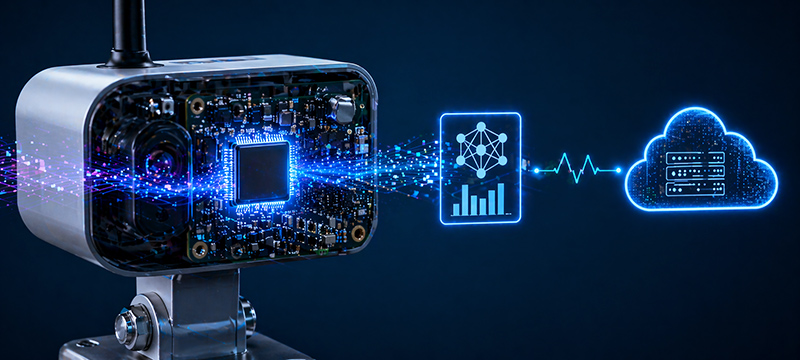
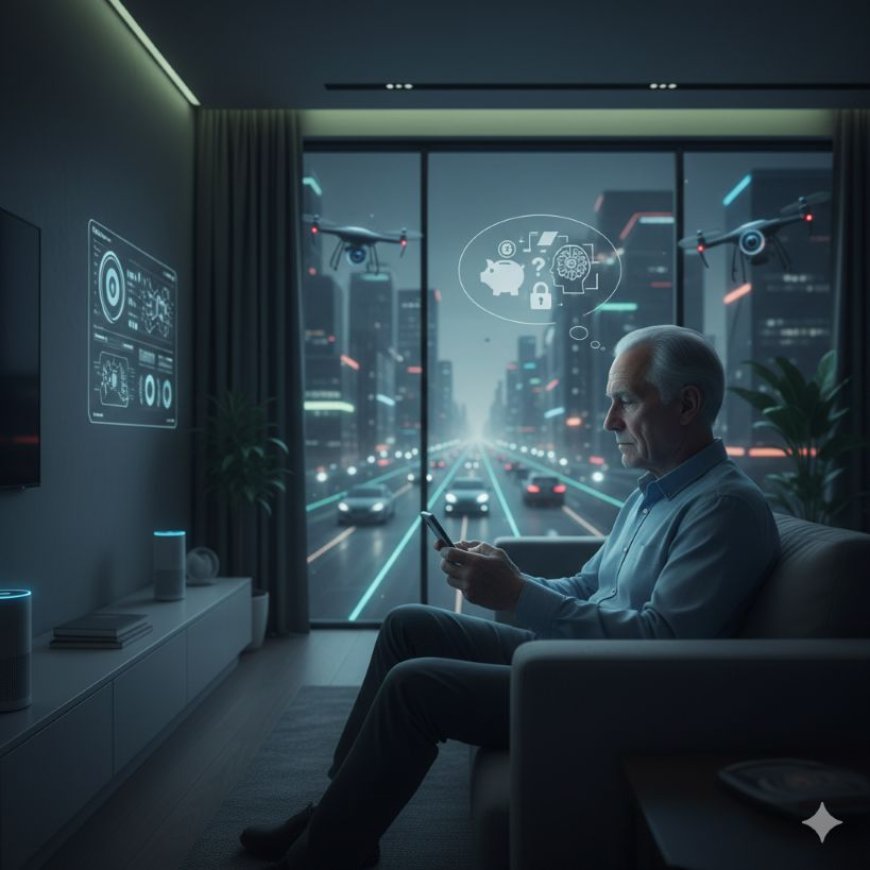
But a quieter, more profound revolution is happening concurrently. It is the fusion of AI with the Internet of Things (IoT). This is not AI in a chat window; this is AI in our homes, our cities, our factories, and our bodies.
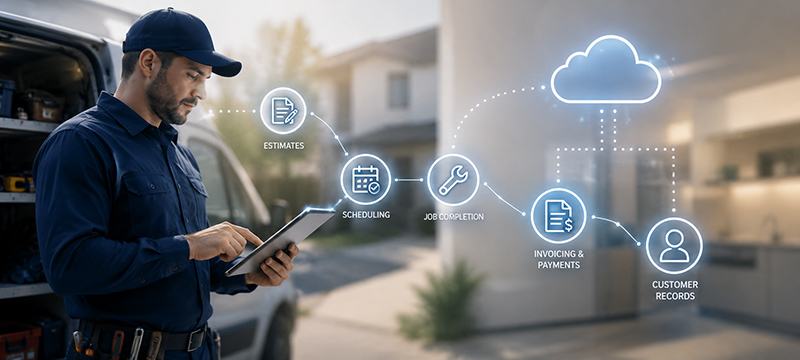
This "AIoT" — the "Artificial Intelligence of Things" — is the network that connects and controls smart grids, autonomous supply chains, intelligent home appliances, and city-wide sensor networks. While the promised business case is one of total efficiency, predictive maintenance, and seamless convenience, the potential threats are woven into the very fabric of our physical reality. They are less about what we think and more about how we live.
Here are some of the oncoming threats as we advance in this new domain, and the profound challenge of measuring innovation against the real cost to humanity.
1. The New Economic Fragility: Beyond Job Displacement
While we discuss AI replacing white-collar jobs, AIoT is aimed squarely at the physical and logistical backbone of our economies.
- Systemic Risk as a Business Model: The primary "value" of AIoT is connecting disparate systems. An intelligent port connects to an autonomous trucking network, which connects to a smart warehouse, which connects to a regional power grid. This hyper-efficiency creates unprecedented systemic fragility.
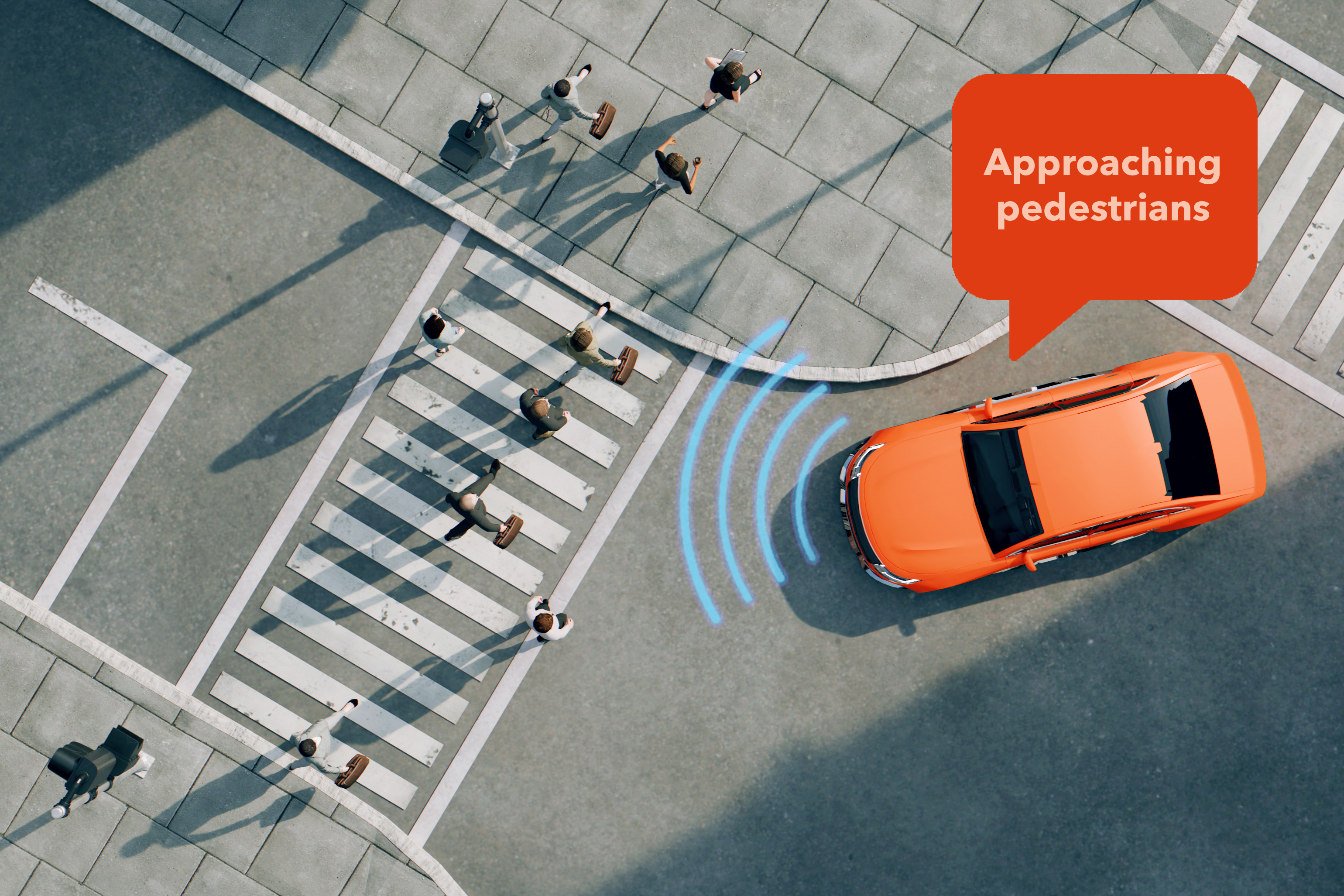
- Example: In the past, a cyberattack might breach a company's database. In an AIoT-enabled world, a single vulnerability (like a botnet) could be exploited to halt a nation's entire food distribution network, shut down its power grid, or cause physical accidents by hacking fleets of autonomous vehicles. The financial cost is no longer just data theft; it's a complete, physical economic shutdown.
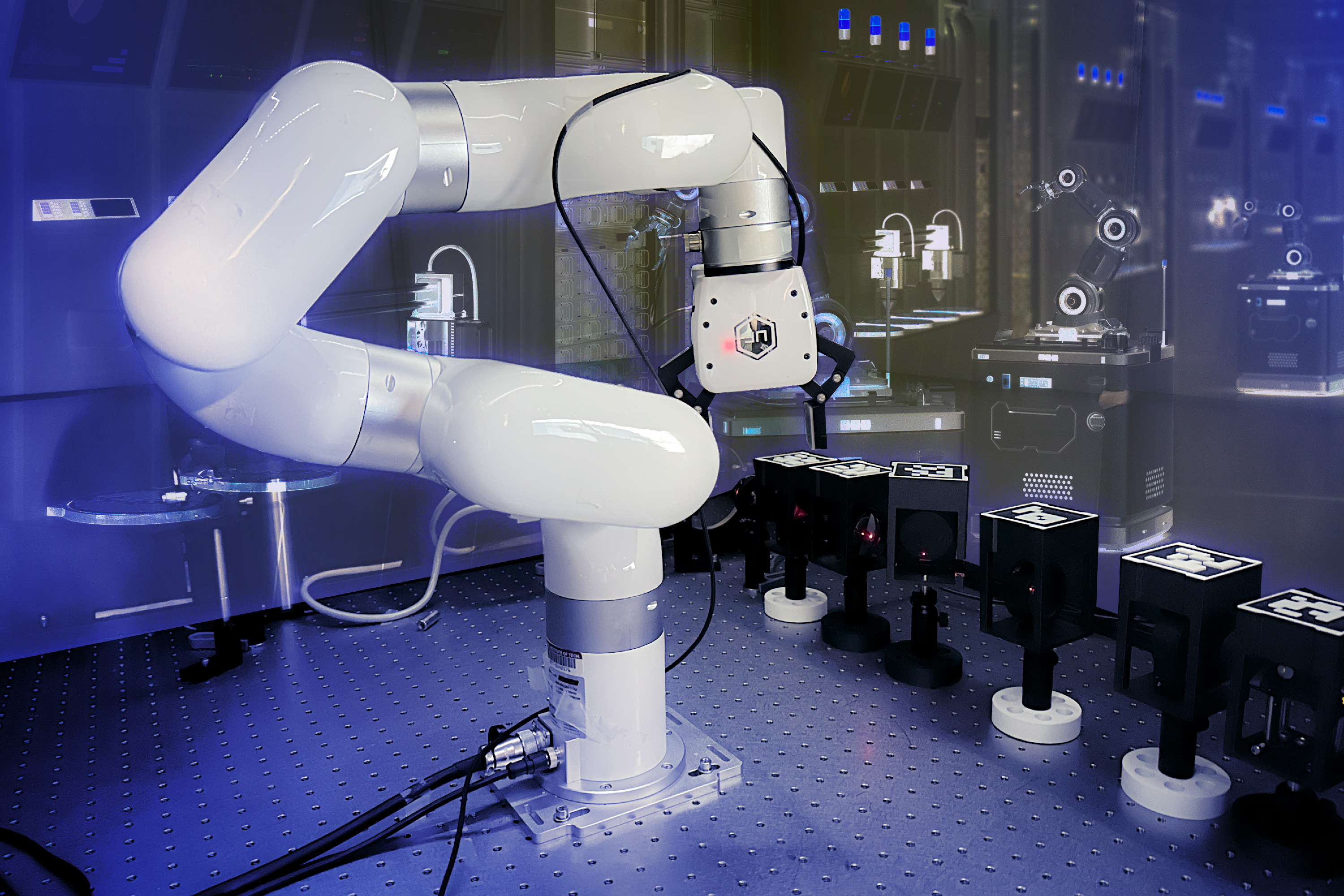
- Targeted Labour Displacement: The jobs at risk here are not just repetitive, but physical. AI-powered sensors that predict equipment failure will replace maintenance and inspection crews. Fully autonomous warehouses (like those already in use) eliminate the need for most pickers, packers, and forklift operators. This creates a parallel wave of unemployment that is distinct from the knowledge-work disruption of generative AI.
- Data-Driven Financial Exclusion: Your financial well-being may soon be tied to the data streamed from your "smart" life.
- Example: Imagine your car insurance premium being calculated in real-time based on AI's judgment of your driving, not just your accident record. Or, more insidiously, a smart appliance reporting your energy use patterns, which an algorithm correlates with "financial distress," lowering your credit score without your knowledge. This creates a new, opaque class of algorithmic poverty.
2. The Atrophy of Human Competence: The Threat to Learning
The core promise of AIoT is a "frictionless" life, where your needs are anticipated and met before you even register them. The threat here is not to what you learn, but to your capacity to learn.
- "Cognitive Offloading" as a Lifestyle: Research has already shown that over-reliance on AI tools can lead to "cognitive offloading," which correlates negatively with critical thinking. When this moves from a search engine to your entire environment, the impact is profound.
- Example: A smart kitchen doesn't just give you a recipe; it guides you step-by-step, tells you when to stir, and manages the temperature. The human is reduced to a pair of hands. This prevents the user from learning the principles of cooking, such as heat management or flavor combinations.
- The Loss of Practical Resilience: When our homes automatically manage their own energy, our cars drive themselves, and our environments are perfectly optimized for comfort, we lose the basic skills of self-sufficiency. This "friction" is where competence, problem-solving, and resilience are built. A society that offloads all practical skills to an AI network becomes dangerously dependent and fragile, unable to cope when the system inevitably fails.
3. The Erosion of the Social & Private Sphere
When the "computer" is the room you are in, the concepts of privacy and autonomy are fundamentally challenged.
- The End of Privacy as a Concept: This is not about your browser history. This is about ubiquitous, passive surveillance. Smart speakers listening to your emotional tone, smart city cameras using gait and facial analysis, and smart thermostats that know when you are home and when you are not.
- Example: This creates a powerful "chilling effect." When all public and private spaces are monitored, it changes how we interact. We may become less willing to engage in dissent, have difficult private conversations, or express unpopular opinions, leading to a sterile, conformist, and less democratic public sphere.
- Automated "Nudging" and Social Control: The AIoT world is not just a passive listener; it is an actor. It is designed to "nudge" your behavior—ostensibly for your own good.
- Example: Your smart fridge might "nudge" you away from sugary snacks. Your smart city's public transit system might "nudge" you to a different route to manage crowd flow. But who sets the rules? This technology gives its owners (corporations or governments) a direct tool to manipulate human behavior at a population scale, optimizing for profit or social conformity, not individual autonomy.
- The Decline of Social Skill: As IoT devices mediate more of our interactions, we risk a further decline in face-to-face communication. This can lead to a documented reduction in the ability to read nonverbal cues, practice empathy, and navigate the complex, un-optimized friction of human relationships.
The Measurement Dilemma: How to Value a Human?
This brings us to one final, critical question: How do we measure the business case for innovation against the real cost to human needs?
The terrifying truth is that we currently can't—because our models are dangerously one-sided.
The "business case" is easy to quantify. It is measured in:
- $ Dollars saved in labour costs.
- % Percentage points of efficiency gained.
- # Number of hours saved in a supply chain.
The "human cost" is abstract and notoriously difficult to quantify. What is the dollar value of:
- A population's critical thinking skills?
- The concept of personal privacy?
- The resilience of a community?
- The feeling of human autonomy?
Because we cannot easily measure these human costs, they are valued at zero in a traditional ROI calculation. The business case always wins.
To fix this, we must fundamentally change our "balance sheet." We need to move beyond simple ESG (Environmental, Social, Governance) checklists and create new, mandatory metrics for "human-centric" innovation.
- Systemic Risk Audits: Businesses and governments deploying large-scale AIoT systems must be required to model and insure against the catastrophic cost of a systemic, cascading failure. This gives a hard financial number to "fragility."
- Cognitive Impact Assessments: Just as we have environmental impact assessments, we should demand "cognitive impact" studies. Does this product automate a skill and promote passive dependence (cognitive offloading), or does it augment the user and build new skills?
- "Autonomy & Privacy" Scores: We need a simple, readable score for all smart devices, much like a nutrition label. It would clearly state:
- What data is collected?
- What data is necessary for it to function?
- How is this data used to "nudge" you?
- Can you fully opt out and retain core functionality?
Ultimately, the true "business case" for any innovation cannot be separated from the stability and well-being of the society it serves. An innovation that generates billions in profit but creates a fragile, dependent, and socially isolated population is not an asset. It is a long-term liability, and the bill will, eventually, come due.
Written/published by Kevin Marshall with the help of AI models (AI Quantum Intelligence)
What's Your Reaction?
 Like
0
Like
0
 Dislike
0
Dislike
0
 Love
0
Love
0
 Funny
0
Funny
0
 Angry
0
Angry
0
 Sad
0
Sad
0
 Wow
0
Wow
0