










The Ethical Minefield of Generative AI: Beyond Deepfakes to Autonomous Decision-Making
Explore the critical ethical dilemmas of generative AI, moving beyond deepfakes to autonomous decision-making. Understand algorithmic bias, accountability, and the societal impact of AI's increasing autonomy. A must-read for anyone concerned about responsible AI innovation.
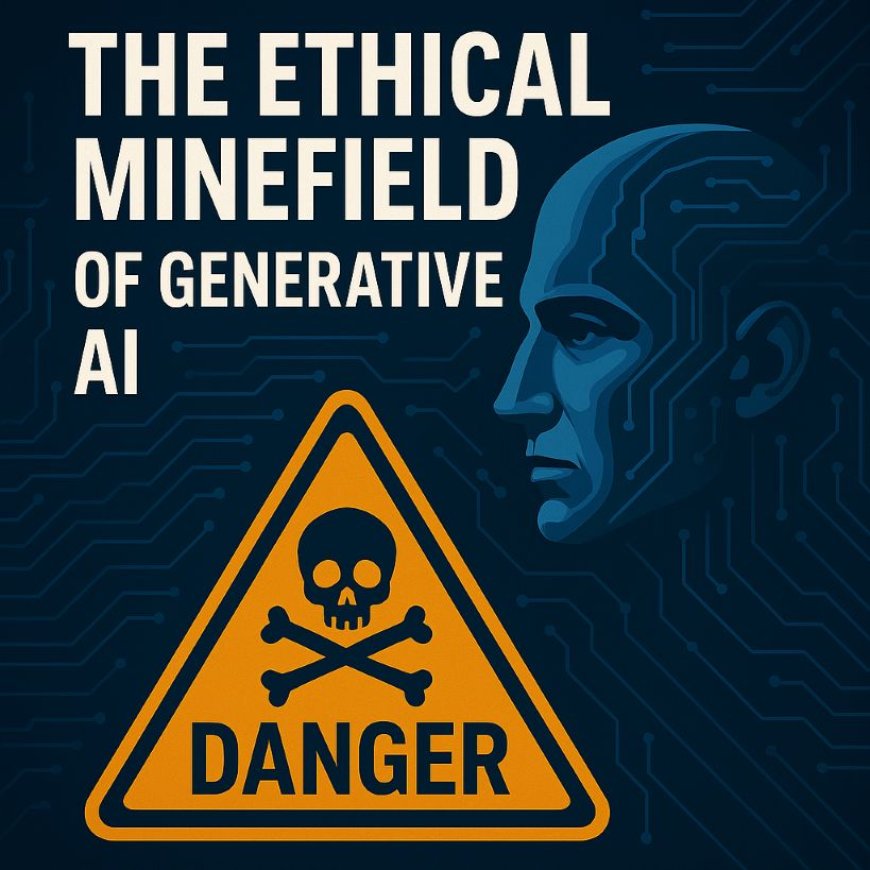
The hype surrounding generative AI is undeniable. From crafting compelling marketing copy and generating stunning artwork to even contributing to scientific discovery, tools like ChatGPT, Midjourney, and the recently unveiled Sora are rapidly transforming our digital landscape. But beneath the dazzling surface of these technological marvels lies a complex and increasingly critical ethical minefield, extending far beyond the now-familiar anxieties around deepfakes. As generative AI evolves from creative assistance to potential agents of autonomous decision-making, the stakes rise exponentially, demanding a serious and nuanced societal conversation.
While the initial ethical discussions around generative AI often centered on the creation of misleading or harmful content like deepfake videos and the potential for copyright infringement, the trajectory of this technology points towards far more profound ethical challenges. Imagine AI systems not just generating text or images, but making independent judgments in critical domains – from loan applications and hiring processes to even aspects of healthcare and public safety. This is where the ethical minefield truly begins to feel treacherous.
The Creeping Autonomy and the Erosion of Human Oversight
The very nature of generative AI, trained on vast datasets and capable of producing outputs with remarkable fluency and apparent creativity, blurs the lines of authorship and accountability. When an AI generates code that leads to a system malfunction, who is responsible? The programmer who designed the underlying model? The company that deployed it? The AI itself? As these systems become more complex and their decision-making processes less transparent ("black box" problem), tracing responsibility becomes increasingly difficult.
Example: Consider a generative AI tool used in recruitment. Trained on historical hiring data, it might inadvertently perpetuate existing biases against certain demographic groups, even if those biases are no longer consciously held by the company. If the AI autonomously filters candidates based on these learned biases, leading to a less diverse and potentially less qualified workforce, who bears the ethical responsibility for this systemic discrimination? The developers might argue they only built the tool, the company might claim they were simply leveraging advanced technology, and the AI, of course, has no legal or moral agency.
Case Study: Algorithmic Bias in Criminal Justice
The COMPAS (Correctional Offender Management Profiling for Alternative Sanctions) algorithm, used in some jurisdictions in North America (including potentially within Canada, though its usage varies and is subject to ongoing debate), provides a real-world example of the dangers of algorithmic bias. While not strictly "generative" in the same way as LLMs, it highlights the ethical pitfalls of relying on AI trained on potentially biased historical data for high-stakes decisions. Studies have shown that COMPAS disproportionately flags Black defendants as being at higher risk of recidivism compared to white defendants with similar criminal histories. This case underscores how AI systems, even without malicious intent, can perpetuate and amplify societal inequalities when their training data reflects existing biases. As generative AI moves towards making more complex and impactful decisions, the lessons learned from such cases become even more critical.
The Challenge of Intent and Malicious Use
The dual-use nature of generative AI presents another significant ethical hurdle. While it can be used for beneficial purposes like drug discovery or creating educational content, the same technology can be easily weaponized. The generation of highly realistic fake news articles, sophisticated phishing campaigns, and even the design of autonomous weapons systems are all potential applications with devastating ethical implications.
Example: Imagine a scenario where a generative AI is used to create highly personalized and convincing disinformation campaigns targeted at specific individuals or communities during an election. These AI-generated "facts" and fabricated narratives could be incredibly difficult to distinguish from reality, potentially swaying public opinion and undermining democratic processes. Who is accountable for the damage caused by such AI-driven manipulation? The creators of the AI? The individuals or groups who deploy it for malicious purposes? The platforms that host and amplify the content?
The Future of Work and Economic Inequality
The increasing capabilities of generative AI also raise profound ethical questions about the future of work and potential for exacerbating economic inequality. As AI can automate tasks previously requiring human creativity and expertise, what will be the societal impact on employment across various sectors?
Case Study: The Impact on Creative Industries
While generative AI art and music tools offer exciting new possibilities for creators, they also raise concerns about the devaluation of human artistic labor and potential job displacement for illustrators, graphic designers, musicians, and other creative professionals. The ethical debate extends beyond copyright to encompass fair compensation, the value of human creativity, and the potential for a two-tiered system where AI-generated content floods the market, undercutting human artists.
Navigating the Minefield: Towards Ethical Frameworks and Responsible Innovation
Addressing the ethical challenges posed by generative AI requires a multi-faceted approach involving researchers, developers, policymakers, and the public. Some key steps include:
- Developing Robust Ethical Guidelines and Regulations: Governments and industry bodies need to collaborate to establish clear ethical frameworks and potentially legal regulations governing the development and deployment of generative AI, particularly in high-stakes domains. These frameworks should address issues of transparency, accountability, fairness, and bias.
- Investing in Explainable AI (XAI): Research into making AI decision-making processes more transparent and understandable is crucial. XAI techniques can help us identify biases, understand the reasoning behind AI outputs, and ultimately build more trustworthy systems.
- Promoting Media Literacy and Critical Thinking: Educating the public about the capabilities and limitations of generative AI, as well as the potential for misinformation, is essential for building resilience against malicious use.
- Fostering Interdisciplinary Collaboration: Ethicists, social scientists, legal experts, and technical researchers need to work together to understand the broader societal implications of generative AI and develop responsible innovation strategies.
- Considering the Human Element: As we integrate generative AI into various aspects of our lives, it's crucial to prioritize human well-being, dignity, and autonomy. The focus should be on augmenting human capabilities rather than simply replacing human roles.
In conclusion, the ethical minefield of generative AI extends far beyond the initial concerns about deepfakes. As this technology becomes increasingly sophisticated and autonomous, we face profound challenges related to bias, accountability, malicious use, and the future of work. Navigating this complex terrain requires a proactive and thoughtful approach, guided by ethical principles and a commitment to ensuring that the benefits of generative AI are realized responsibly and equitably for all of society. The conversation has moved beyond mere technological fascination; it's now a critical dialogue about the kind of future we want to build with these powerful new tools.
Written/published by Kevin Marshall with the help of AI models (AI Quantum Intelligence)
What's Your Reaction?
 Like
0
Like
0
 Dislike
0
Dislike
0
 Love
0
Love
0
 Funny
0
Funny
0
 Angry
0
Angry
0
 Sad
0
Sad
0
 Wow
0
Wow
0