












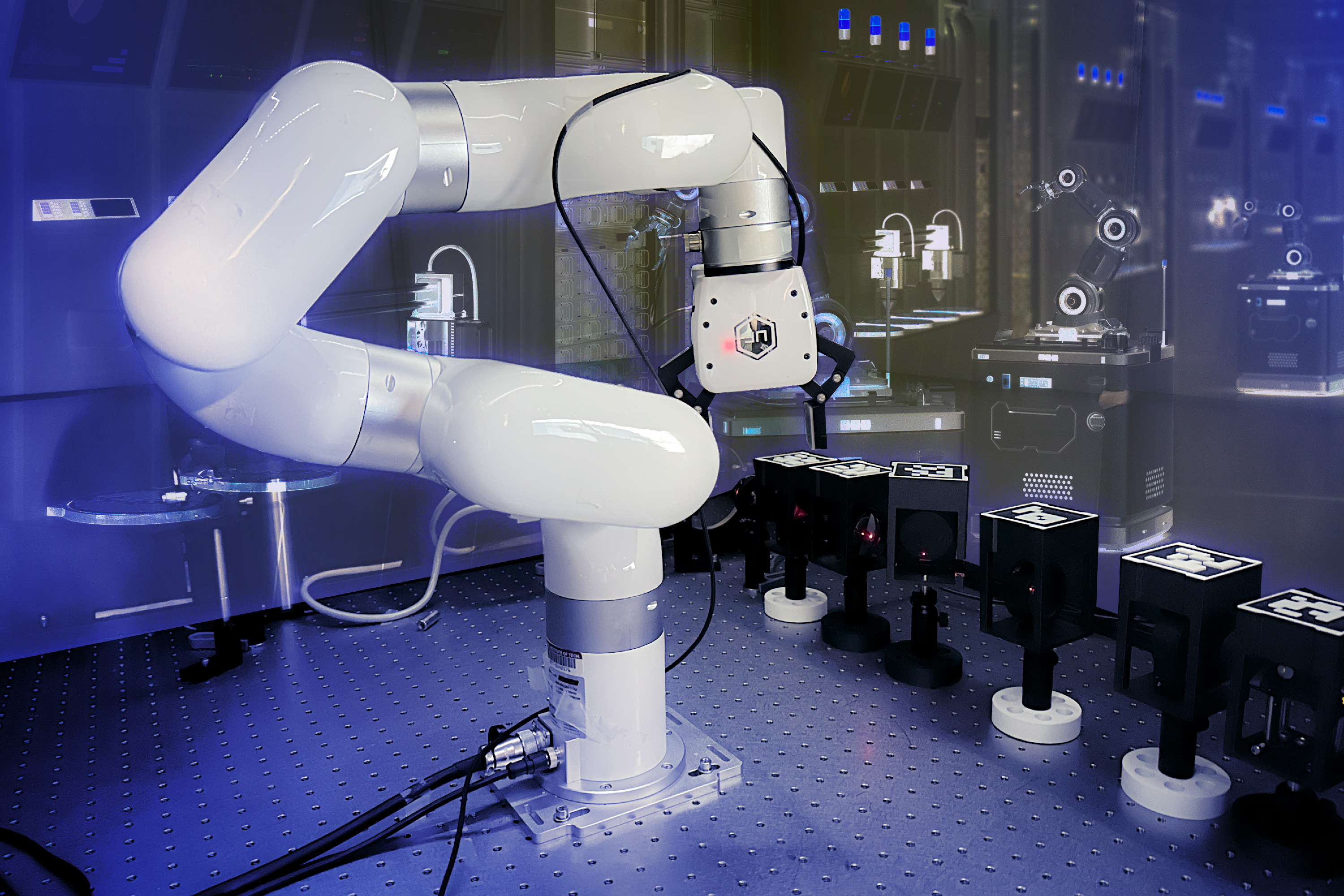



Opinion: Qualcomm’s Dragonwing IQ‑10 Signals the Dawn of Physical AI at Scale
Qualcomm’s new Dragonwing IQ‑10 robotics processor marks a major leap in physical AI. This op‑ed explores what the announcement means for the future of humanoids, autonomous robots, and global AI‑driven industry transformation.
Qualcomm’s unveiling of the Dragonwing IQ‑10, its first dedicated robotics processor, marks a pivotal moment in the evolution of “physical AI”—the fusion of embodied robotics with advanced machine learning. Presented at the India AI Impact Summit 2026, the platform showcases a full-stack robotics architecture designed to accelerate humanoid and autonomous mobile robot deployment across factories, warehouses, and even homes.
What makes this announcement more than another incremental hardware upgrade is Qualcomm’s explicit ambition: to create a general-purpose robotics foundation capable of continuous learning, multimodal perception, and industrial‑grade reliability. The company’s modular architecture—combining edge compute, ML operations, and an “AI data flywheel”—positions robots not as static machines but as adaptive agents capable of improving autonomously in real‑world environments.
For the AI Quantum Intelligence community, this signals a deeper shift. We’re moving from AI as a purely digital intelligence to AI as a physical force multiplier—a transition that mirrors the leap from classical computation to quantum‑accelerated problem solving. The Dragonwing IQ‑10 isn’t just a chip; it’s a declaration that embodied AI is ready to scale and that nations like India are emerging as strategic hubs for robotics innovation.
The implications are profound. As physical AI systems become more capable, industries will reorganize around autonomous workflows, hybrid human‑robot teams, and continuous learning loops that blur the line between software updates and mechanical evolution. The next competitive frontier won’t be who has the best model—it will be who can deploy intelligent machines fastest, safest, and at industrial scale.
Qualcomm’s move suggests that the era of humanoids and AMRs as niche prototypes is ending. The era of physical AI infrastructure—globally distributed, continuously learning, and economically transformative—is beginning.
Written/published by AI Quantum Intelligence with the help of AI models.
Sources:
From AMRs to humanoids: Qualcomm showcases full robotics suite at India AI Impact Summit 2026 | Mint
What's Your Reaction?
 Like
0
Like
0
 Dislike
0
Dislike
0
 Love
0
Love
0
 Funny
0
Funny
0
 Angry
0
Angry
0
 Sad
0
Sad
0
 Wow
0
Wow
0